

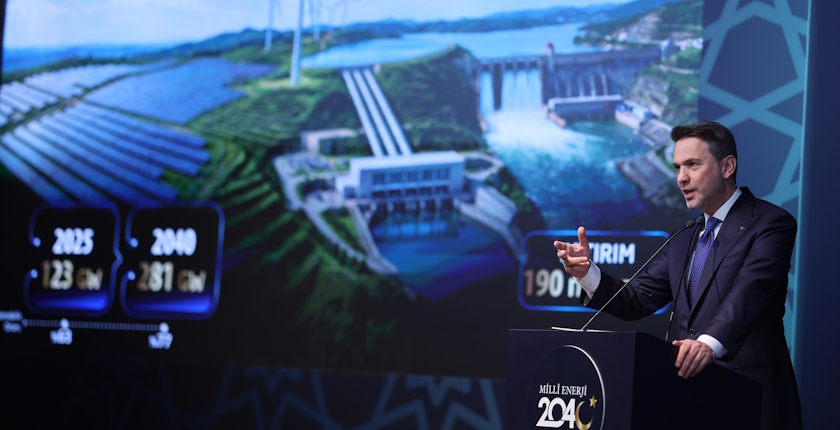
Minister of Energy and Natural Resources Alparslan Bayraktar said Turkey aims to lift the electrification rate to 36% by the end of the next decade. The government launched the so-called National Energy 2040 plan, estimated at USD 500 billion, ahead of the annual United Nations Climate Change Conference COP31, which is starting in Antalya. The government’s goal is to boost the domestic technology and manufacturing rate in the sector to 92% and achieve a 77% share of renewables in electricity generation capacity.
Turkey has a USD 500 billion energy development vision by 2040. The co-host, together with Australia, of the Conference of the Parties to the United Nations Framework Convention on Climate Change (UNFCCC), unveiled its targets with a focus on electrifying the economy.
The National Energy 2040 plan is based on five pillars: energy efficiency, nuclear energy, renewable energy, oil and natural gas, and minerals, on a trajectory toward energy independence.
Minister of Energy and Natural Resources Alparslan Bayraktar pointed to the importance of infrastructure, digitalization, and international cooperation. Consumption and demand must be changed, where electric vehicles, data centers, green hydrogen production, heat pumps and water treatment would contribute to reaching a 36% electrification rate, he explained.
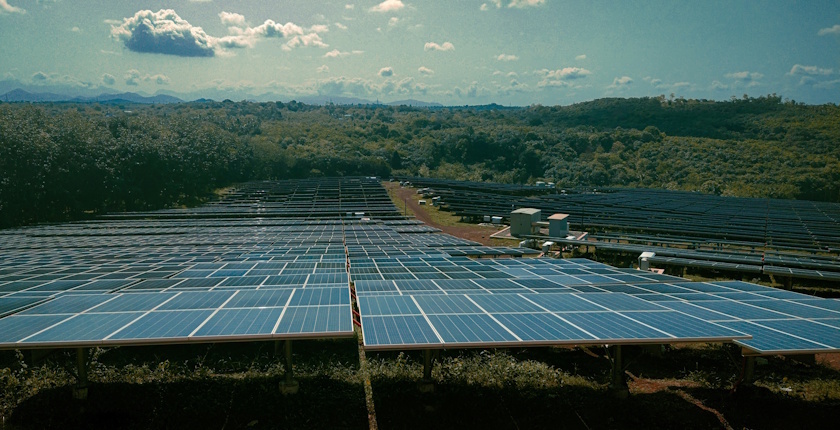
Renewable electricity capacity goal for 2040 is 77%
As tens of thousands of delegates including international officials, scientists, activists and businesspeople were about to arrive to Antalya for the UN Climate Change Conference – COP31, Bayraktar stressed that his country aspires to lift the share of renewable electricity capacity to 77% from 63%. The targeted domestic technology and manufacturing rate in the energy sector for 2040 is 92%.
The required public and private investments translate to 108,000 new jobs, according to the minister. Oil and natural gas production in Turkey needs to meet domestic demand in 2040.
Total electricity capacity needs to rise to 281 GW from 123 GW, Bayraktar revealed
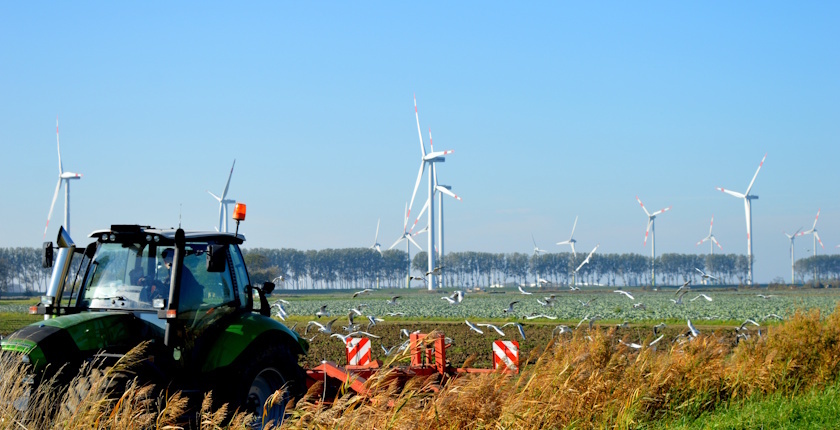
Bayraktar said total electricity capacity would more than double to 281 GW. The plan implies solar and wind power auctions of at least 2 GW per year combined, as well as for an overall 6 GW of offshore wind power.
“Wars and crises have shown that distributed production has become vital. That means local production and local consumption. In wars, energy infrastructure facilities become the primary targets. Distributing production also has a strategic significance. We aim to establish smaller power plants, under 1 MW, more intensively.”
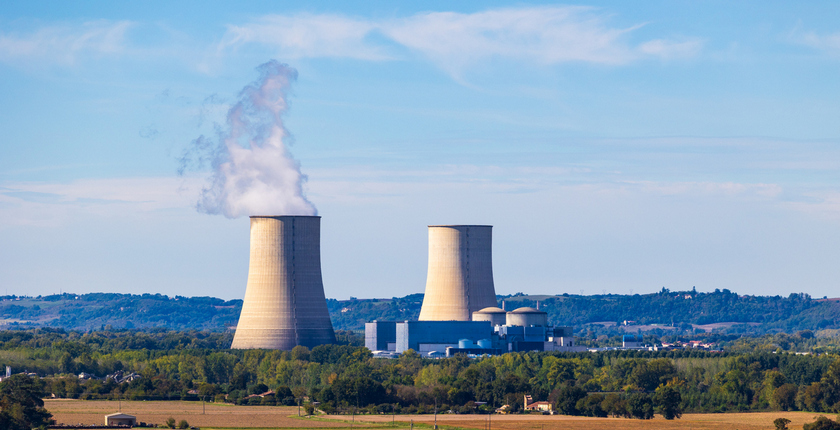
Nevertheless, nuclear power plants would cover 11% of electricity demand at the end of the next decade, with 10 GW of total capacity. The Akkuyu facility, which is set to soon put the first of its four reactors into operation, is envisaged at 4.8 GW. The country is planning nuclear power plants in Sinop and East Thrace, as well as small modular reactors (SMRs).
Turkey earmarks USD 36 billion for power transmission system
USD 36 billion is earmarked for power transmission from north to south and east to west. The roadmap involves expanding high-voltage lines from 77,000 to 112,000 kilometers, and transformer capacity from 200 GW to 316 GW. Interconnection capacity is seen growing from 5.4 GW to 15 GW.
Flexibility requires storage, Bayraktar noted. Turkey needs 140 GWh of storage capacity, he said, including a 6 GW pumped storage hydropower plant.
The minister forecasted there would be 20 million electric and hybrid vehicles in the country in 2040. It compares to 41 million of the expected overall fleet.