


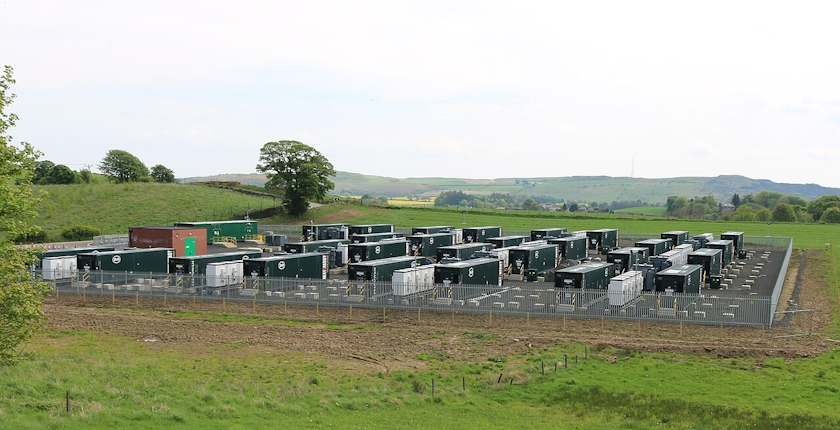
Relative to the size of its electricity system, peak loads, population and economy, Bulgaria has by far the highest battery energy storage penetration rate in the entire world. Moreover, it crushed its own records by almost doubling total capability to 6.23 GW in less than six months.
Battery energy storage systems (BESS) in Bulgaria have been growing even faster than the country’s already stellar photovoltaics rate. Operating power online has reached 6.23 GW altogether, compared to 5.41 GW in mid-August and 3.43 GW before the end of May, Capital reported, citing an update from the Electricity System Operator (ESO).
The facilities in operation can store more than 19 GWh, translating to an average durability of more than three hours. It is likely another in a string of records, at least among the more developed markets in the segment. Notably, it means four-hour BESS are being installed, and even one five-hour project has been reported.
Battery capability covers 85% of PV capacity
Bulgaria is at the top of the world chart relative to the size of its electricity system, peak loads, population and economy. It is in the first league even in absolute terms.
Solar power capacity has reached 7.3 GW, the article adds, so the battery coverage in the category is a whopping 85%!
Batteries have turned to intensive charging during the night as winter approaches
While photovoltaic output has become much more erratic as winter has approached, batteries have turned to intensive charging during the night.
After the state support programs have passed, new projects are commercially based and entering a now more saturated market.
Between October 1 and 25, batteries supplied 18 GWh per day, against 19.9 GWh absorbed, the news outlet calculated.
Prominent role for regional stability ahead of pan-European acceleration
As an early mover, Bulgaria’s BESS facilities had a prominent role during this year’s heat waves and droughts in maintaining the stability of the electricity system in the entire region. Neighboring Greece and Romania are accelerating deployment, with high ambitions, as do countries throughout Europe.
Nevertheless, wholesale electricity in Bulgaria remains expensive, as well as in most of Southeastern Europe and Hungary, except tangibly milder peaks and daily spreads. Importantly, net power exports have surged.
Battery storage still has much room to grow in the wider market. Another factor, besides the energy crisis looming again due to the conflicts in Ukraine and the Middle East, is that Romania’s only nuclear power plant Cernavodă has been offline since August, and one of the two reactors in Bulgaria’s Kozloduy is inactive for maintenance between October 8 and late November.
In addition, at the end of October, just two years after its first battery systems came on stream, Bulgaria had 85% of its overall peak electricity load covered with battery power. Some of the most developed markets were much weaker: Texas (17%), Great Britain (17%), Australia (23%) and California (33%).