


Bulgaria’s net electricity exports surged by 62% in annual terms from the beginning of the year to early October. They reached 3.5 TWh, compared to 2.16 TWh in the same period last year, driven primarily by increased generation from renewable energy sources, supported by energy storage systems.
Data from Bulgaria’s transmission system operator (TSO) Electricity System Operator (ESO) show that the country produced 12.24% more electricity year-on-year, while domestic consumption grew by 8.45%, according to the Association for Production, Storage and Trading of Electricity (APSTE).
Power generation from renewable energy sources reached 11.5 TWh, up by nearly 34% from the previous year. Renewables have accounted for nearly 80% of the country’s total power generation growth.
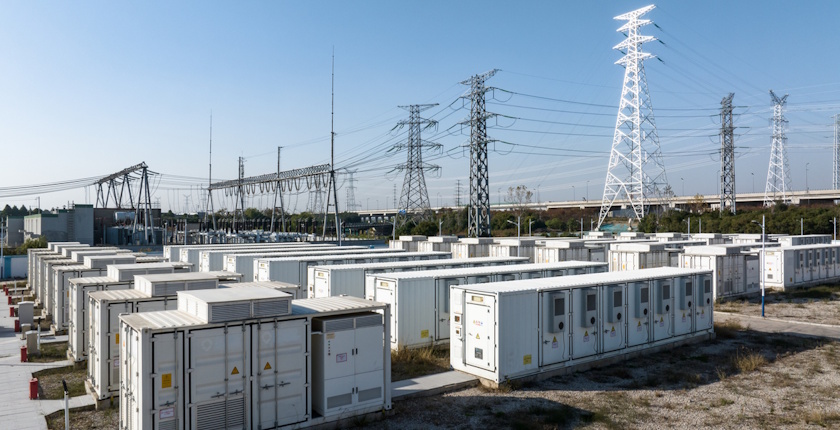
The expansion of energy storage systems has been particularly remarkable. From the start of the year until October 4, grid-scale batteries delivered 1,720 GWh of electricity to the power system. It is a more than ninefold increase from just 190 GWh that was recorded a year earlier.
This enabled cheap electricity generated during the day to be stored and used during hours of higher demand and higher prices, APSTE pointed out.
Of note, Bulgaria’s BESS capacity is approaching 6 GW / 17 GWh.
Bulgaria remained a net exporter during the challenging summer in the region
APSTE stressed that the benefits of the new energy mix became particularly clear during the summer.
Despite prolonged heatwaves and low water levels on the Danube river that constrained nuclear and hydro power generation across the region, Bulgaria remained a net exporter and maintained prices lower than neighboring markets during key periods.
This success was driven by a combination of solar power plants, battery storage, and the Kozloduy Nuclear Power Plant (NPP).
Gazdov: While neighboring markets suffer from high prices and power shortages, Bulgaria generates and stores more and more of its own electricity
“While neighboring markets suffer from high prices and power shortages, due to constraints on their nuclear plants and high natural gas prices, Bulgaria generates and stores more and more of its own electricity. This translates into more competitive prices for households and businesses, greater energy security, and a stronger position on the regional energy market,” APSTE chairman Nikola Gazdov explained.
A striking example occurred on October 8, when Unit 6 of the Kozloduy NPP underwent planned maintenance and Unit 5 operated at reduced capacity due to low water levels on the Danube.
Despite these constraints, in the early afternoon photovoltaic systems were producing nearly 4,300 MW, exceeding total national demand of 4,100 MW, while batteries were charging at over 4,000 MW, storing cheap electricity for peak evening demand, the update reads.
Wind is the solution for cheaper electricity in the winter
However, APSTE warned that the successful expansion of solar energy and batteries is not enough. In the winter, solar generation decreases while demand rises. To secure more of cheap domestic power during the colder months, Bulgaria must accelerate wind energy deployment.
Since 2020, PV capacity in the country has grown by about 600% to nearly 7 GW, while BESS capacity is close to 6 GW / 17 GWh. APSTE estimates that total investments in photovoltaics, batteries, and related infrastructure since 2020 have reached approximately EUR 7 billion.
However, Bulgaria has only 716 MW of installed wind capacity, with no major new wind farm built since 2013. Wind power complements solar with a different daily and seasonal generation profile, capable of providing substantial power output during winter, APSTE added.
Gazdov: Sun and batteries have significantly enhanced Bulgaria’s energy security
“Sun and batteries have significantly enhanced Bulgaria’s energy security amid one of the most severe energy crises. This is very important, but it is not enough. We must build on this success by attracting investment into wind power as well,” he said.
This road will secure cheaper local electricity not only in the summer, but also in the winter, Gazdov added.
Achieving this does not require new subsidies, but clear rules and a genuine easing of construction procedures for new capacity, in his view.
According to APSTE, Bulgaria could attract over EUR 4 billion in additional private investment in wind farms and energy storage systems by 2030, provided institutions ensure predictable regulations and remove unnecessary administrative constraints, including for projects located outside renewable energy acceleration areas.