


Energy security is driving increasingly divergent transition pathways for energy importers and exporters, according to DNV’s Energy Transition Outlook 2026. The authors stressed that short-term supply shocks are accelerating oil’s long-term decline, and added that the coming decade will be about system integration, not just renewable generation.
Energy Transition Outlook 2026 is the 10th edition of DNV’s annual Energy Transition Outlook. In the opening chapter of the outlook, authors list some of the things they got right (so far) and other areas where they have had to course-correct.
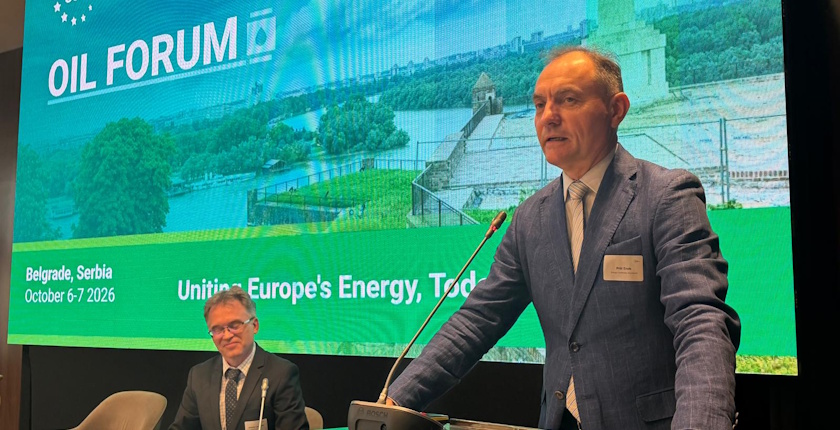
DNV Group President & CEO Knut Ørbeck-Nilsen said that, consistently over the last 10 years, DNV has called things as it saw them, not as it wished them to be. Emissions associated with the ‘most likely’ forecast mean the world is currently heading for global warming of 2.3 degrees Celsius by 2100, he added.
How are transition pathways for energy importers and exporters diverging?
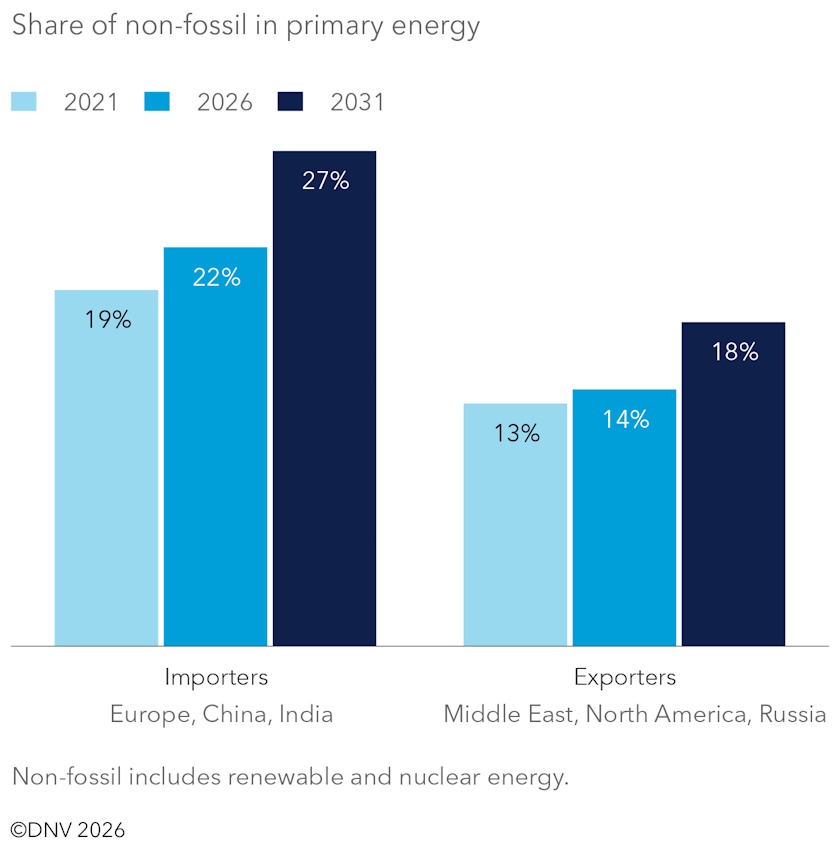
Energy exporters are maximizing their production to mitigate the shortfall of oil and gas from the Middle East, but most of the world is seeking to reduce or avoid fossil fuel dependence and prioritize strengthened supply security through renewables, nuclear, and energy efficiency.
Over the last five years, the share of non-fossil energy in the primary energy mix has increased more than three times as much in energy-importing regions (2.2 percentage points across China, India, and Europe) as in energy-exporting regions (0.7 percentage points across the Middle East, North America, and Russia), the report reads.
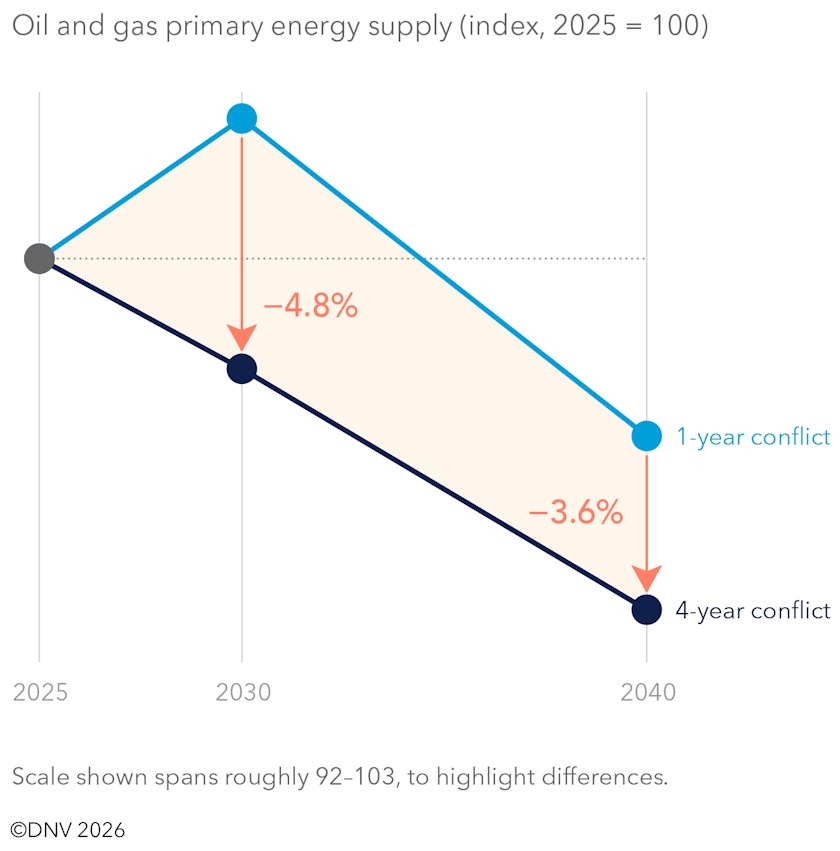
DNV estimated that the Iran war has further weakened the case for oil as a global export commodity and that it is causing permanent demand destruction.
Its sensitivity study, assuming the Middle East conflict lasts until 2030 with elevated energy prices, projects a 4–6% short-term reduction in demand during the conflict and a 2–5% permanent demand destruction.
Turning the accelerating deployment of renewables into economic advantage
According to the authors of the report, improved pricing, tariffs, infrastructure, and market design are the main priorities to integrate variable renewables in the energy system.
DNV Group President & CEO Knut Ørbeck-Nilsen is convinced that the defining challenge of the coming decade will be turning the accelerating deployment of renewable generation into economic advantage.
That means extracting more value from every renewable megawatt built by applying a new level of systems thinking to how energy assets are deployed and in how policy shapes the value they deliver, he added.
Neither transmission capacity nor demand flexibility are growing fast enough
The data centres that hyperscalers are building illustrate the challenge. Their concentrated demand can strain local networks and force expensive grid upgrades. This makes them unpopular when the costs are borne by local communities, but the real issue is decades of underinvestment in grid infrastructure.
“Expanding and modernizing the grid is essential with or without data centres. The countries that prosper in an increasingly electrified economy will be those that can attract new electricity-intensive industries while continuing to provide reliable and affordable power for households and businesses alike,” Ørbeck-Nilsen highlighted.
The report underlines that neither transmission capacity nor demand flexibility are growing fast enough. While expanding transmission capacity takes time, demand flexibility can deliver significant benefits in the near term.
Gas remains critical for balancing the grid, even as its share of generation falls from 23% to 8% by 2050, the report reads.
Electrification is the single most powerful lever available to improve prosperity
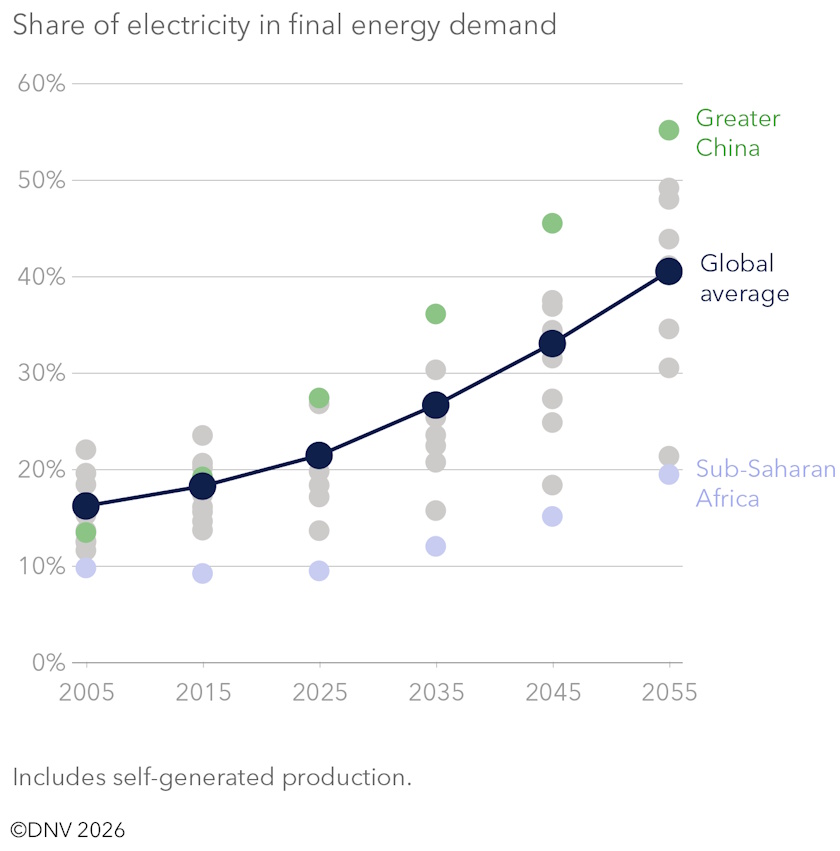
The rate of electrification over the next 20 years will be more than double that of the previous 20 years, DNV estimated. In 2005, electricity represented 16% of global final energy demand. Today the share is 21%, and the group finds that the share will be 33% in 2045.
Electrification is driven by fossil-importing countries. The main driver of growing electricity demand from today to 2040 will be space cooling (22%) and EV charging (21%), followed by data centres, including AI (18%).
Knut Ørbeck-Nilsen said that DNV has argued consistently that faster electrification of society is the single most powerful lever available to improve prosperity, strengthen energy security, and accelerate decarbonization.