


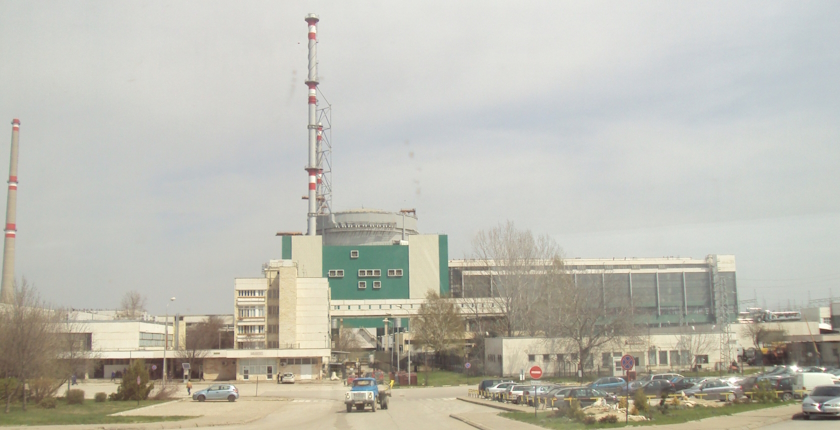
Nuclear power plant Kozloduy in Bulgaria is on the brink of emergency output reduction as the water level of the Danube river, used for cooling the two reactors, is approaching a critically low point. A drop of 20 centimeters below the first threshold would prompt a temporary shutdown, further jeopardizing electricity supply in Southeastern Europe. Conversely, there has been improvement in the situation for the Krško nuclear plant in Slovenia and Paks in Hungary, while Romania’s Cernavodă remains offline.
The relentless heatwave in the Balkans is maintaining the risk of rolling outages or even blackouts. At the same time, Central Europe is benefiting from a drop in temperatures and much-awaited rainfall, which may help. Weakening Danube flows are jeopardizing the Kozloduy nuclear power plant, a major factor for regional stability. It is almost literally an inch away from a forced reduction in output.
The Hungarian government-controlled utility MVM has restarted the second of the two turbines of the sole active reactor in the Paks nuclear power plant. It nearly shut off completely before the Danube finally gained back some of its water level.
The authorities are submerging two barges with 145,000 cubic meters of rock into the Europe’s second-largest river at the site to improve the water flow.
The Danube is cooling the reactors in Paks, as well as in Romania’s Cernavodă, which remains offline, and Kozloduy, further downstream.
Notably, the Krško nuclear power plant in Slovenia, which shares it with neighboring Croatia, has increased capacity utilization to 660 MW or 90%. The activity had to be scaled down to 520 MW because of the weakened flow and high temperature in the Sava river.
Interconnections, solar power, battery storage keeping energy system afloat
Run by state-owned Bulgarian Energy Holding (BEH), Kozloduy is approaching a critical point. A week ago, the Danube was just ten or so centimeters above the level that would prompt a reduction in electricity production. The nuclear power plant consists of two reactors of 1 GW apiece.
If the Danube drops by another 20 centimeters at the location, both units would need to be switched off. It means much more pain for the entire region. Kozloduy makes up two fifths of domestic power output.
Greece and Bulgaria have become the backbone of the region’s electricity systems
Southeastern Europe is overwhelmed by the current energy crisis, with substantial structural deficiencies adding to the uncertainty. Interconnections and solar power have been instrumental in maintaining stability, though power prices soared.
Battery storage, especially Bulgaria’s capabilities, unmatched anywhere in the world, is another crucial element. The country is continuing to break records in its electricity exports for the past month, with as much as 33 GWh per day.
Importantly, Greece has itself reached a daily all-time high on August 14, with net electricity exports of 53.9 GWh, Energypress reported. Bulgaria accounted for a whopping 25 GWh and a large chunk flows further to Central and Eastern Europe, the article adds.
Ministry of Energy: Kozloduy operating in line with schedule
At Oryahovo, near Kozloduy, the Danube has dropped nine centimers in the past six days. According to the latest forecast, it will lose another five centimeters by August 23.
Fortunately, hydropower reservoirs are 78% full, per the last update.
Kozloduy is operating according to schedule, with additional measures taken in response to the unprecedentedly low level of the Danube, the Ministry of Energy said yesterday.
In case of total shutdown, a technically complex and lengthy process is needed for restarting the nuclear plant, Kapital wrote. In addition, it requires a lot of electricity. Normally, the active reactor brings the other one back up after regular overhauls.
The Danube is usually low until mid-October. If the drought continues, the Balkans will have an even tougher winter and year ahead.