


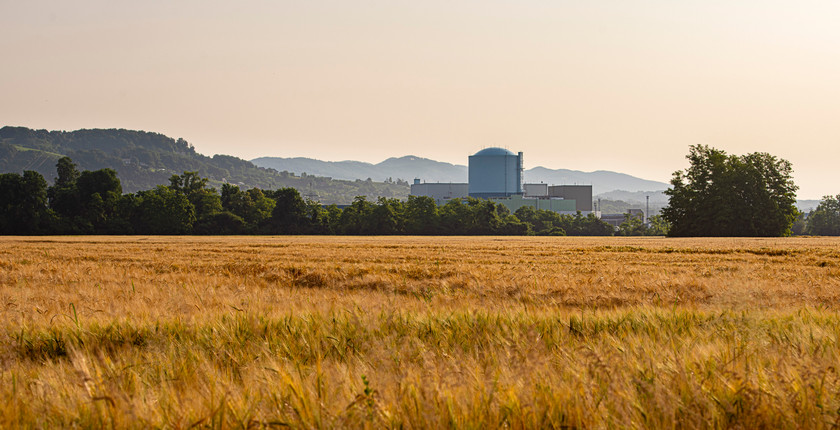
Nuclear power plant Krško in Slovenia is reducing its reactor power to 80% due to persistent extreme hydrological and meteorological conditions in the Sava River, according to a statement by NEK, the plant’s operator. The move marks another blow to the stability of electricity supply in Southeast Europe caused by high temperatures and low water levels in the Danube and Sava rivers.
The announcement from Krško comes as the last remaining reactor of Hungary’s four-unit nuclear power plant Paks is barely working, while Romania is struggling to keep one of the two Cernavodă nuclear plant’s reactors running.
As previously announced, Krško will gradually reduce reactor power overnight into Thursday, August 6. If current hydrological and meteorological conditions persist or worsen, reactor power will be further lowered, according to the statement.
Krško’s reactor power may be further lowered if current conditions persist or worsen
The facility will return to full-power operation once conditions improve, said the operator of the nuclear power plant, shared by Slovenia and Croatia. The Krško nuclear power plant uses water from the Sava for cooling.
The measure is necessary to ensure compliance with the environmental consent provisions, which require that the daily average temperature of the Sava at the point of mixing in the Brežice hydropower plant’s basin must not exceed 28°C and that the average daily temperature increase must not be more than 3°C, according to the statement.
NEK had managed to maintain Krško’s full-power operation throughout the recent hot months
NEK noted that it had managed to maintain Krško’s full-power operation throughout the recent hot months, while mitigating thermal impacts on the Sava by using its cooling tower, along with other systems and components.
The last time the nuclear power plant operated at reduced power due to Sava temperature and flow constraints was in 2003, when it had to run at reduced capacity for over 90 days.