


A very steep fall in solar capture prices defined the four-year period between 2022 and 2026, based on a new analysis published by the European Union Agency for the Cooperation of Energy Regulators (ACER).
The study’s authors noted that the capture price is the average price that a specific power source earns for the electricity it generates over a given period, weighted by the power it produces. It is compared to the baseload price to conclude how much renewables producers gain or lose from their participation in the market.
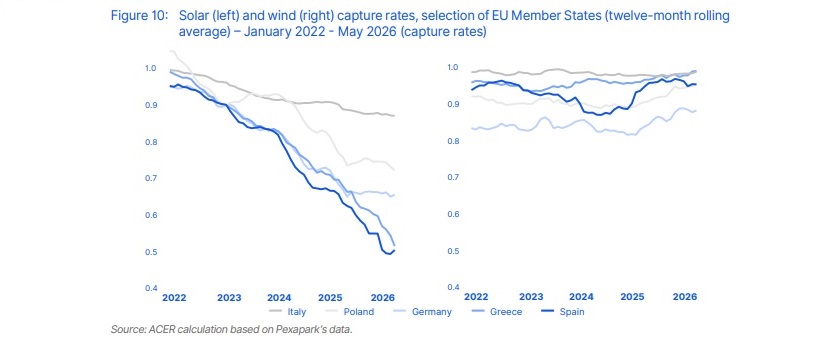
Solar capture rates fell by more than half in countries like Greece and Spain from 2022 until May 2026. That month the capture price in Greece stood at just EUR 24.63 versus an average market price of EUR 88.95, as calculated by the national Administrator of Renewable Energy Sources and Guarantees of Origin (DAPEEP).
Other markets saw milder reductions in the period. In Germany, the drop was 35%, Poland slided 30% and Italy went 12% lower.
The situation is different in wind energy, given its radically different production profile, which is spread out across all 24 hours of each day.
In this case, capture prices remained more or less stable over time. Germany had the lowest rates, starting at about 17% lower than the baseload in 2022, while by this year it advanced to a minus 11%. Italy had the highest, almost 100% correlation to the baseload price throughout the entire period.
Batteries make a huge difference
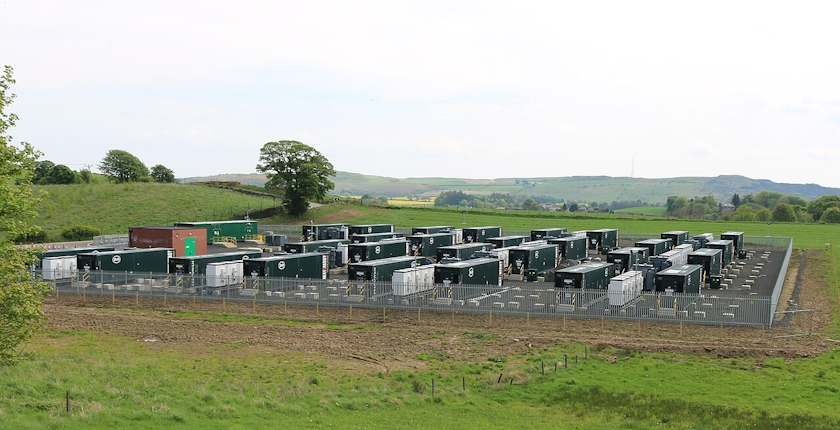
ACER also finds that the addition of a battery storage system to existing solar farms makes a tremendous difference in profitability.
A comparison using Pexapark’s data showed a steep rise in capture rates for solar with storage this year, surpassing baseload prices by more than 50%.
“Arrangements combining renewable energy generation with storage (i.e. hybrid PPAs) can mitigate the cannibalisation effect. These contracts allow renewable generation to be shifted into hours with higher prices and storage to be used to provide more stable generation in hours of low renewable generation, thus increasing the value of generated electricity. Such arrangements can significantly increase capture rates compared to those having less flexibility,” ACER said.