

A coalition of European organizations led by Hydrogen Europe urged the European Commission to support natural hydrogen exploration and roll out clearer rules. The group warned of the risks of falling behind the United States, Australia and other regions. One of the world’s largest reservoirs was discovered in Albania.
Natural hydrogen exploration company Mantle8 said it has brought together a coalition of European energy, industrial, technology, research and investment organizations to call on the European Commission to establish a clear regulatory framework. Led by Hydrogen Europe, the group urged the European Union in an open letter to explicitly recognize natural hydrogen in its energy and hydrogen policies, improve permitting procedures and mobilize investment to establish the resource’s geological and commercial potential.
The call comes as the European Commission is preparing its renewed EU Hydrogen Strategy, with a call for evidence launched on October 26, explicitly referencing natural hydrogen as an emerging source for research and innovation. The letter was presented during a workshop at European Hydrogen Week in Brussels.
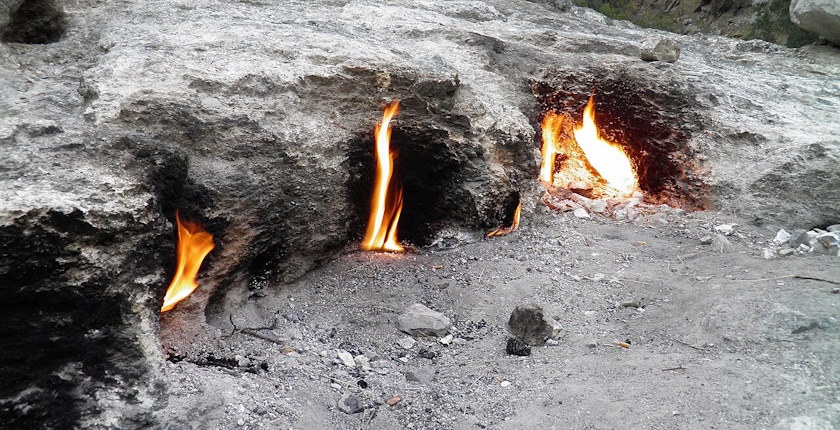
Natural or white hydrogen, which occurs in the Earth’s crust, can become a prime clean and renewable energy source. Its production does not require direct use of fossil fuels or electricity, and only water vapor is released when it burns. However, the industry is still in its infancy.
The world’s pioneer operational site is in Bourakébougou, Mali. Other large deposits and projects under development include locations in France, Spain, Philippines, US, Canada and Australia. Notably, a huge continuous outgassing of 84% concentrated hydrogen was confirmed in a deep chromium mine in 2024 in Bulqiza in northeastern Albania.
Industry needs EUR 1 billion exploration program
More than 30 signatories called for a EUR 1 billion exploration program to support around 50 wells across at least 10 member states. The group warned of the risks of falling behind as the United States, Australia and a number of regions.
A hundred million tons of recoverable natural hydrogen translates to as much as EUR 200 billion in gross resource value
“At an illustrative valuation, 100 million tons of recoverable natural hydrogen would represent approximately EUR 100 to EUR 200 billion in gross resource value. Capturing that opportunity would support a wider European industrial value chain in geoscience, drilling, subsurface monitoring, separation, purification, conditioning and transport, while repurposing capabilities, infrastructure and jobs from Europe’s oil, gas and mining sectors. Where present, strategic co-products such as helium could add further value,” the open letter reads.
The science is moving, but mapping alone won’t create an investable exploration market, the group added.
Signatories include Cleantech for Europe, France Hydrogène, BEV, Natural Hydrogen Ventures, thyssengas, the European Federation of Geologists (EFG) and Greece-based Centre for Research and Technology Hellas (CERTH).
Identifying natural hydrogen reservoirs before drilling
Founded in 2019 and headquartered in Grenoble, France, Mantle8 is developing methods to identify, before drilling, active subsurface hydrogen generation and locate geological settings where hydrogen may accumulate and flow in commercially relevant volumes.
“Clear rules, predictable permitting and investment in exploration would allow us to establish where natural hydrogen can be found, whether it can be recovered commercially and what role it could play in Europe’s energy future,” said the firm’s Founder and Chief Executive Officer Emmanuel Masini.
In June, Mantle8 obtained Spain’s first exploration permits for natural hydrogen and helium, for areas in the Basque Country and Navarra. The company earlier acquired the Hydrogeco permit on the French side of the Pyrenees.