


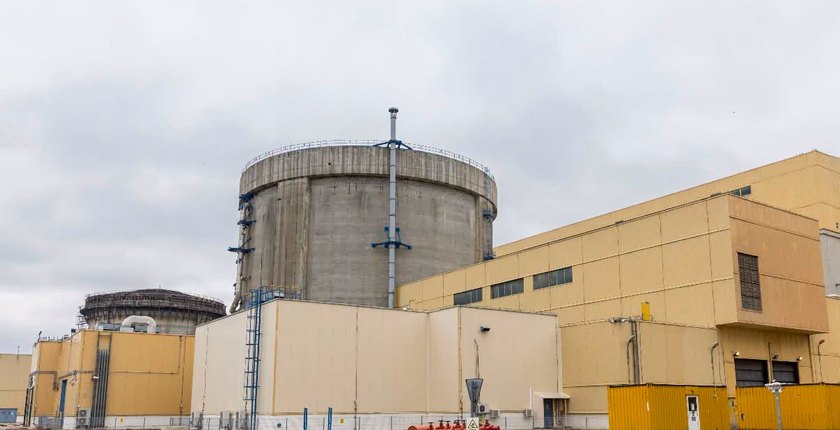
Romania has disconnected the second of the two reactors at the Cernavodă nuclear power plant from the grid after failing to secure sufficient cooling water amid critically low Danube River levels, caused by extreme heat and drought in recent weeks. The power plant, which normally produces about 20% of Romania’s electricity, is now completely shut down, and it remains uncertain when it will resume operations.
The second reactor was gradually shut down between 7 am and 11 am on Thursday, according to Romanian media. The first unit has been offline since July 28.
The Energy Ministry has said the production deficit will be covered by imports and alternative sources. The available resources, according to the ministry’s statement, include wind and hydro, but also coal-fired generation at CE Oltenia.
Romania will have to rely on imports and alternative sources to cover the production deficit
Earlier this week, Romania asked the European Commission to let it postpone the planned closure of unit 5 at the Turceni coal-fired power plant, slated for August 31, according to Romanian media.
State-owned Nuclearelectrica, which operates the Cernavodă nuclear power plant, said a decision to restart production would depend on “the evolution of forecasts regarding the level of the Danube.”
“The decision to shut down unit 2 in a controlled manner was determined by the continued significant decrease in the level of the Danube,” according to Nuclearelectrica’s filing with the Bucharest Stock Exchange.
Ever since Cernavodă’s first unit was disconnected, Romania had struggled to keep the second reactor running as Danube levels fell to record lows. The efforts included dredging, blasting a rock formation on the riverbed, and even sinking four loaded barges to raise the water level.
The government’s emergency plan allows for curbing supply to industry and canceling electricity exports
The government’s emergency plan allows the country’s transmission system operator, Transelectrica, to limit consumption for industrial customers and curb or cancel electricity exports if the situation requires it.