


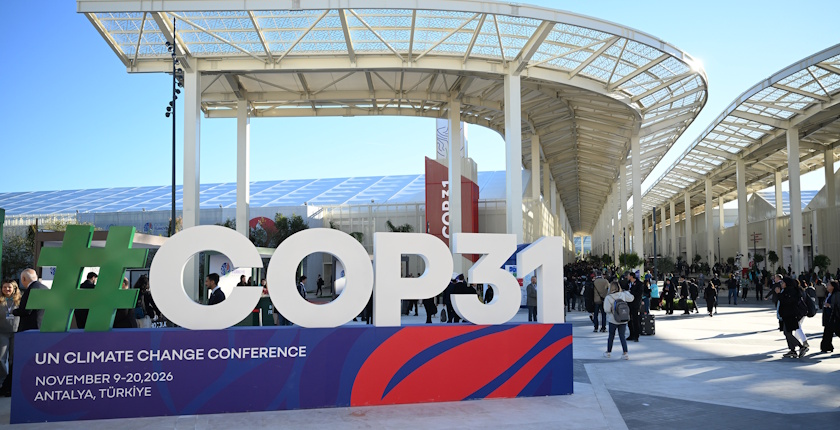
The United Nations Climate Change Conference COP31 opened yesterday in Antalya, Turkey. Over the next two weeks, until November 20, representatives of nearly 190 countries will discuss implementing existing climate commitments, reducing greenhouse gas emissions, the energy transition, and climate finance.
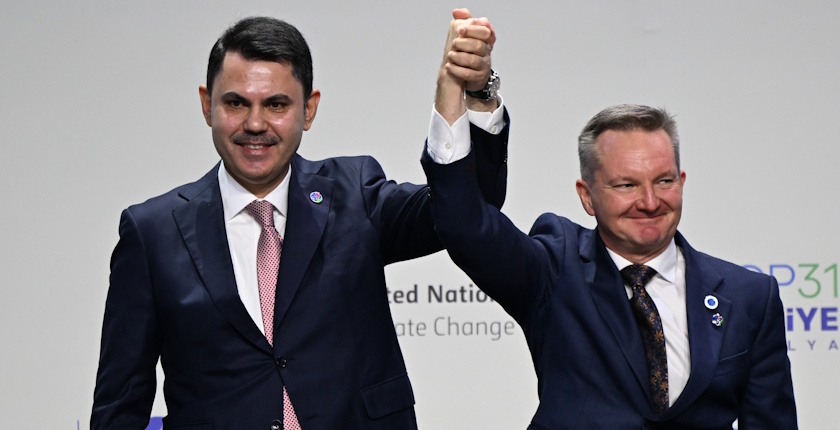
The 31st United Nations Climate Change Conference (COP31) is organized by Turkey and Australia, which have agreed to share the responsibilities. Turkish Minister of Environment, Urbanization and Climate Change, Murat Kurum, is serving as the COP31 president, while Australia’s Minister for Climate Change and Energy, Chris Bowen, is the president of negotiations.
The Conference of the Parties (COP) to the United Nations Framework Convention on Climate Change (UNFCCC) has been held annually since 1995. It is the world’s only multilateral decision-making forum on climate change, bringing together almost every country on Earth. This year, representatives of 190 countries have gathered in Antalya, one of Turkey’s best-known tourist destinations.
However, like last year, the conference is taking place without an official delegation from the United States, the world’s second-largest emitter of greenhouse gases. President Donald Trump’s administration has not sent representatives to the UN climate summit for the second consecutive year, following the country’s withdrawal from the Paris Agreement in early 2026.
In his opening address, COP31 President Murat Kurum called on countries to turn climate promises into concrete action.
Kurum told delegates that climate change can no longer be considered in isolation from the other challenges facing countries and communities, stressing that “each crisis makes the others worse.”
Murat Kurum: Climate impacts are crossing borders
According to Kurum, the impacts of climate change are crossing borders and affecting multiple sectors. Droughts, floods, water scarcity, and extreme heat are affecting food production, supply chains, economies, migration, cities, and human health.
“A drought in one part of the world is felt at the dinner table in another,” Kurum said. He called for COP31 to become an “implementation COP,” focused on closing the gap between commitments made at the negotiating table and tangible improvements in people’s daily lives.
Kurum reaffirmed the Paris Agreement’s goal of limiting global temperature rise to 1.5 degrees Celsius above pre-industrial levels.
COP31 opens amid new climate records
Meanwhile, new climate data highlight the challenges of achieving the Paris Agreement’s goal.
The World Meteorological Organization (WMO) released its State of the Climate Update 2026 on the opening day of the conference, showing that the past 12 years have been the warmest on record, with the past four years ranking as the four hottest.
Just days earlier, the Copernicus Climate Change Service (C3S) reported that October 2026 was the warmest October ever recorded, with the global average temperature reaching 1.75 degrees Celsius above pre-industrial levels.
According to C3S estimates, 2026 is virtually certain to become the second calendar year in which the global average temperature exceeds 1.5 degrees Celsius above pre-industrial levels. The first one was 2024.
António Guterres: We have entered a new era of climate extremes
According to WMO data, the global average temperature from January to September 2026 was approximately 1.47 degrees Celsius above the pre-industrial average. Global sea levels reached record highs, while 2026 is on track to become the tenth consecutive year of record ocean heat.
“We have entered a new era of climate extremes,” UN Secretary-General António Guterres warned following the release of the WMO report, emphasizing that climate records continue to be broken while the human cost keeps rising, particularly for the most vulnerable communities.
Electrification and finance as drivers of climate action
In his opening address, Kurum emphasized the role of electrification in the energy transition, highlighting Turkey’s 35-by-35 Global Electrification Pledge. It is an initiative to increase electricity’s share of global final energy consumption to 35% by 2035.
According to Kurum, renewable energy, stronger power grids, energy storage, energy efficiency, clean transport, and green industry will reinforce one another and contribute to this transformation.
Disagreements over climate finance emerged on the first day of COP31
Climate finance will be one of the key issues in this year’s negotiations. Disagreements emerged already on the opening day. Developing countries are calling for more funding to adapt to climate change, while participants have failed to reach a consensus on including the tripling of adaptation finance as a separate agenda item.
Kurum recalled the climate finance goal agreed in Baku, which calls for at least USD 300 billion annually for developing countries by 2035, as well as the call to scale up climate finance from all sources to at least USD 1.3 trillion per year.
“Now our promises must be backed by capital. That capital must fund investment. And that investment must deliver results,” he said.
Bowen: COP31 must help unlock finance and investment
COP31 President of Negotiations Chris Bowen said the conference was an opportunity to demonstrate what international cooperation could achieve for both the climate and global energy security.
According to Bowen, COP31 must help unlock finance and investment, accelerate electrification, and strengthen action to protect the oceans, with a focus on tangible outcomes in infrastructure, jobs, energy security, and more resilient communities.
Simon Stiell: Renewable energy delivered around USD 500 billion in global savings last year
UNFCCC Executive Secretary Simon Stiell highlighted the economic benefits of the energy transition, noting that 90% of large-scale renewable energy projects are now cheaper than fossil fuel alternatives.
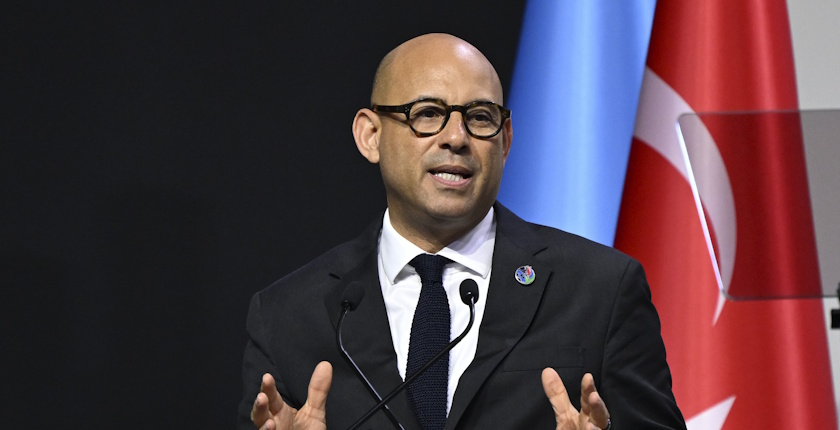
According to Stiell, renewable energy delivered around USD 500 billion in global savings last year, followed by an additional USD 265 billion in the first half of 2026.
“No COP is a silver bullet, and no single conference can bridge the gap between climate science and reality,” Stiell said, stressing the need to build on the progress achieved at previous climate summits.