


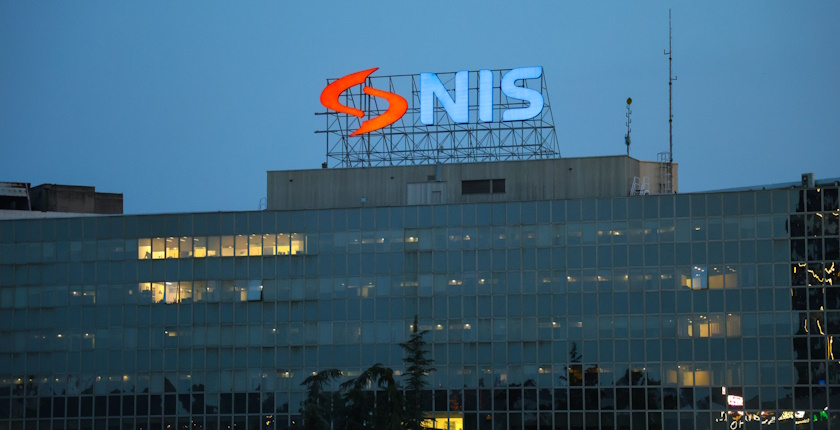
MOL Group, headquartered in Hungary, is allowed to execute preparatory transactions for acquiring Gazprom-owned Serbian oil refiner and distributor NIS, which is under sanctions imposed by the United States. The Department of the Treasury in Washington DC issued the “additional license,” after renewing its approval to continue negotiations by December 11 on the potential purchase of the majority stake held by the Russian energy giant. Hungary’s Deputy Prime Minister and Minister of Foreign Affairs Anita Orbán said there is a strong intention on all sides to finalize the transaction before the deadline.
Nearly two years after the Office of Foreign Assets Control (OFAC) of the US Treasury Department introduced sanctions against NIS, which operates Serbia’s only oil refinery and the largest service station chain, an official update indicated progress in Hungarian MOL Group’s initiative to buy the rival.
Notably, ruling parties in both neighboring countries were heavily defeated in general elections last month and in April, respectively. It has prompted speculation that the deal was off, but OFAC has issued “an additional license” for “preparatory transactions,” MOL Group said today.
Russian state-owned Gazprom holds 56.2% of NIS
Less than a week ago, the US extended the approval for the talks and for the Serbian company to continue operating, both until December 11.
NIS, also known as Naftna industrija Srbije, is under sanctions because of Russian ownership. The company requires approval from OFAC to operate regularly. The license has been repeatedly extended, except for three months before the end of last year.
Russian state-owned Gazprom holds 56.2% of NIS through two firms: Gazprom Neft has 44.9%, and Intelligence controls 11.3%. The Government of Serbia has 29.9%, and minority shareholders account for the rest.
Hungary indirectly holds a majority stake in MOL. Of note, OTP banka Srbija, the subsidiary of Hungarian OTP Bank in Serbia, has 1.7% of NIS. The government in Budapest controls just a marginal stake in the lender.
MOL would require separate authorization from OFAC to complete NIS acquisition
The new licence authorizes certain transactions necessary for the transfer of Russian-issued securities to MOL Serbia Investment, and related activities, including the obtaining of certain required Russian governmental approvals, MOL Group revealed. The document is valid until February 28.
The completion of the transaction would require separate authorization from OFAC, the Hungarian company pointed out.
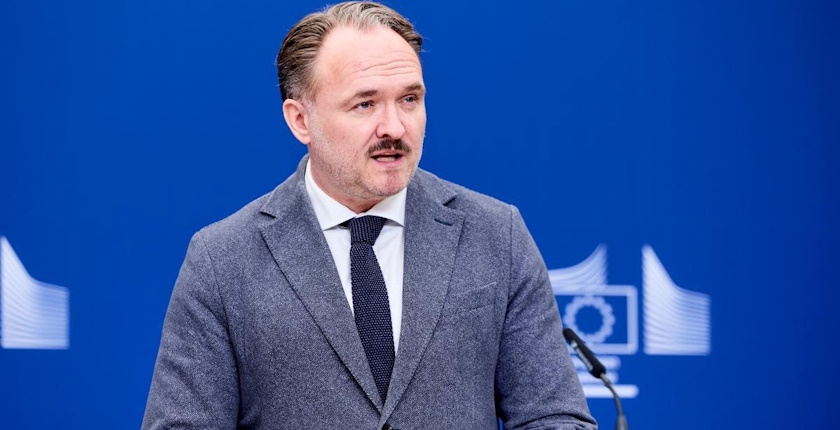
Anita Orbán: NIS purchase could help Hungary in talks on oil supply via JANAF
Earlier, Hungarian Deputy Prime Minister and Minister of Foreign Affairs Anita Orbán expressed hope, with regard to the elections in Serbia, that her country would be able to serve as a strategic partner in the region even for a country as large as the United States.
“You will surely understand that I cannot comment on ongoing business negotiations, but according to the information I have, there is a strong intention on all sides – Serbian, Russian, and Hungarian – to finalize this transaction by December 11. As a recent development, I’d like to mention the Serbian elections: Péter Magyar was the first head of government to congratulate the new Serbian government, so we hope that we can take Serbian-Hungarian relations to the next level,” she told Telex in an interview.
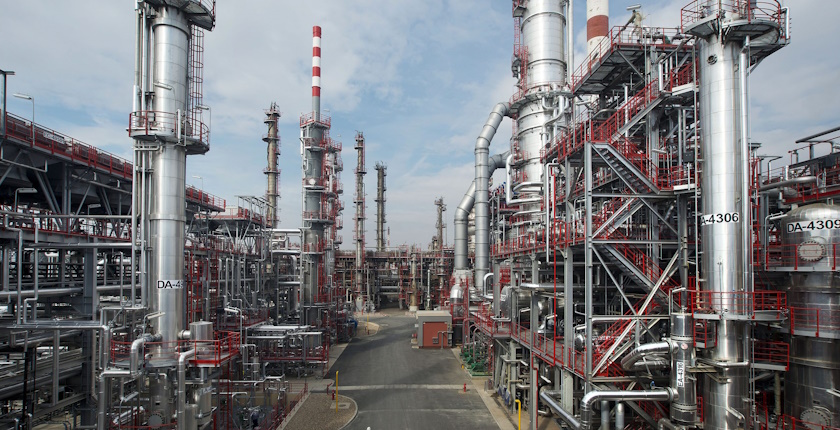
The refinery in Pančevo in Serbia gets its oil from the JANAF pipeline
The acquisition could help Hungary’s negotiations on the supply through Croatian oil pipeline JANAF, as it is the source for the Pančevo refinery in Serbia, Orbán explained.
In terms of natural gas, crude oil and energy security as a hole, Hungary can play a stabilizing role as a major transit country and distribution hub, in her view. “We have the most storage capacity, we are connected to six countries, and we are able to supply other countries as well; as far as the oil sector is concerned, MOL holds a decisive role in the region,” she stated.
The Student List, which won 53% of votes in the parliamentary elections in October, planned to send delegations to the US and Russia after it establishes the new Government of Serbia. The aim was to discuss the sanctions as well as an extension of the Russian natural gas supply contract, respectively.