


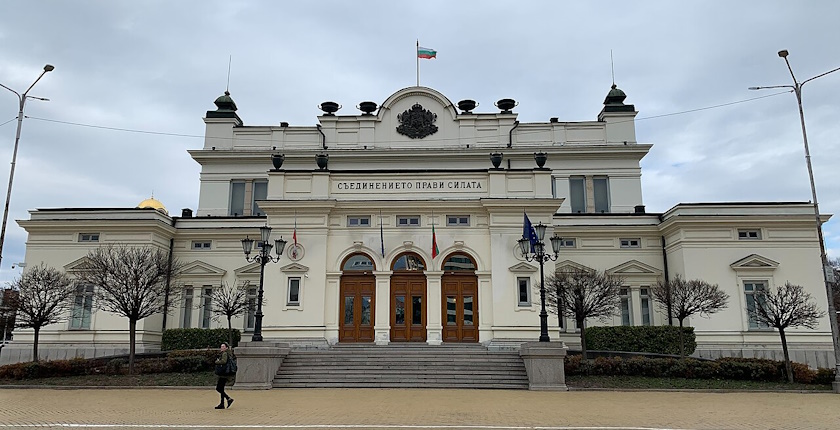
The National Assembly of Bulgaria adopted the changes to the Energy from Renewable Sources Act. The aim is to encourage the use of renewables while preserving environmental requirements and procedures, according to the relevant ministry. The law includes the obligation to cut emissions by at least 55% by 2030.
Bulgaria has aligned its legislation with the European Union’s Renewable Energy Directive RED3. The changes to the Energy from Renewable Sources Act are creating the conditions for achieving climate neutrality by 2050, together with the interim target, for 2030, of reducing net greenhouse gas emissions by at least 55% from the 1990 levels, the Ministry of Energy said.
Notably, the deadline for the transposition of RED3 was May 2025. The EU introduced the directive in 2023.
No easing of environmental, biodiversity restrictions
The amendments encourage the use of energy from renewable sources, while fully preserving the environmental and biodiversity requirements and procedures from the relevant legislation, the accompanying document adds.
The deadline for the transposition of RED3 was May 2025
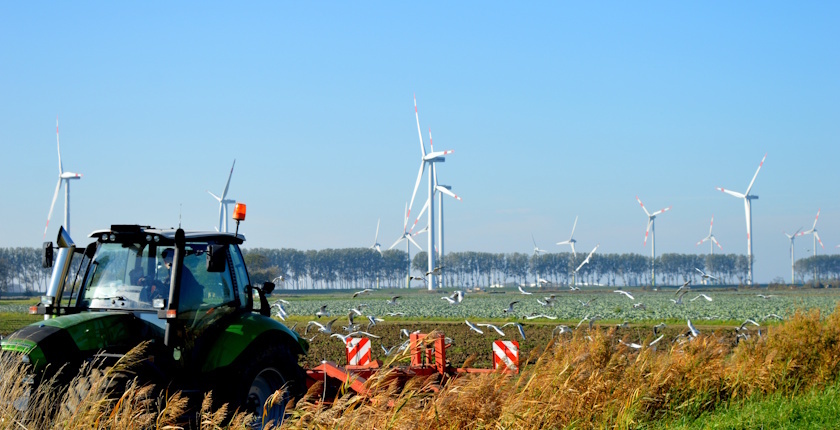
One of the most important novelties concerns the determination of priority zones for wind power. They are known as renewables acceleration areas (RAAs) or renewables go-to areas. Protected areas, established bird migration routes, forest and permanent grassland areas are excluded.
Local communities are encouraged to participate in energy projects in RAAs. The law maintains the restrictions related to changing the purpose of agricultural land for non-agricultural needs and their categorization.
New framework for renewable energy projects with other EU member states
The amendments facilitate cooperation between EU member states through joint renewable energy projects. The official opinions on the connection of wind power facilities to the grid will be valid for longer.
Among the objectives of the new legislation is to stimulate the development of decentralized systems for electricity production and storage.
Specific measures include technical rules and norms for the design and construction of buildings, as well as support for businesses. The legislation promotes the production of thermal energy from renewable sources. It also regulates the issuance and exchange of renewable electricity credits in transportation, to stimulate the use of clean energy in the sector.