


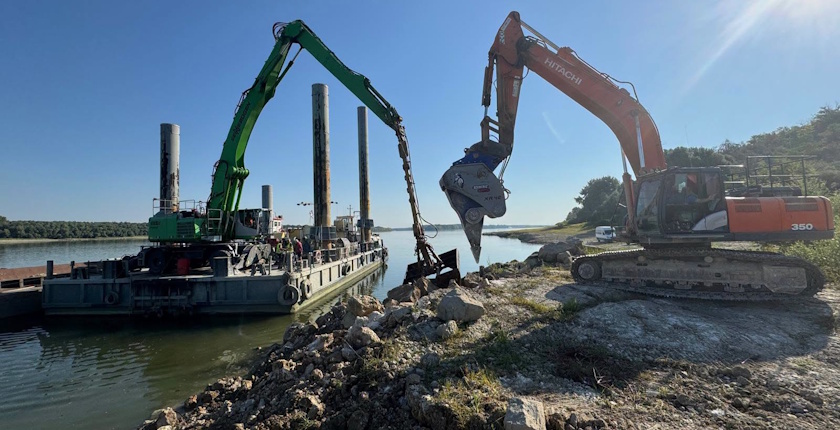
Romania is sinking four loaded barges into the Danube in yet another attempt to increase the water flow to the Cernavodă nuclear power plant and ensure reactor cooling, amid a region-wide electricity supply crisis caused by the ongoing heatwave and declining river levels. The measure is expected to keep Cernavodă’s second reactor running for another two to three days.
The sinking of the barges is the third measure taken by the Romanian authorities, after dredging and the blasting of a rock formation at the bottom of the Danube, Cernavodă’s director, Romeo Urjan, told Digi24.
According to Urjan, if the vessels are not sunk, the second reactor will have to be shut down in the next five to six days. Each reactor at the Cernavodă plant normally accounts for around 10% of Romania’s electricity generation.
The heatwave has been causing problems with electricity generation in other Southeast European countries as well. In Hungary, the Paks nuclear power plant is barely operating, while in Serbia, low Danube levels are hindering production from both coal-fired and hydropower plants.
The heatwave has been causing problems with electricity generation across the region
In addition, Slovenian nuclear power plant Krško, which also supplies electricity to Croatia, has reduced its reactor power to 80%, citing extreme hydrological and meteorological conditions in the Sava River, a Danube tributary. The plant, which uses water from the Sava for cooling, could further reduce output if the unfavorable conditions persist.
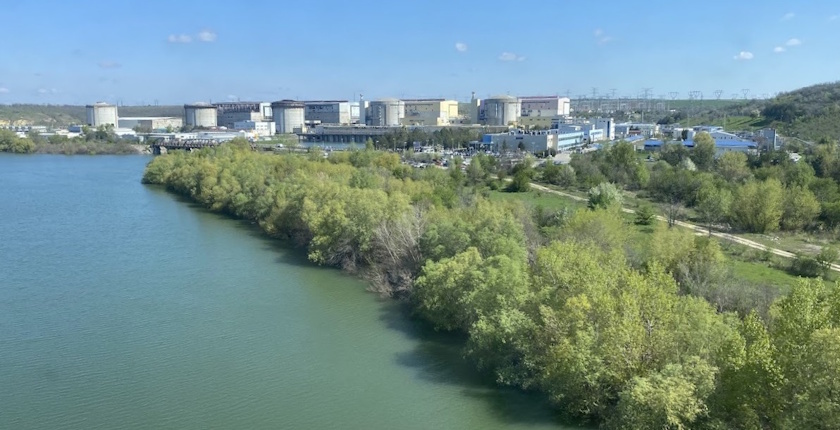
Romania’s operation to sink four barges aims to create an obstacle at the bottom of the river that would divert more water towards Cernavodă to cool its reactors, according to Digi 24. It is expected to raise the Danube’s water level by 10 to 12 centimeters.
The sinking of the vessels is expected to raise the water level by 10-12 cm
Ana Maria Agiu, spokesperson for Romanian Waters, the national water resources administration, stressed that “every extra centimeter gained is beneficial for the operation of the plant.”
According to Agiu, the Danube has reached a new historic minimum flow of 1,400 cubic meters per second, nearly three times lower than the multi-year average for August, of 3,900 cubic meters per second.