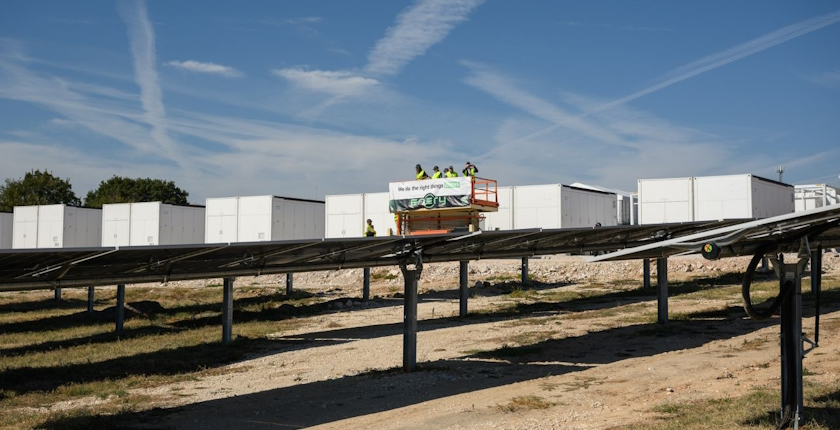



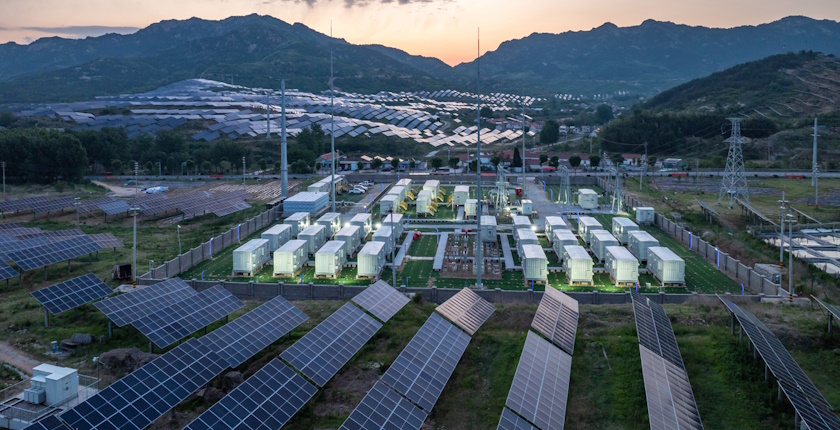
Operating power of battery energy storage systems in Bulgaria climbed to more than 16% of the electricity system. The share of the technology is much higher than anywhere else in the world in multiple categories.
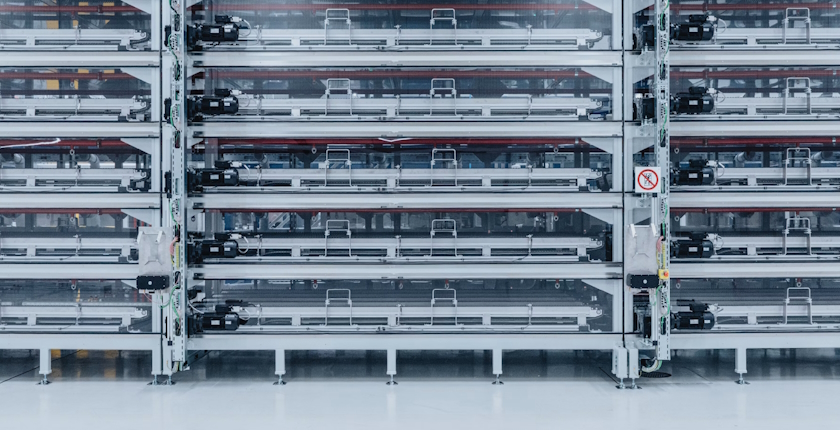
The energy storage rush has facilitated a rally in investments in battery systems, together with increasing affordability, accessibility and modularity. Permits aside, contractors install such devices and facilities quickly, especially in comparison with pumped storage hydropower plants. The share of battery energy storage systems (BESS) in Bulgaria jumped to the number one spot globally in several charts, Kapital reported.
In the past two years, EUR 2 billion poured into the emerging segment, according to the article, which the Bulgarian Industrial Association republished. Most of it is private capital, but the grants awarded under the European Union’s Recovery and Resilience Facility (RRF) were the ones that set it off. The Bulgarian part of the mechanism, like in the rest of the 27-member bloc, is called National Recovery and Resilience Plan (NRRP or PVU).
As a result, the country now has a renewable electricity balancing role for its neighbors with high photovoltaic output, altering the narrative for the entire power sector. Furthermore, it is counting on massive projects for pumped storage hydropower as a long-term storage solution.
Only California comes close to Bulgaria in ratio of BESS capability versus power system
Data from the European Network of Transmission System Operators for Electricity (ENTSO-E) shows that Bulgaria is hosting 3.32 GW in storage capability, with over 8.6 GWh in capacity terms. It translates to more than two and a half hours of charging or discharging at full power.
In a more up-to-date reading, the country’s Electricity System Operator (ESO) already had 3.43 GW on May 20. Almost everything is in dispatchable facilities within its transmission system. It excludes household systems and other small facilities. The level is the highest in Europe in absolute terms, as Germany is still under 3 GW, the report reads.
Battery systems in Bulgaria cover more than 46% of the combined PV and wind power capacity
However, Bulgaria ranks best by far in the world in the share of the power system, at 16%, and the total BESS size versus its economy and the population! The country hosts 26.1 MW per USD 1 billion of gross domestic product and 534 MW per one million people. It also has an equivalent of more than 46% of the combined PV and wind capacity.
At 136 GW, China covers 3.5% of total power generation capacity and just 6.9 MW per USD 1 billion of GDP. In March, grid BESS in the United States amounted to 46.7 GW of capability at 1.38 TW of electricity production capacity – 3.4% – and 1.5 MW per USD 1 billion.
The US state of California has 15.1 GW in utility-scale batteries, almost one third of the country’s fleet, which is 14% of power system capacity.
Early market entrants get greater reward but at higher risk
Bulgaria has signed contracts for more than 13 GWh in storage capacity. The news outlet recalled that the RESTORE program’s budget and target were halved in 2023. At BGN 781 million (EUR 399 million) and 3 GWh, respectively, it mobilized two times more in private investments.
Investors detected the price signal, with a view of the country’s solar boom and the related power price spreads and drop in equipment prices. Early comers would benefit faster from energy arbitrage and system services than in countries such as Italy, though the risk is higher.
Total BESS power in Bulgaria is on a trajectory toward 5 GW by the end of the year.