


More than 90% of utility-scale renewables projects commissioned in 2025 delivered power below the cost of the cheapest new fossil fuel plants built in their markets, according to IRENA’s latest report Renewable Power Generation Costs in 2025. It also highlighted the falling costs of hybrid systems.
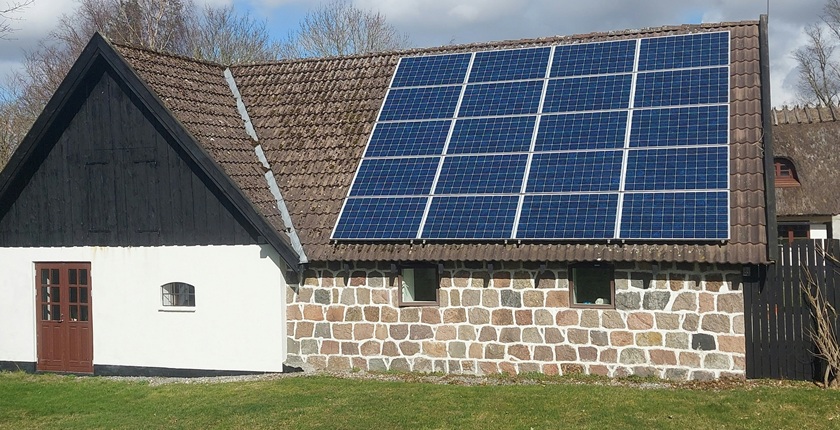
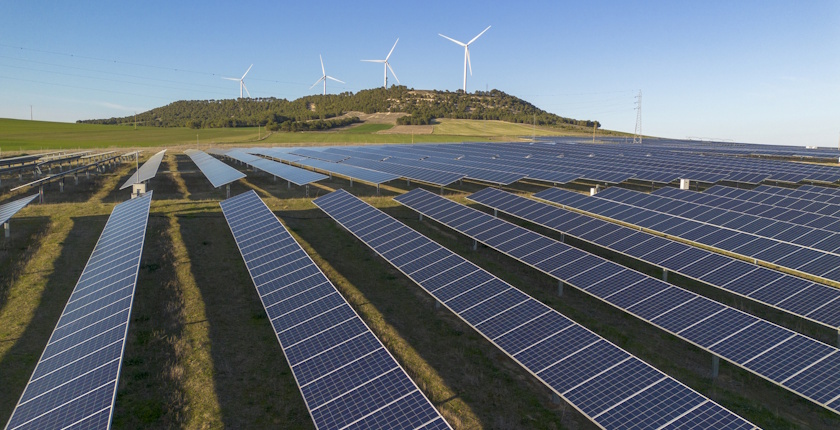
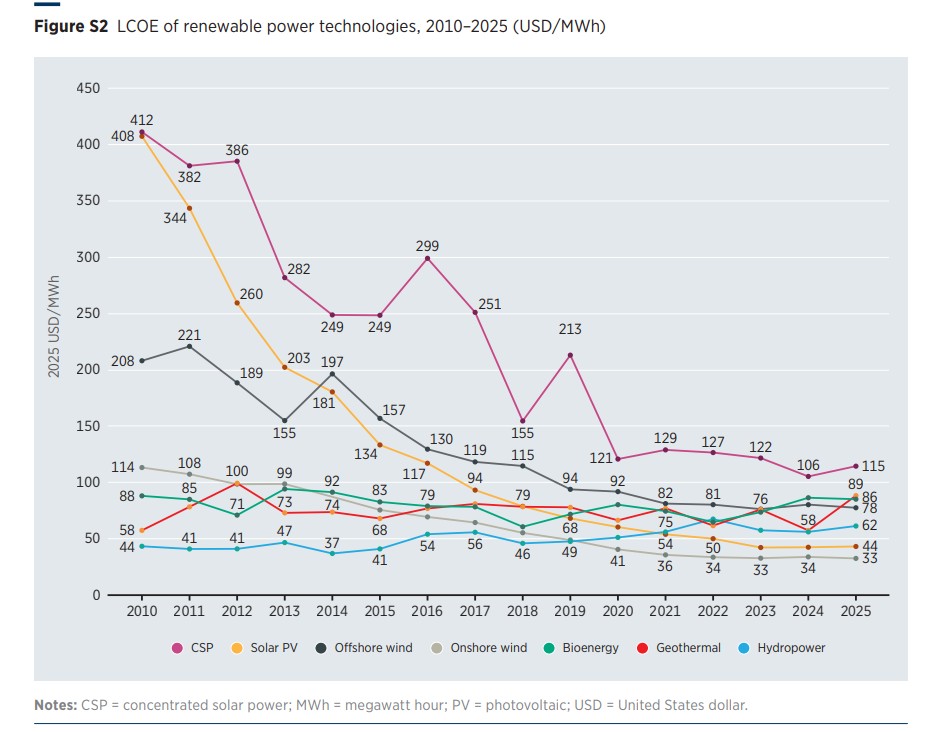
After more than a decade of steep declines, renewable power costs are stabilising. In 2025, solar PV remained at its 2024 level of USD 44/MWh, while wind continued to improve, with onshore wind falling to USD 33/MWh and offshore wind to USD 78/MWh.
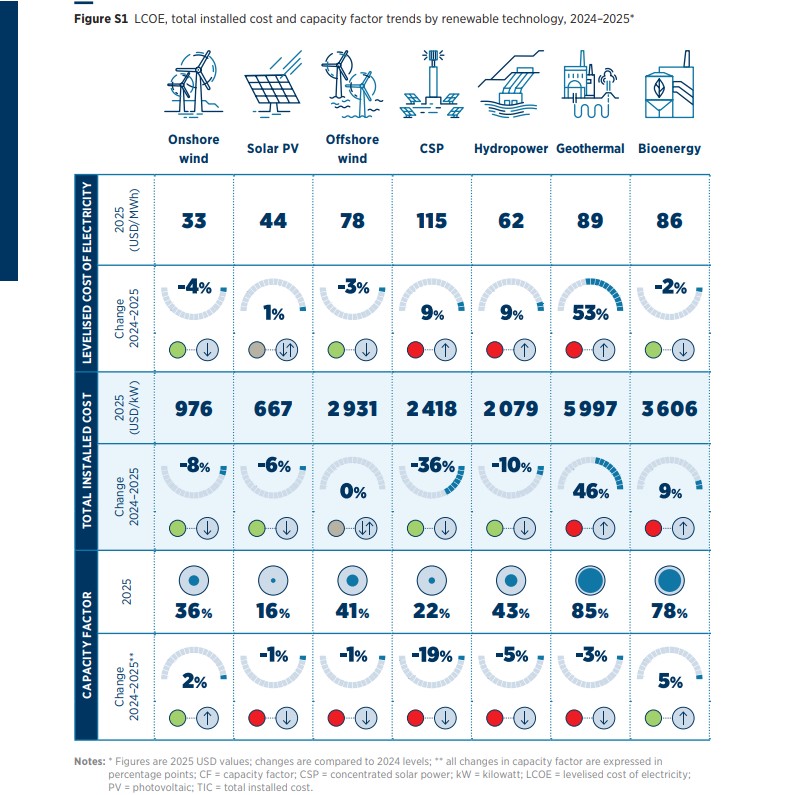
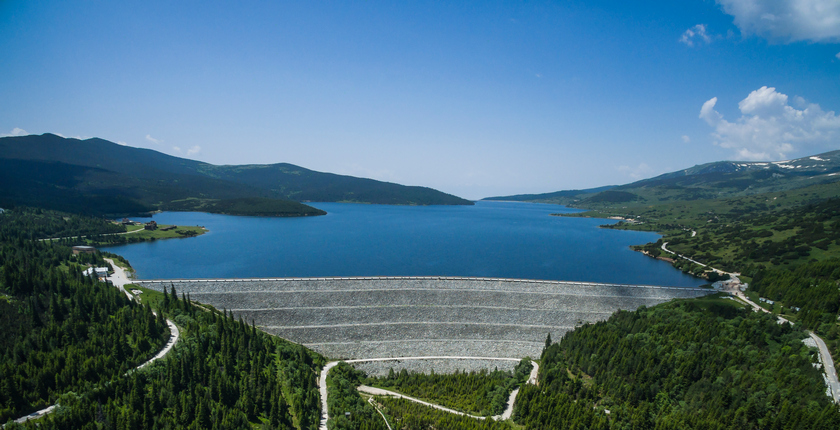
In contrast, most dispatchable renewable technologies recorded higher costs, with hydropower, geothermal and concentrated solar power rising to USD 62/MWh, USD 89/MWh and USD 115/MWh, respectively. Bioenergy was an exception, declining to USD 86/MWh.
However, increases in the costs of most dispatchable renewables were driven by lower output, and not changes in technology costs, the report reads.
The cost of new fossil fuel-fired generation continued to rise
The authors stressed that the cost of new fossil fuel-fired generation continued to rise. Between 2024 and 2025, new natural gas-fired generation increased in cost.
A gas turbine shortage, driven in part by surging data centre demand, roughly doubled the capital expenditure associated with a new, combined cycle plant to about USD 2,400 per kW in the United States, according to the report.
This also pushed the levelised cost of electricity (LCOE) from gas-fired generation towards USD 100/MWh in higher gas cost markets, such as Italy, Germany and Japan. In markets where gas is cheaper, the measure remained in the USD 50 per MWh to USD 60 per MWh range.
Hybrid systems on the run
IRENA’s new cost comparisons for high-reliability hybrid systems show that the firm LCOE of solar-plus-battery systems with a 95% reliability fell from more than USD 100/MWh in 2020 to below USD 85/MWh in 2025 at high-quality sites.
The report projected further reductions, by around 30% by 2030 and 40% by 2035.
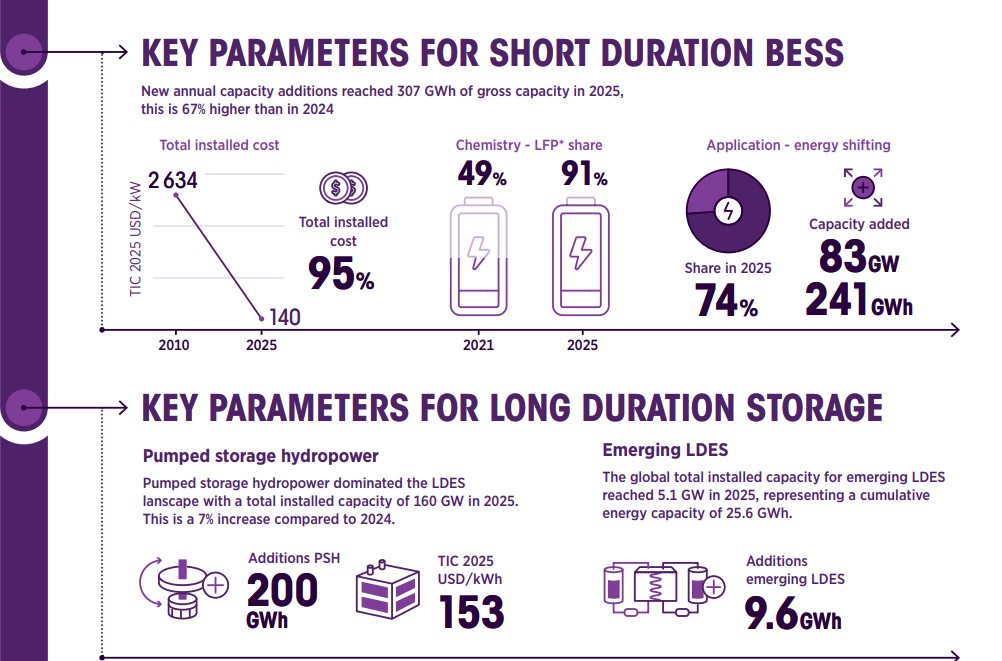
The installed cost of four-hour utility-scale batteries fell by close to 30% in 2025, to around USD 140 per kWh – around 95% lower than its 2010 level.
LCOE of such systems at high-quality sites fell below USD 85/MWh
These cost reductions are transforming the economics of hybrid renewable systems, strengthening their role in meeting demand reliably, the report reads.
In 2025, around one quarter of all newly commissioned utility-scale solar capacity was paired with battery energy storage system (BESS), with the firm LCOE of such systems at high-quality sites falling below USD 85/MWh.
IRENA predicts that costs of hybrid systems should keep decreasing over the next five years, but more slowly and unevenly.
The costs of mature technologies, such as solar PV and onshore wind, are plateauing, while batteries and long-duration storage are expected to see further cost reductions as deployment increases, according to the report.