


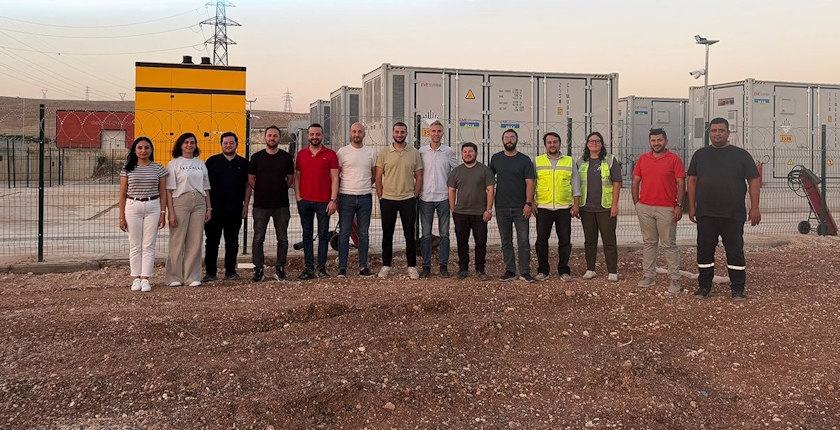
While accelerating the expansion of its hybrid power plant portfolio, Turkish company Aksa Energy also installed the country’s first standalone battery energy storage system (BESS). It entered the ancillary services market, contributing to grid stability.
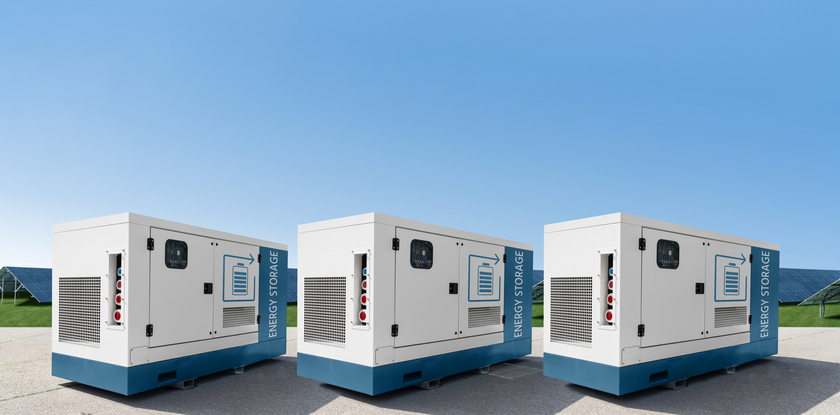
Renewable electricity producers in Turkey are stepping up the pace of development of hybrid power plant projects that include energy storage, alongside adding batteries to existing solar and wind power plants. Aksa Energy (Enerji) made a breakthrough last month by commissioning the country’s first standalone BESS.
Furthermore, the facility in Şanlıurfa in the southeast has just entered the ancillary services market. After a successful test of primary frequency control (PFC) or frequency containment reserve (FCR), it is now contributing to grid stability.
First BESS provider of ancillary services was built by joint venture with EVE Energy
The RASA project with the company’s affiliate Aksa BESS brought online a facility with 50 MW of operating power and a storage capacity of 61.9 MWh. The firm is a joint venture between Aksa Power Generation (Aksa Jeneratör) and Chinese lithium battery manufacturer EVE Energy.
Aksa Energy is part of the Borsa Istanbul’s BIST 50 benchmark stock index since the beginning of this month
Aksa Energy, founded in 1997, is the largest publicly listed independent power producer in Turkey. A week ago it was included in the Borsa Istanbul’s BIST 50 stock index, while remaining in BIST 100, a broader benchmark. Both Aksa brands are part of Kazancı Holding.
EVE Energy is targeting a so-called 1P rate, or 1C. It implies that the battery fully charges or discharges in one hour. But for instance, a 2C rate translates to half an hour, while 2P means that the cycle lasts two hours.
Aksa Energy launches production at solar-BESS facility Gaziantep Pamuk
Earlier, Aksa Energy put its Gaziantep Pamuk hybrid power plant into operation. It is a solar power plant of 58 MW in peak capacity and a 40.5 MW grid connection, together with a 1P battery energy storage system of 48.2 MWh.
The location is in Şehitkamil, in Gaziantep province in south-central Turkey. Inavitas provided the energy management system (EMS).
Aksa BESS is contractor for 221 MW battery system within planned wind power plant
In addition, ERN Holding’s subsidiary Energen Enerji hired Aksa BESS as the engineering, procurement and construction (EPC) contractor for Karaman DRES. The acronym is for a licensed wind and storage system, of 10 MWh or more, as opposed to self-consumption facilities. The DGES category is for licensed solar and storage systems, as opposed to self-consumption facilities.
The project is for a 232 MW wind power plant integrated with a 221 MW battery system with a matching storage capacity – 1P.
The Development Investment Bank of Türkiye (Türkiye Kalkınma ve Yatırım Bankası) leads a consortium including Halkbank and Ziraat Bankası which recently approved a EUR 250 million financing package. China-based Envision Energy is providing the wind turbines.
Environmental approval for wind power segment of Eskişehir hybrid project
In other recent updates, Aksa Yenilenebilir Enerji received an environmental approval a month ago from the Ministry of Environment, Urbanization and Climate Change for its Eskişehir project.
The enterprise controlled by Aksa Energy is planning 18 turbines of 144 MW in nominal capacity, an effective 141 MW, in the eponymous province in the northwest. The site is in the districts of Tepebaşı and Mihalgazi.
Aksa’s wind park would include a 141 MW / 141 MWh battery energy storage system.