


A total of 40 non-governmental organizations in Romania and Bulgaria have asked their environment ministers to launch transboundary consultations on plans for the Čukaru Peki and Malka Golaja mining and metallurgical complex near Bor and Zaječar in the eastern part of neighboring Serbia, the Timočka buna initiative said. It added that the groups warned that the planned expansion could affect both countries via the rivers Timok and Danube.
On June 18, the Government of Serbia adopted a decision to develop the Special Purpose Spatial Plan for the Čukaru Peki and Malka Golaja Mining and Metallurgical Complex. The indicative planning area covers around 126 square kilometers within the administrative territories of the cities of Bor and Zaječar.
The production of the plan is funded by Serbia Zijin Mining d.o.o., part of China-based Zijin Mining Group.
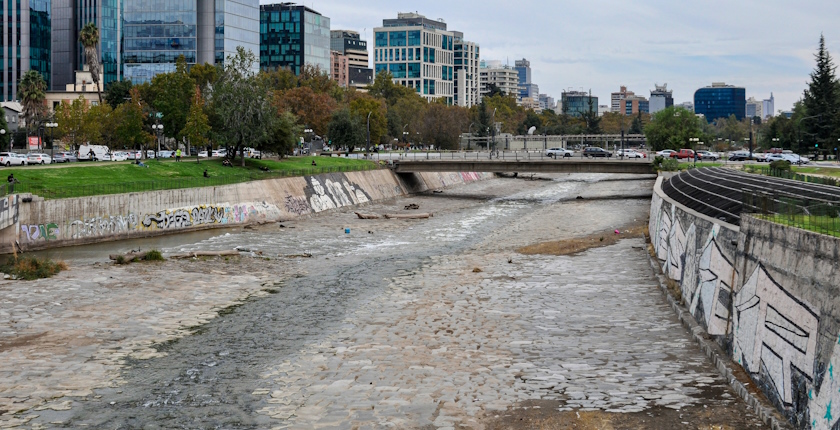
The planned complex is located in the Timok river basin in eastern Serbia, close to the country’s borders with Bulgaria and Romania. The Timok flows into the Danube at the tripoint border. Its mouth is only a few kilometers from the Romanian commune of Gruia, while the Bulgarian municipalities of Bregovo, Vidin and Lom are also nearby.
On August 17, 28 Romanian non-governmental organizations sent a letter to Minister of Environment, Waters and Forests Diana-Anda Buzoianu. Timočka buna, a Serbian initiative that worked with Romanian partner organizations on writing the letter, said that 12 Bulgarian organizations followed a day later, addressing Minister of Environment and Water Rositsa Karamfilova Blagova.
The organizations want their countries to ask Serbia to include them in transboundary consultations as potentially affected parties
The organizations are asking their governments to formally request, through diplomatic channels, that Serbia include their countries in transboundary consultations as potentially affected parties. They cited the Convention on Environmental Impact Assessment in a Transboundary Context – Espoo Convention, and its Protocol on Strategic Environmental Assessment, also known as the Kyiv Protocol. Serbia, Romania and Bulgaria are parties to both agreements.
This would enable public authorities, local authorities and citizens in Romania and Bulgaria to receive the draft plan and strategic environmental assessment report in Romanian and Bulgarian languages, respectively, and participate in public consultations.
The organizations are also seeking independent assessments of transboundary and cumulative impacts. They want the assessments to include the expansion of the Južni revir open pit in Majdanpek and the diversion of the Mali Pek river. The Bulgarian organizations additionally requested that Serbia provide a written explanation if it decides not to include their country in the process.
Mine expansion planned to cover more than 1,000 hectares
According to the planning document presented during the preliminary public consultation phase, the project includes the expansion of the Čukaru Peki underground mine and a new combined open pit and underground copper and gold mine, Malka Golaja, covering more than 1,000 hectares.
The proposed concept also includes a flotation tailings storage facility covering around 1,900 hectares in the Kriveljska river valley and a new metallurgical complex outside the urban part of Bor. The complex would comprise a smelter with an annual capacity of up to 400,000 tonnes and a sulfuric acid plant.
The planned use of water is of particular concern to the Romanian organizations. The documentation envisages the abstraction of more than 800 liters of water per second from Black Timok (Crni Timok or Crna reka in Serbian language), equivalent to approximately half of the river’s summer flow.
The petitioners warn of risks to water resources
The organizations also point to risks associated with the tailings storage facility’s location. Both the Black Timok and Kriveljska river feed into the Timok, which then flows into the Danube. The planning document identifies potential transboundary water pollution in the downstream Danube countries, namely Romania and Bulgaria, as one possible impact.
The letter from the Romanian organizations also highlights risks to groundwater. It states that the mining method used at Čukaru Peki carries a risk of land subsidence. The planned Malka Golaja mine is about seven kilometers from Nikoličevo, known for its thermal mineral waters, and from the city of Zaječar, which is supplied with water from around 40 public springs and wells. The organizations are therefore asking for an assessment of the potential effects on local aquifers.
The plan envisages the possible resettlement of part of the local population. In their letter to the Romanian minister, the organizations particularly highlighted the potential impact on the Vlach ethnic minority, which accounts for around 60% of the population of the village of Krivelj.
The letter also states that more than 280 protected plant and animal species and 16 types of habitats of international importance have been identified within the planning area. The area includes archaeological sites around the villages of Nikoličevo and Slatina. Gamzigrad-Romuliana, which the United Nations Educational, Scientific and Cultural Organization (UNESCO) declared a World Heritage Site , is located about six kilometers from the planned Malka Golaja mine.
Around 2,000 people signed a petition against the project within three hours
Opposition has also emerged in Serbia. According to Timočka buna, during the preliminary public consultation, which ended on August 3, around 2,000 residents of Zaječar signed a petition against the project in approximately three hours. Around 300 written objections were also submitted.
The requests by the Romanian and Bulgarian organizations followed a criminal complaint against Zijin over suspected illegal logging at Malka Golaja. Serbia’s national forestry inspectorate subsequently ordered the work to be halted.
Timočka buna also noted that in 2020, the City of Bor filed a criminal complaint against the management of the existing smelter on its territory, over high concentrations of sulfur dioxide. In addition, Zijin was fined RSD 2 million (EUR 17,000) in 2024 for the illegal construction of a mining facility in Bor.