


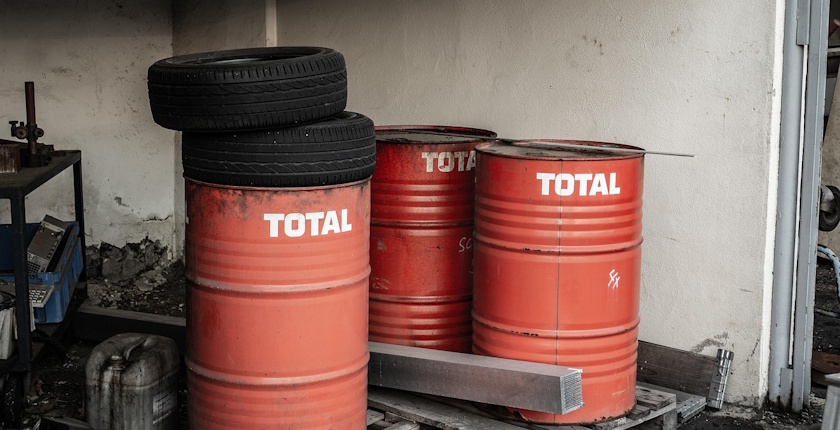
Waste motor oil is classified as hazardous waste as it can contaminate soil, water, and air. Although Serbian regulations for its management are clear, tens of thousands of tons are unaccounted for every year. Auto repair shops, obliged to dispose of it, often sell the material to individuals who use it for heating. Burning used motor oil is extremely dangerous because of the release of substances similar to chemical warfare agents into the air, warns Dejan Lekić from the National Ecological Association.
Just one liter of used motor oil can pollute up to one million liters of drinking water, making it one of the most harmful pollutants.
UAS, a Serbian association of auto repair shops, pointed out after the public debate on the draft Law on Waste Management that Serbia does not need cosmetic legal changes, but solutions to prevent the country from being buried under all types of hazardous and non-hazardous waste.
According to the latest report by the Serbian Environmental Protection Agency (SEPA), about 40,311 tons of oil were placed on the Serbian market in 2023. Of the 40,311 tons, only 440 tons of waste motor oil were processed in Serbia, and 1,660 tons were exported. It means 38,000 tons likely ended up in soil, sewage systems, waterways, or household furnaces.
Burning waste motor oil releases toxic substances
Dejan Lekić from the National Ecological Association, the creator of the xEco app for real-time air pollution monitoring, warned that waste motor oil must never be used as fuel in household stoves, nor discharged into soil or sewage.
“The only correct approach is to collect it and hand it over to licensed operators. Once the operator takes it, the oil can follow two paths: regeneration or destruction. Ideally, it is regenerated – technologically purified to produce base oil for reuse,” he explained.
Waste oil can be regenerated or destroyed
Regenerating waste oil is an example of the circular economy. From one ton of crude oil, only 2% can be turned into base oil, while 65% of collected waste oil can be processed into base oil.
“The second option is using it as a fuel, but only in specialized industrial facilities such as cement plants, which have furnaces operating above 1,200 degrees Celsius and appropriate filtration systems. Such facilities are the only ones that can safely destroy hazardous substances and prevent their release into the atmosphere,” Lekić asserted.
Using waste oil as fuel in household stoves is extremely dangerous to health
As it is cheap and easily available, waste motor oil is often used for heating in Serbia. But when burned in ordinary stoves, it releases large amounts of carcinogenic gases and heavy metals. According to Dejan Lekić, using waste oil for heating poses a serious threat to human health.
He explained that waste motor oil contains heavy metals such as lead, mercury, and cadmium, along with various additives. Regular stoves cannot reach temperatures high enough to burn these substances safely, so they are released directly into the air.
Lekić warned that incomplete combustion also produces extremely toxic compounds, including dioxins and furans – substances known to cause cancer and linked to severe neurological damage, hormonal disorders, and fertility problems. “People who burn this oil are literally releasing chemical warfare agents into their surroundings,” he said.
Serbia is among the top European countries in premature deaths caused by air pollution
Serbia is among the top European countries in premature deaths caused by air pollution, and it ranks first in Europe for lung cancer mortality linked to pollution, according to the World Health Organization. UAS, the Serbian group of car repair shops, described the situation as a “silent ecological catastrophe” that has been ongoing for decades and added that the system remains unable to stop it.
During the recent public debate on the new Law on Waste Management, the relevant ministry rejected most of the association’s proposals for managing waste oils. UAS emphasized that these suggestions were based on the best practices for reducing hazardous waste in the European Union and the region.