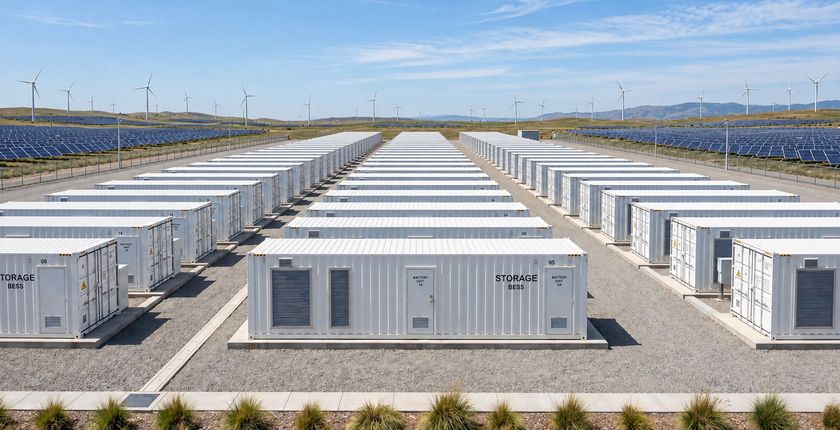



The rollout of the European Union’s new power pricing system in October, with prices set every 15 minutes, rather than every hour, has increased the profit potential of battery energy storage systems (BESS). In several countries, BESS profits now have the potential to rise by more than 15%, according to an analysis by research and energy intelligence company Rystad Energy.
Thanks to the 15-minute trading interval, arbitrage potential on the EU’s day-ahead power markets has increased by an average of 14%, with some countries, such as Austria and Slovakia, recording gains of over 20%, according to the analysis.
In Germany, quarter-hour arbitrage was 16% more profitable than hourly arbitrage, while in Lithuania, the improvement was 14%.
The new system brings the greatest benefits in countries with less flexibility
The new trading intervals, known as 15-minute Market Time Units (MTUs), bring the greatest benefits in countries with less flexibility in power generation and consumption, where a high share of intermittent renewables can cause large price swings, according to Sepehr Soltani, senior analyst for energy storage at Rystad.
Rystad estimates that if a battery earns around 20% more each year due to these price swings, its total return on investment can increase by about 3% over 20 years.
A 20% annual profit gain could raise return on investment by 3% over 20 years
In contrast, in places with a flexible electricity supply, such as Norway with hydropower and Portugal with hydropower and gas, prices are more stable over an hour, so the difference between profits from 15-minute and hourly trading is much smaller, he explained.
This is why in Portugal, Norway, and Sweden, the new system has brought only minor improvements in BESS profitability potential.
Rystad noted, however, that today’s unusually high arbitrage margins, of over USD 150 per MWh, are not expected to persist over the next 10–20 years. A more realistic long-term average is around USD 60 per MWh, according to the analysis.