

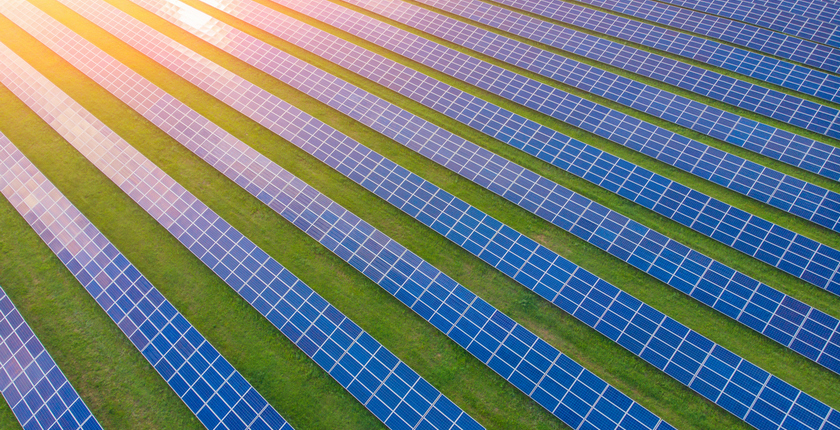
Global installed solar power capacity has reached 3 TW and is expected to grow to more than 9 TW by 2036, according to an analysis by BloombergNEF. Until recently, the solar boom was led by rich countries and China, but the focus now seems to be shifting to developing nations, as they are still far from reaching the limits imposed by the grid’s capacity to integrate renewables.
The first terawatt of solar, a milestone reached in 2022, was deployed mostly in rich countries thanks to state subsidies, while China took the lead as global solar capacity reached 2 TW in 2024 and 3 TW in 2026, the analysts noted.
However, by 2036, more than 25% of all solar deployed will be in developing countries, with the share of rich countries falling to about 20%, according to BloombergNEF projections.
By 2036, over a quarter of solar deployed will be in developing countries
In the past few years, countries such as Pakistan, Nigeria, the Philippines, Cuba, and Lebanon have seen rapid growth in rooftop solar installations. Thanks to this, the number of countries with at least 1 GW of solar installed rose to as many as 74 by last year, up from 42 in 2020.
China’s solar expansion is expected to slow down in the coming years, as the deployment of new capacity has been faster than the development of transmission and battery energy storage infrastructure, leading to increased curtailment of solar production, the analysts said.
China’s solar expansion is expected to slow down
Lara Hayim, head of solar research at BloombergNEF, explains that there is a theoretical upper limit to how much solar can be added to the grid, because once solar power meets all the daytime demand, adding more capacity is of no value.
She also highlighted the importance of energy storage for maximizing solar’s potential, stressing that without batteries the solar revolution is unlikely to continue.