


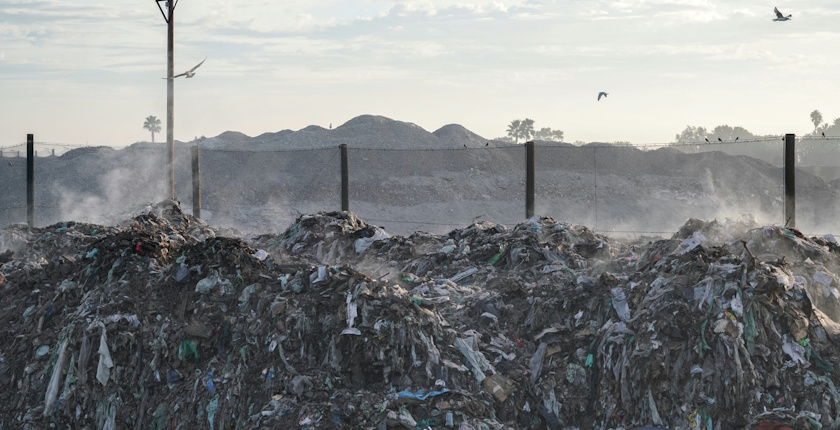
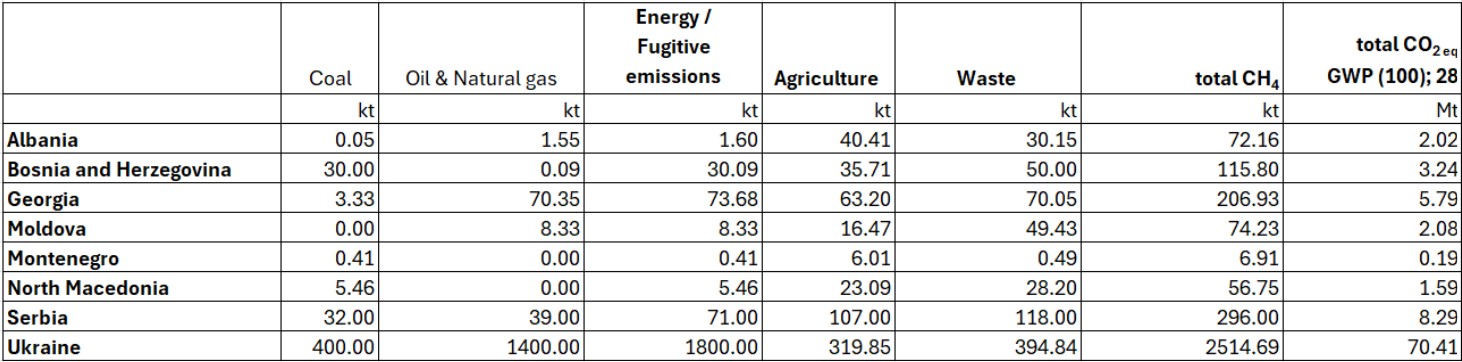
Agriculture is the main source of methane emissions in Albania and Montenegro, while waste is the top source in Bosnia and Herzegovina and North Macedonia. The two sectors contribute almost equally to methane emissions in Serbia, according to the first consolidated snapshot of methane emissions across the Energy Community contracting parties.
Based on publicly available National Inventory Reports and National Inventory Documents submitted to the UNFCCC, the Methane emissions by the Energy Community Contracting Parties report provides a snapshot of methane emissions across the contracting parties, focusing on three principal source categories: agriculture, waste, and fugitive emissions from fuels reported within the energy sector.
In almost all contracting parties, except Ukraine, agriculture and waste together account for more methane emissions than the energy sector. In Georgia, the energy and non-energy sectors’ emissions stand at comparable levels, the Energy Community Secretariat stressed.
It pointed out that the purpose of this assessment is to bring greater visibility to methane, a highly potent greenhouse gas (GHG) whose contribution is often less visible in climate policy discussions because of the much larger share of CO2 in total GHG emissions, of 70–78%.
Methane-specific reduction requirements are not incorporated into the Energy Community acquis. However, the report highlights the potential contribution of methane mitigation to meeting existing binding climate commitments, due to its relatively short atmospheric lifetime and high warming potential.
Based on the 20-year Global Warming Potential (GWP20) as an illustrative measure, one ton of methane has a warming effect equivalent to about 82–87 tons of CO2 over a 20-year period.
Gas operators began applying EU-aligned approaches to measuring and reporting methane emissions
In this sense, reducing one ton of methane can deliver a near-term climate benefit comparable, on a GWP20 basis, to reducing 82–87 tons of CO2, the secretariat explained.
The report shows how gas operators across the region have voluntarily begun applying EU-aligned approaches to measuring and reporting methane emissions.
The secretariat sets out three areas for further action: improving methane quantification, deepening engagement with international methane mitigation initiatives, and developing circular economy solutions that can simultaneously cut emissions and strengthen renewable energy supply.