

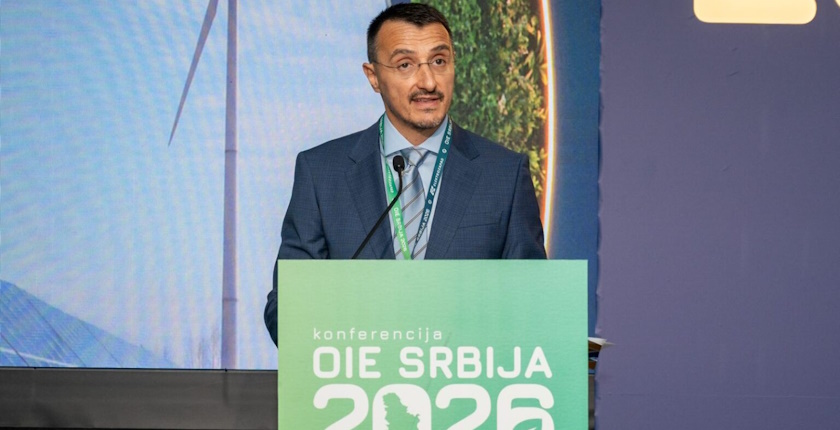
Projects for generating energy from renewable sources in Serbia are blocked or seriously under jeopardy, and the initiative of the RES Serbia association for regulatory amendments is still pending, its Chair of the Board of Directors Miloš Colić said at the RES Serbia 2026 conference. Grzegorz Zieliński from the EBRD also expressed concern. In contrast, Jelena Matejić from the country’s transmission system operator Elektromreža Srbije (EMS) claims that the grid is being developed taking into account the needs of investors.
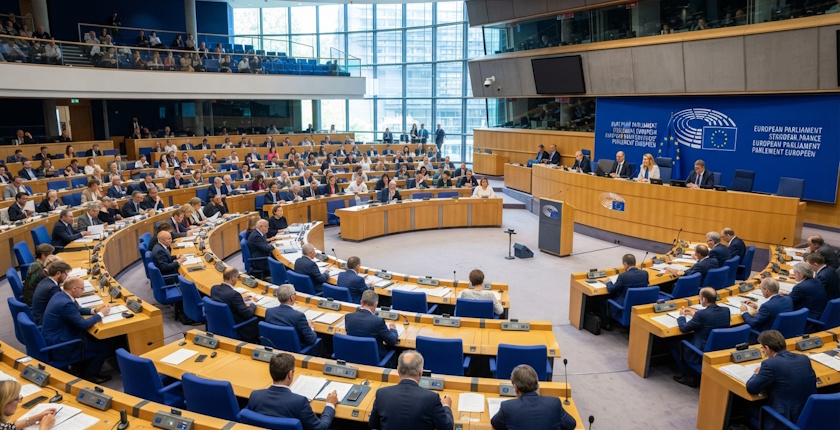
The RES Serbia 2026 regional conference began yesterday in Vrdnik, northwest of Belgrade, with 600 representatives of the domestic energy sector and 30 countries around the world.
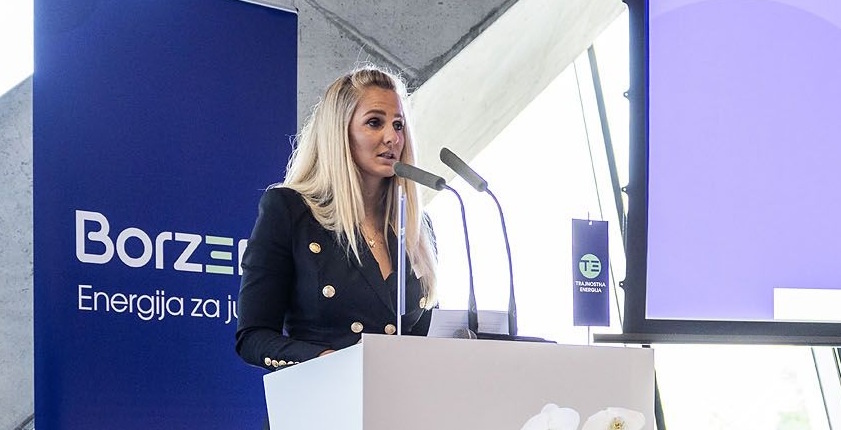
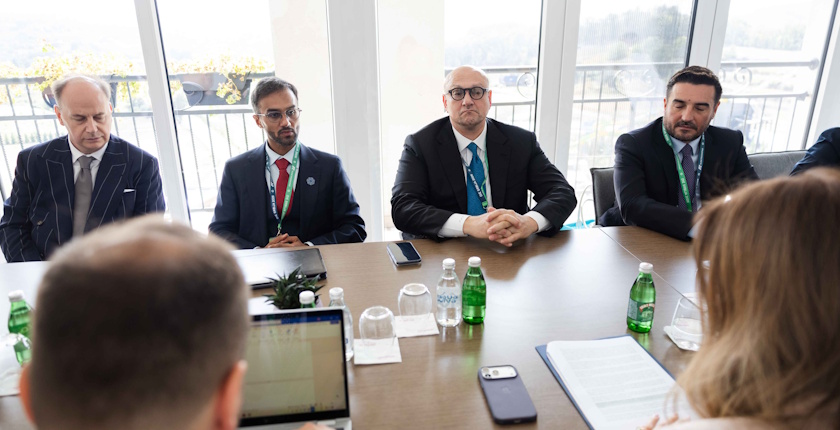
The event was opened by Minister of Mining and Energy Dubravka Đedović Handanović, Managing Director for South-Eastern Europe at the European Bank for Reconstruction and Development (EBRD) Grzegorz Zieliński, Chief Executive Officer of Abu Dhabi Future Energy Co. (Masdar) Mohamed Jameel Al Ramahi, and Chair of the Board of Directors of the Renewable Energy Sources of Serbia (RES Serbia) association Miloš Colić.
Colić warned that projects for generating energy from renewable sources are currently blocked or seriously under threat, and that the initiative from RES Serbia for regulatory amendments is still waiting.
According to him, investors have in previous years deposited serious amounts of bank guarantees as proof of their intention and readiness to materialize the projects.
“Today, a part of those guarantees is coming under risk, not because the investors didn’t do their job, but because they are waiting for decisions and actions of the administration. In other words, they can bear consequences due to delays that they themselves cannot influence,” Colić emphasized, adding that clear procedures, predictability, as well as continuous and planned development are necessary.
Every new green megawatt is common good
Colić noted that the entry of new wind and solar projects into the development process has practically been stopped until 2029.
“We understand the need to protect the grid. But stopping development for several years is not a good solution. No matter how important the legitimate interests of investors are, this is not just a question of investors’ interests. Every new green megawatt that enters the power system of Serbia is a common good. It is new domestic energy, greater energy security, a greater competition in the market. And in the long term – pressure towards a more competitive energy price,” he emphasized.
In three or four years we cannot simply press a button and get new power plants.
He warned that if the development cycle is halted today, in three or four years we cannot simply press a button and get new power plants.
“Energy projects are not built overnight. The private and public sectors should therefore not be one another’s competition. We have different roles, but the same power system,” Colić concluded.
Zielinski: Renewable sources are losing momentum in Serbia
The EBRD’s Grzegorz Zieliński pointed out that new capacities from renewable sources generate millions of euros in investments, provide cheaper electricity, and prove that the private sector is capable of implementing investments.
However, he expressed concerned because, as he said, renewable energy sources are losing momentum in Serbia, and at a time when costs have drastically fallen, security has become greater, and the impact of climate change is more visible than ever.
“Across the world, investments in renewable energy sources are accelerating, while in Serbia we see a different direction, with the postponement of new projects until 2029. Only five percent of electricity in Serbia in 2025 was produced by wind and solar,” Zieliiński emphasized.
However, he added that he is an optimist when it comes to further development, noting that Serbia has capable companies in the construction of energy projects.
Masdar prepares more capital for Western Balkans
Mohamed Jameel Al Ramahi, head of Masdar, headquartered in the United Arab Emirates, underscored that he sees Serbia and the Western Balkans as central to the future of this company in Europe, and that it is ready to bring more capital and investments into the wider region.
Al Ramahi highlighted the need for a clear and consistent policy, stronger grids and interconnections, as well as partnerships
“In order to unlock a new wave of investments, what is needed is a clear and consistent policy, stronger grids and interconnections within the country, but also in the region, as well as partnerships. Čibuk is the first chapter, but let’s build new ones – for Serbia, the Western Balkans and Europe,” Al Ramahi said.
The company has just put its Čibuk 2 wind farm into regular operation.
Đedović Handanović: Real projects will get possibility to be built
Minister Đedović Handanović stressed there is 12 GW in projects within the model for the transmission grid, or 15 GW if the distribution system is added.
“It is several times more than the system can integrate, which is why it was necessary to move the deadlines to 2029, to see which projects stand in the portfolio and free up space for mature investments. Our goal is not to slow down development, but to create a sustainable system in which real projects will have the possibility to be built,” she stated, adding that amendments to the Law on the Use of Renewable Energy Sources are in preparation, including for the establishment of areas for the accelerated development of renewable sources.
There is 11 GW in connection process
General Manager of Elektromreža Srbije (EMS) Jelena Matejić stated that there is currently 11 GW of wind and sun in the process for the connection to the transmission system – high voltage. The goal for 2030 is to reach 3.5 GW in total for the two.
In Serbia, contracts for an overall 2 GW have been signed in the field of energy storage
In addition to that, EMS, the country’s transmission system operator (TSO), has contracts for battery storage for 2 GW altogether.
“Do not fear for grid capacity. There is capacity, it is being developed taking your needs into account,” Matejić told investors.
Montenegrin TSO CGES’s General Director Ivan Asanović recalled that interest has been expressed in his country for connecting 7 GW. He specified that 5 GW has been processed through studies. Contracts have been signed for 3 GW, mostly for photovoltaic plants.