



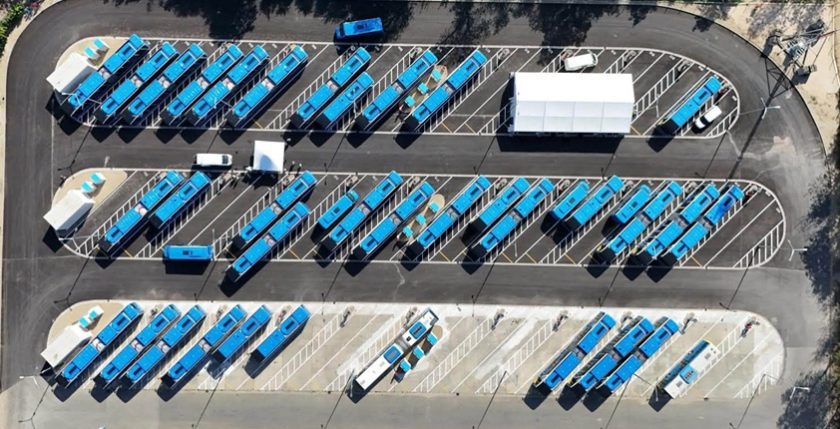
As of this week, Zagreb residents are commuting on 62 electric buses, out of a total of some 300 buses operating daily across the Croatian capital.
Zagreb’s first electric bus began passenger service in early April last year, marking the start of the city’s drive to transition its entire public transportation fleet to electricity and hydrogen power.
Nearly 60 new electric buses have now been delivered as part of a procurement program launched last year. Alongside the deployment of the electric buses, city authorities inaugurated a charging depot in the neighborhood of Podsused, marking another step in modernizing public transit and continuing the electrification of public transport operator ZET’s fleet.
The electric vehicles will reduce noise and harmful emissions
In addition to offering passengers greater comfort, reliability, and safety, the electric vehicles will help reduce noise and harmful emissions while improving urban air quality, the City of Zagreb stressed.
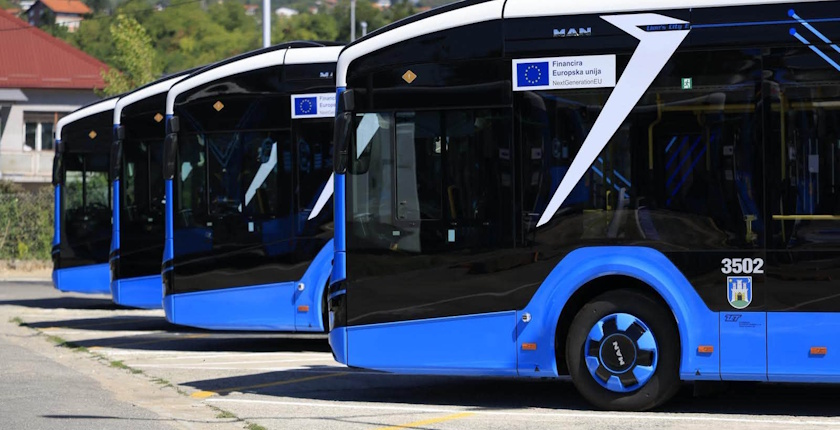
ZET’s new electric fleet comprises 62 vehicles – 30 standard buses, 26 articulated buses, and six midibuses. The investment is estimated at EUR 56.8 million, according to the city authorities.
Of the total, EUR 45.4 million was secured from the European Union’s funds via the National Recovery and Resilience Plan (NRRP) in cooperation with the Ministry of the Sea, Transport and Infrastructure, with the remaining EUR 11.4 million financed from the city budget.
The charging depot features 134 charging points
The new charging depot serves as critical infrastructure for the further expansion of electric bus transportation. Equipped with 67 dual e-chargers, or 134 charging points, it covers the entire electric fleet, while allowing for its future expansion.
The charging points cost EUR 9.8 million to install, with EUR 7.8 million funded through NRRP grants in partnership with the Ministry of Economy and the Environmental Protection and Energy Efficiency Fund (FZOEU), alongside EUR 2 million from the city budget.
Tomašević: Two additional bus charging locations are required
“During peak timetable operations, which coincide with the start of the school year, around 300 buses are on the streets daily. This milestone electrifies one-fifth of ZET’s total bus fleet, representing a major step forward,” Mayor Tomislav Tomašević stressed.
He noted that two additional e-charging sites will be required to continue the electrification of ZET’s bus fleet, adding that the ultimate goal is to fully electrify the fleet over the next seven to eight years.
The new buses are fully accessible for persons with reduced mobility and equipped with air conditioning, modern safety systems, CCTV, USB ports, and automated passenger counting systems.
Under optimal conditions, the estimated range is at least 500 kilometers for standard buses, 450 kilometers for articulated models, and 260 kilometers for midibuses.
It will allow them to operate a full working shift without recharging, the city authorities explained.