


The European Parliament has backed the European Commission’s proposal to extend the EU’s Carbon Border Adjustment Mechanism to steel and aluminium downstream goods, including finished steel and aluminium goods, fasteners, wire, springs, and finished steel and aluminium household goods. Currently, the mechanism applies to iron, steel, aluminium, cement, fertilisers, hydrogen, and electricity.
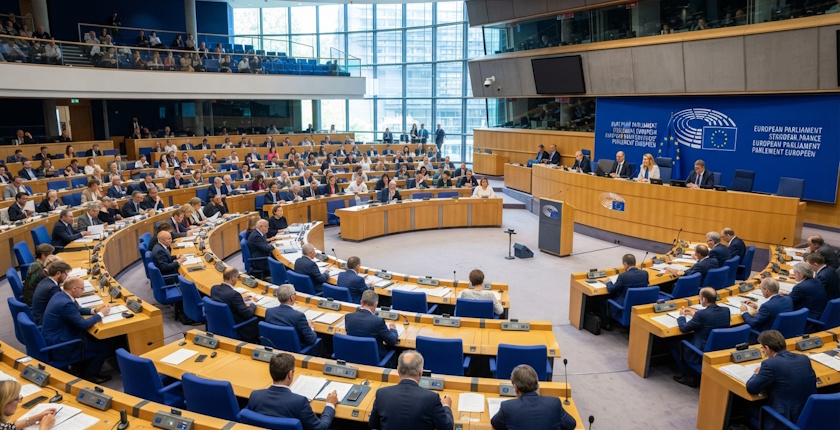
The European Parliament has adopted its position for negotiations with member states on proposed changes to the Carbon Border Adjustment Mechanism (CBAM). The parliament is now ready to start negotiations with EU member states on the final shape of the bill.
The CBAM has entered into force on January 1, 2026.
This decision by the parliament means that the scope of the CBAM is extended beyond basic materials to an extensive list of downstream products, broadening it even further than the commission originally proposed.
Chahim: The compromise makes the mechanism stronger, fairer, resilient, and balanced
It also introduces an exemption for electricity flows from non-EU countries used by grid operators to maintain network stability, according to the European Parliament.
CBAM rapporteur Mohammed Chahim said that the compromise makes the mechanism stronger, fairer, resilient, and balanced while closing loopholes and protecting European industry.
Rapporteur for the temporary decarbonisation fund Pascal Canfin added that the steps broaden product coverage, set stronger anti-circumvention rules against resource shuffling from China, and offer solutions for farmers and companies on export markets.
The parliament has adopted its position on the establishment of the temporary decarbonisation fund
Additionally, the parliament has adopted its position on the establishment of the related temporary decarbonisation fund (TDF) to protect EU producers in export markets.
MEPs want financial support from the TDF to run from 2027 to 2029 rather than only from 2028 as proposed by the commission, and want to open the fund to fertiliser producers and downstream users, adding products such as urea, ammonium nitrate, and ammonium sulphate.
All downstream operators using CBAM-covered goods as inputs should be eligible for support, and leftover revenue could be redirected to the EU’s international climate finance commitments under the Paris Agreement instead of being returned to member states, according to the European Parliament.