


The second quarter of 2026 points to a partial easing of the frictions observed at the start of the Carbon Border Adjustment Mechanism’s (CBAM) definitive period. However, compared with the first half of 2025, price spreads were wider and cross-border exchanges lower despite the easing observed in Q2 2026, according to the Energy Community Secretariat’s second report on the impact of CBAM on electricity markets.
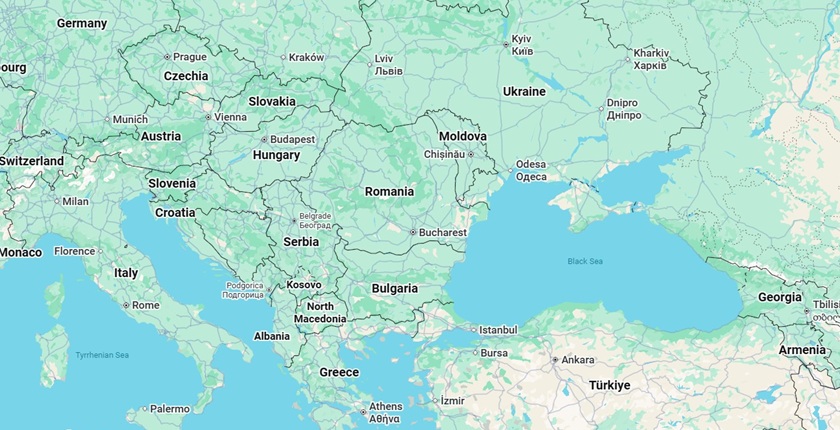
The analysis focuses on the six Western Balkans (WB6) contracting parties (Albania, Bosnia and Herzegovina, Kosovo*, Montenegro, North Macedonia, and Serbia) and their neighbouring European Union member states (Bulgaria, Croatia, Greece, Hungary, Italy, and Romania).
The Carbon Border Adjustment Mechanism (CBAM) entered into force on January 1.
The Energy Community Secretariat’s first report on CBAM’s impact showed that electricity flows between the EU and the Western Balkans have diverged from historic trading patterns.
Hydrology normalised in the second quarter
As hydrology normalised in the second quarter, prices partly reconverged, correlations recovered, the region returned to its seasonal net importer position, and exports resumed on corridors where the remaining price spreads could absorb costs implied by the default emission factors, the report for the second quarter reads.
The data do not, however, show a full return to the 2025 pattern.
Gross WB6–EU electricity exchange remained lower, trade continued to consolidate around new channels, commercial and physical flows remained divergent, and the widest spreads persisted on corridors exposed to high implied CBAM costs, the report added.
Electricity within the region is increasingly channelled northwards through Serbia towards the Hungarian border
Ukraine might be emerging as a primary destination market for surplus electricity from the Western Balkans. Electricity within the region is increasingly channelled northwards through Serbia towards the Hungarian border rather than being absorbed within the region, according to the report.
Trade consolidated around two centres, rather than reverting to its 2025 configuration. The flow from Serbia to Hungary more than doubled (+111%) in comparison with Q2 2025, and the flow from Romania to Hungary rose 156%, which is consistent with Ukraine’s import needs being served through the Hungarian hub, the document reads.
The document suggests that the persistent divergence between commercial and physical flows will make it more expensive and complex to maintain grid stability.
Seasonal factors and changing market conditions continued to play an important role in Q2 2026, the authors said. Therefore, the outlined developments should not be attributed solely to CBAM, the secretariat added.
It stressed that data from further quarters will be needed to determine whether these developments are temporary or they signal a more structural change in regional electricity trade.
CBAM costs for importing electricity from contracting parties to the EU almost unchanged
The price of CBAM certificates for Q2 2026 electricity imports was EUR 75.28 per tonne of CO2. This was essentially unchanged from the EUR 75.36 for the first quarter.
However, the report pointed out that the stable quarterly average masks a clear reduction in short-term volatility. The daily EU ETS auction price ranged between EUR 70.60 and EUR 80.43 in Q2 2026, against EUR 62.19 and EUR 91.34 recorded in Q1.
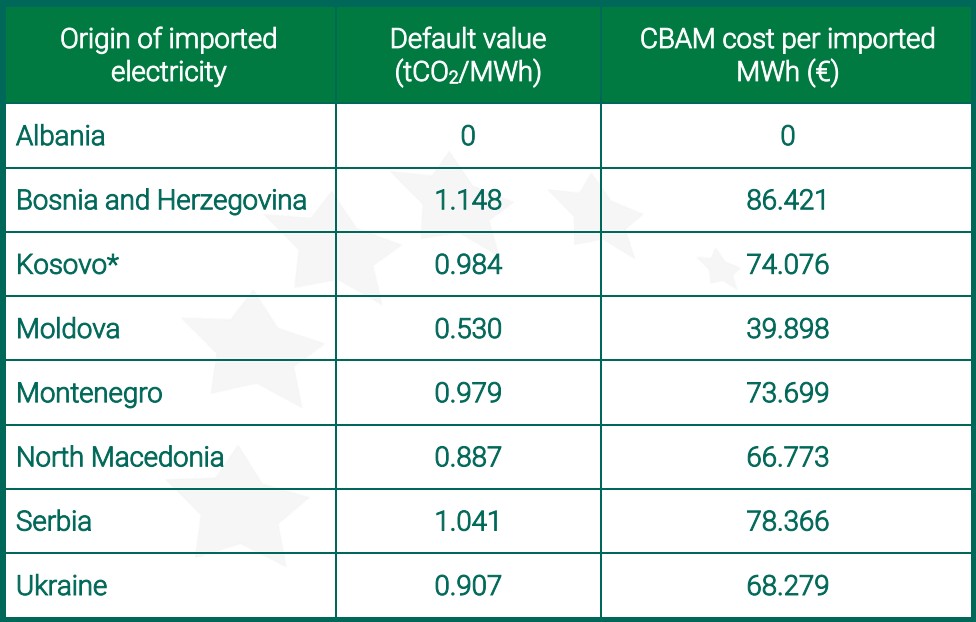
Using the default values published in the European Commission’s relevant implementing regulation, the specific CBAM-related costs for importing electricity from contracting parties to the EU in Q2 2026 are shown below. They are almost unchanged from Q1.