

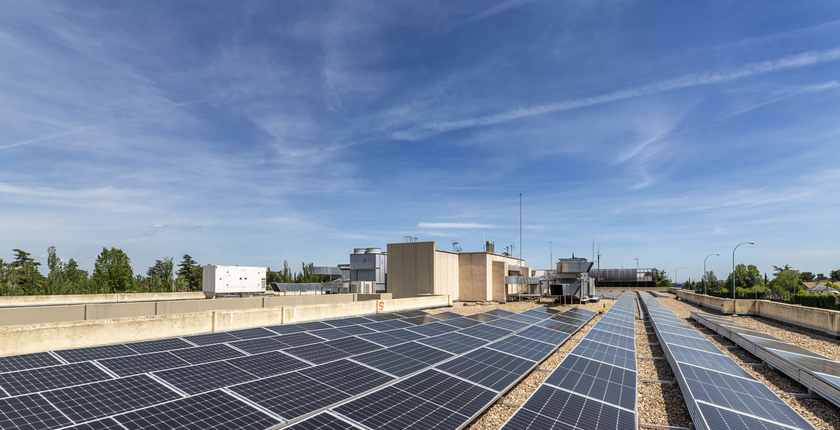
Romania has launched two subsidy programs, worth a total of EUR 650 million, for public institutions to install solar panels and batteries for self-consumption. The investments, financed from the European Union’s Modernisation Fund, are expected to help Romanian institutions cut energy bills and reduce pressure on the grid.
The first program, worth EUR 500 million, will finance the installation of photovoltaic panels with energy storage batteries. Batteries are mandatory and must be designed for durations of 2 to 4 hours. Projects under this program may also include heat pumps, Romanian media reported.
The second program, with a EUR 150 million budget, is intended for installing behind-the-meter batteries at public institutions that already have renewable energy facilities.
Subsidies can cover the entire project cost
Subsidies can cover up to 100% of project costs, but are capped at EUR 10 million per beneficiary. Eligible to apply are public institutions such as municipalities and county councils, hospitals, universities, and social centers.
The calls open on Friday and applications will be accepted until November 6, 2026, or until the budget is exhausted. Applications will be evaluated by February 12, 2027, while the approved projects must be completed and commissioned by December 31, 2029.
The approvals for the two programs were signed on Tuesday by Acting Prime Minister and Minister of Energy Ilie Bolojan, according to the reports.
He said the programs are expected to help public institutions reduce energy bills and use energy generated from renewable sources more efficiently, while also reducing pressure on the grid during periods of peak consumption.
Bolojan: Batteries should be mandatory for all future prosumers
Last month, Romania unveiled two battery support programs, earmarking EUR 150 million for standalone facilities and EUR 76.2 million for existing prosumers to add energy storage systems.
Bolojan said at the time that batteries should become mandatory for future prosumers, arguing that expanding photovoltaic capacity without energy storage would harm the country’s power system.