


The United Nations Environment Programme (UNEP) has published a new report titled Limiting Overshoot, predicting that the 1.5°C global warming threshold will be exceeded within the next few years. However, there is still a chance that the overshoot will be temporary and that temperatures could return to the level set out in the Paris Agreement by the end of the century, according to the report.
Every fraction of a degree of warming above 1.5°C compared with pre-industrial levels increases climate impacts and risks.
The year 2024 was the first individual year in which the global average temperature exceeded this threshold. However, global warming is not assessed based on a single calendar year, but over a multi-decadal period. UNEP therefore warns that the 2024 result is a clear signal of what lies ahead.
If current policies continue, the world could be around 2.6°C warmer by 2100
Even under one of the most optimistic scenarios in UNEP’s latest report, Limiting Overshoot, which assumes the full implementation of national climate plans and long-term net-zero targets, global warming would peak at around 1.8°C by the end of the century.
If current policies continue, the world could be around 2.6°C warmer by 2100 than in the pre-industrial period.
The remaining carbon budget also shows how little room is left to avoid overshooting the threshold. For the world to have a 50% chance of limiting warming to 1.5°C, only around 130 billion tons of CO2 can still be emitted.
If emissions continue at their current rate, the remaining carbon budget would be exhausted in approximately three years.
The 1.5°C goal has not been abandoned
Although it is no longer realistic to expect that overshooting the threshold can be avoided entirely, UNEP stresses that the Paris Agreement’s 1.5°C goal has not been abandoned. The world must now try to keep the overshoot as small as possible, reach a peak in warming, and then bring temperatures back down.
The report calls this an overshoot, peak and decline pathway. Global temperatures first rise above 1.5°C, then reach their highest level and stabilize, before beginning to fall and eventually returning to 1.5°C or below.
UNEP stresses that this is neither desirable nor safe, but the best remaining option.
It will be necessary not only to reach net-zero emissions, but also to move into a phase of net-negative CO2 emissions
However, achieving this scenario would require not only reaching net-zero emissions, but also moving into a phase of net-negative CO2 emissions. This means removing more carbon dioxide from the atmosphere than is emitted.
To achieve this scenario, UNEP proposes three phases of action.
The first phase involves significant emissions reductions, particularly of CO2 and methane, alongside adaptation measures for the most vulnerable communities and ecosystems. In the second phase, net-zero emissions must be achieved so warming peaks at the lowest possible level.
The third phase involves sustaining net-negative CO2 emissions so that global temperatures begin to decline, alongside long-term adaptation to impacts that can no longer be avoided.
What are the consequences of exceeding the 1.5°C threshold?
UNEP warns that “there are no good outcomes above 1.5°C.”
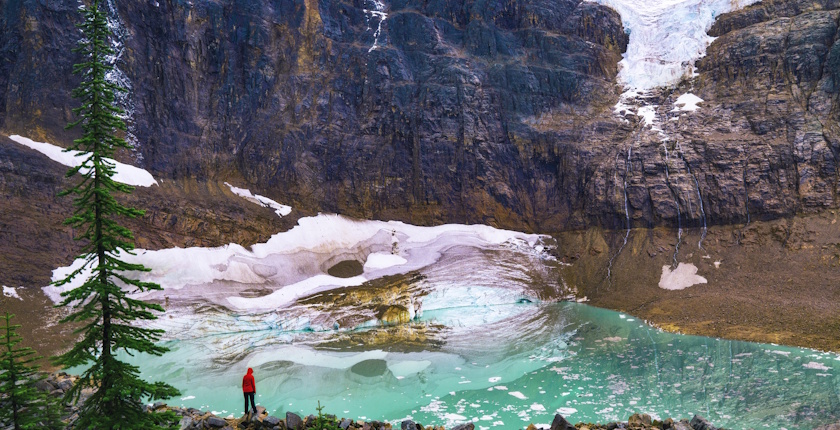
The greater the overshoot and the longer it lasts, the higher the risks of extreme heat and wildfires, glacier and sea ice loss, permafrost thaw, sea-level rise, biodiversity loss, and problems with food and water availability.
Of particular concern is the possibility of crossing so-called tipping points. Further warming increases the risk of destabilizing the Greenland and West Antarctic ice sheets, triggering major changes in the Amazon rainforest and disrupting the Atlantic Meridional Overturning Circulation (AMOC), one of the world’s key ocean current systems.
Therefore, a return of global warming to 1.5°C would not mean a return of the planet to its previous state. Sea levels could continue to rise, some species and ecosystems could be permanently lost, while some communities may already have been displaced or forced to change their way of life.