

The Greek government has announced a plan to cut electricity prices for end consumers by 30% over the next three years. The plan, with dedicated funding set to reach EUR 5 billion, focuses heavily on renewables and new battery energy storage (BESS) capacity, in line with decarbonization efforts.
Greek prime minister Kyriakos Mitsotakis said at the Thessaloniki International Fair that reducing electricity prices is one of the government’s top priorities, as consecutive energy crises have been affecting households and businesses.
Total funding is expected to reach EUR 5 billion, with EUR 2.3 billion coming from the Islands Decarbonization Fund, EUR 600 million from the EU’s fiscal escape clause, and the rest from the Social Climate Fund.
Battery installation is set to accelerate
The government aims to lower electricity prices through multiple measures and interventions, and has identified six separate areas with potential gains.
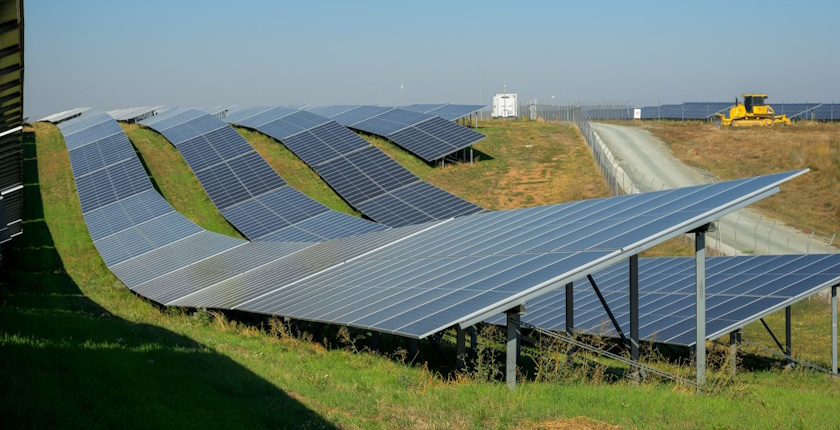
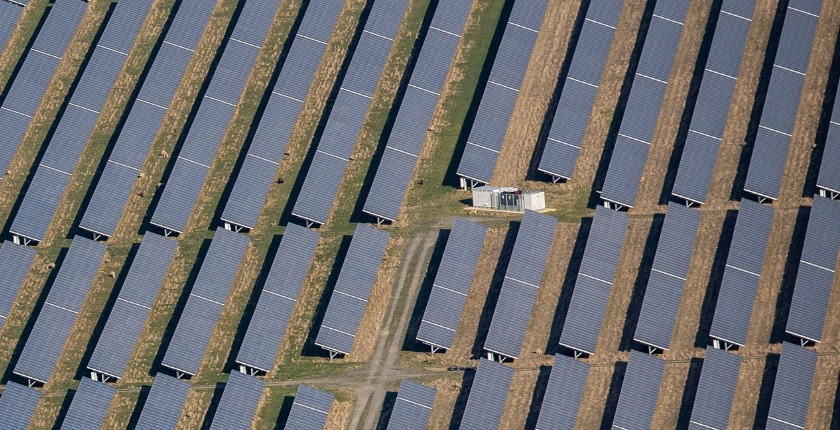
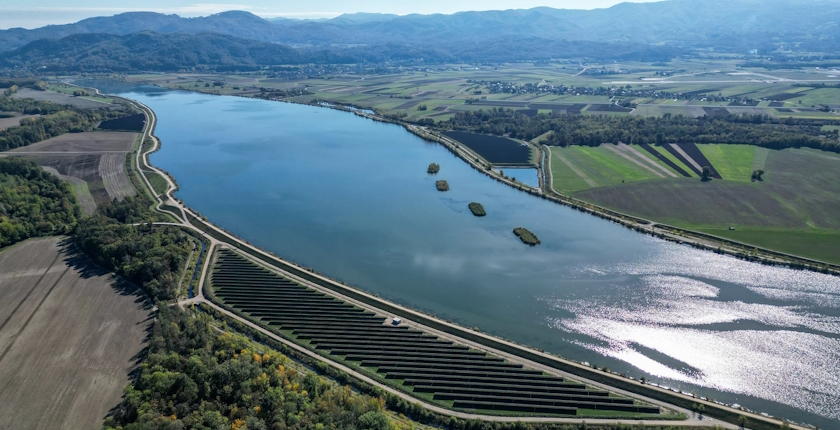
The first is renewable energy, where development is set to continue under a new spatial plan. So far, installations have mostly focused on photovoltaics, which earlier this summer reached the national 2030 target of 13.8 GW, three and a half years ahead of schedule.
Energy storage is the main area
Energy storage is the main area the new plan focuses on.
The goal is set at 5-7 GW of operational batteries by the end of this decade, with 3-4 GW by 2028 as an interim target.
So far, EUR 400 million has been channelled through the Resilience and Recovery Fund (RRF), while the Social Climate Fund will provide another EUR 200 million.
Deploying renewables with energy storage on islands
Small businesses, municipalities, large renewable plants, and standalone BESS projects will each receive EUR 50 million. In the last two categories, competitive auctions will take place.
When it comes to Greek islands, EUR 1.1 billion will support electricity interconnections, EUR 200 million will be invested in dams and dual-use water reservoirs, and EUR 56 million will be set aside for electric car charging stations.
Renewable energy plants with storage will receive EUR 970 million, which should help install 316 MW of solar and 295 MW of batteries on the islands.
Reducing the so-called common benefit surcharge
Another development is a reduction of the so-called common benefit surcharge, which currently stands at about 3-4% of the total power bill.
Its purpose is to distribute the extra cost of power production on non-connected islands among all consumers.
This measure will cost EUR 200 million and will be funded from the state budget.
Green heating solutions to replace fossil fuels
In the energy savings segment, the Social Climate Fund will provide EUR 2.1 billion for home upgrades and the installation of 32,000 heat pumps and 68,000 solar heaters.
Separately, 10,000 households in Western Macedonia and Megalopolis will be eligible to receive EUR 50 million in total for the same upgrades, as well as rooftop solar systems.
Energy-saving certificates will be issued to 200,000 households free of charge. Moreover, 780,000 beneficiaries will receive heating bill subsidies to shield them from rising costs resulting from the EU emissions trading system’s expansion to the heating sector from 2028.
Two previous programs, for public buildings and schools, were not completed in time under the RRF and will now proceed under the new funding budget.
A new chapter for self-consumption
Last but not least, the ministry will soon unveil a new framework for the self-consumption segment.
The goal is to simplify rules, allow the installation of microsolar systems of up to 800 W, and introduce collective self-consumption in blocks of flats.
It also focuses on the use of standalone batteries without feeding electricity into the grid.
Curbing power theft and arrears
In the retail segment, smart meter rollout is supposed to curb consumer arrears, which reached EUR 3 billion last year.
These new meters will also help combat energy theft, which costs EUR 450 million annually.
Mitsotakis: Renewables keep prices 19% below the EU average
“We are able to do all these things because we have invested in renewable energy and in island interconnections. This policy, despite what some people say, already keeps power prices 19% below the European average,” Mitsotakis said while describing his government’s overall energy policy.
His comments come at a time when power prices have been rising across the continent.
During the first week of September, wholesale electricity prices exceeded EUR 150 per MWh across many countries, especially in Southeast Europe, as a result of higher natural gas prices, drought, and limited interconnections.