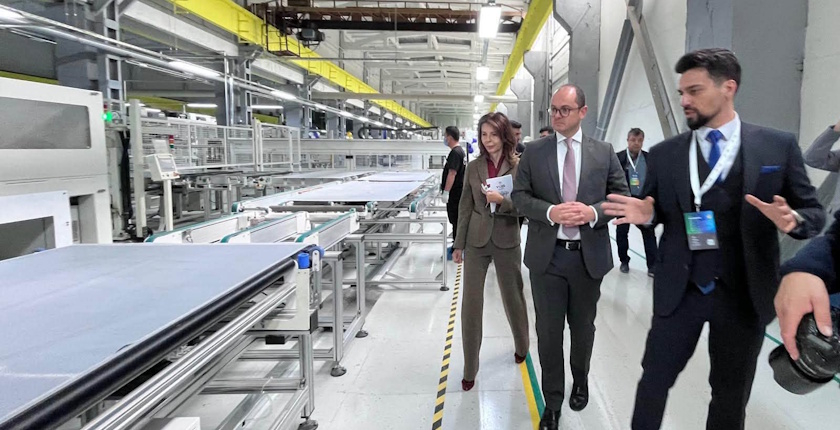




The Islands Decarbonization Fund was launched in Naxos, with financing from the European Investment Bank (EIB).
An agreement was signed between the government, EIB and the European Commission, to support the fund. Deputy Minister of Environment and Energy Alexandra Sdoukou called it an essentially smaller version of the European Union’s Recovery and Resilience Facility (RRF), dedicated to the green development of islands.
EIB and public funds together would contribute at least EUR 1.6 billion, aiming to mobilize total investments of EUR 3 billion to EUR 5 billion. The government’s contribution is planned to be covered through the gradual sale of 25 million carbon allowances – EUAs – within the European Union Emission Trading System (EU ETS).
“We are making lives better through this initiative. At the same time we improve our economy and strengthen our energy security,” Prime Minister Kyriakos Mitsotakis said at the ceremony.
A part of the package, EUR 550 million, is earmarked for supporting the interconnection of the Dodecanese islands to the mainland, in a EUR 2 billion project carried out by Independent Power Transmission Operator (IPTO), as well as islands in the northern Aegean Sea.
Focus on self-consumption and hybrid plants
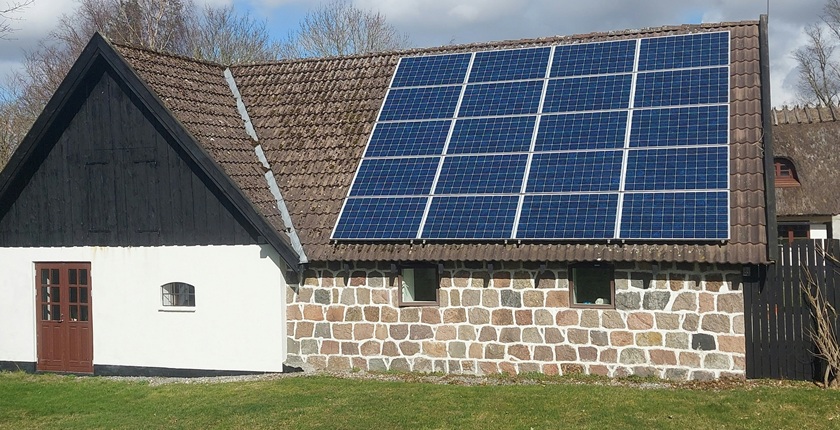
When it comes to renewable energy, EUR 135 million would be used to promote self-consumption projects including batteries for households, businesses, municipalities and farmers.
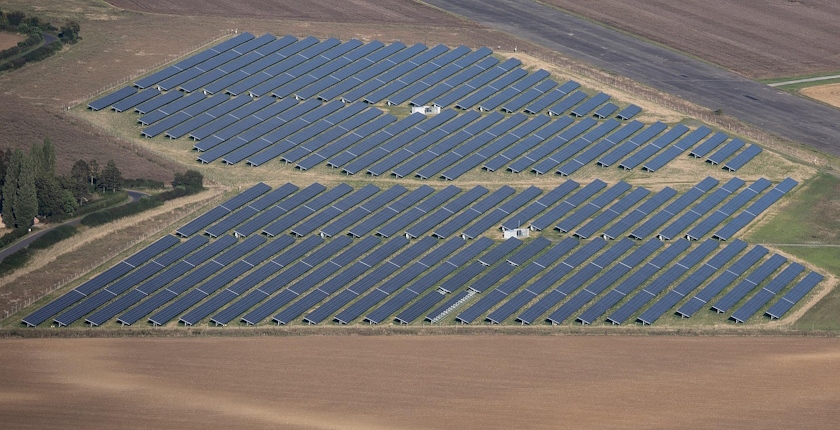
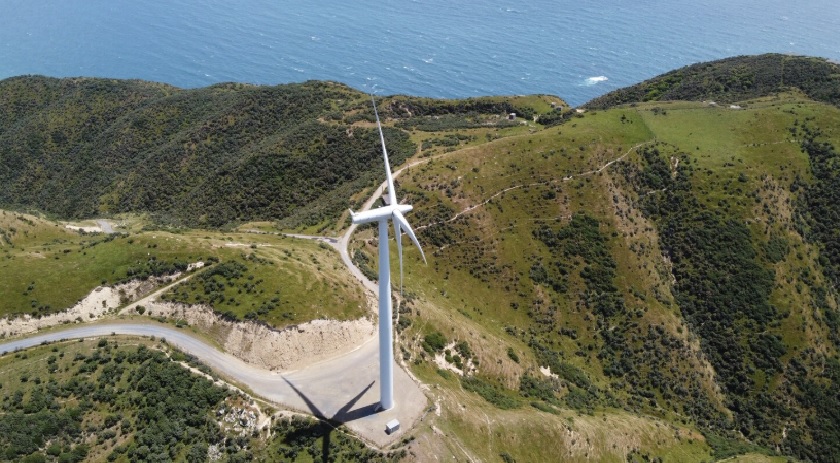
Another EUR 140 million is for solar and wind farms with batteries in connected islands. Investors would be entitled to grants amounting to 40% of the costs.
There is EUR 210 million earmarked for hybrid plants with batteries in non-interconnected islands in Rhodes, Kos, Kalymnos, Samos, Chios and Lesbos (also known as Lesvos and Mitilini). Grants would cover 42% of the costs.
The goal is to meet 30% to 40% of their electricity needs with green energy, instead of costly diesel-fueled power generators.
Next, EUR 260 million would support the development of an offshore wind farm, while EUR 100 million is for water supply and pumped storage hydropower plants.
In transportation, EUR 30 million is for the car charging network, with another EUR 100 million for green electricity for ships in harbors, to curb pollution.
Skylakakis: This effort will send a green message with great importance when it comes to our tourism as well
All these projects are seen reducing CO2 emissions in the islands by one million tonnes annually, while interconnections are expected to save consumers EUR 3.8 billion in energy costs over 25 years.
“This effort will send a green message with great importance when it comes to our tourism as well,” Minister of Environment and Energy Thodoros Skylakakis said.
Comments (1)
Vicki
Does this new project include the shipyards on the island of Syros?