

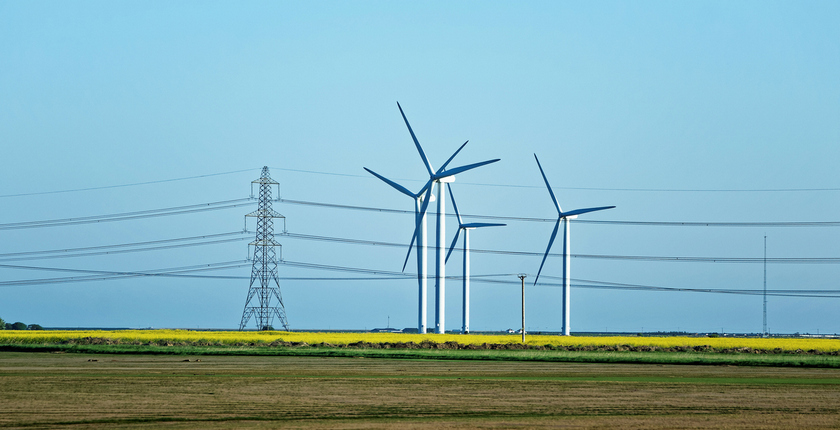
The Hungarian Energy and Public Utility Regulatory Authority (MEKH) has launched the country’s first tender to allocate available grid capacity to wind power projects, including optional battery energy storage, as part of efforts to foster wind energy deployment.
Applicants are invited to submit bids for nine grid nodes across six districts of Hungary, with the total available feed-in capacity of 702 megavolt-amperes (MVA), according to a statement from MEKH. The capacity will be allocated on the medium- and high-voltage grids.
The call for bids also specifies the timeframe for grid connection. The earliest possible connection date is September 30, 2030, while connections cannot take place later than September 30, 2032, the regulator said.
The call is open from September 4 until October 30. The results will be announced by December 13, 2026 at the latest, the regulator said, adding that the call and related documents are available on its website.
The bid submission deadline is October 30
Applicants may obtain grid feed-in rights primarily for the establishment or expansion of wind power plants and, on a secondary basis, for battery energy storage systems, law firm CMS explains in its summary of the tender.
Each application must request a minimum feed-in capacity of 14 MVA and a minimum installed capacity of 14 MW for the wind power plant.
The proposed battery capacity may not exceed the wind capacity bid
Applicants may also include battery storage capacity in their bid as a “secondary technology,” provided that its proposed installed capacity does not exceed the primary wind capacity they are applying for, according to CMS.
The tender criteria include financial contributions to affected municipalities, higher installed capacity than the requested feed-in capacity, battery storage capacity ratio, acceptance of sharing the grid connection point with another winner, and developing the proposed wind farms on a brownfield site, according to CMS.
“The call for tenders was preceded by an extensive market survey, a detailed grid analysis, and industry consultation,” said MEKH President Edit Juhász.
According to Enerdata Global Energy Research, wind power had a share of just 2% in Hungary’s electricity mix in 2025, while solar accounted for 27%, up from 7% in 2020.
Hungary hopes to add at least 4 GW of new wind capacity by 2030
The Hungarian government has identified wind power as a strategic priority, and its new policy framework envisages annual grid connection capacity tenders exclusively for wind projects, according to Enerdata. The target is to add at least 4 GW of new wind capacity between 2026 and 2030, the portal wrote.
The tender comes amid an electricity generation crisis caused by heatwaves and drought across Southeast Europe. Hungary’s sole nuclear power plant, Paks, almost went offline this summer due to a lack of cooling water from the Danube.