


Two attacks on Germany’s power grid occurred on September 1. Following an act of sabotage that disrupted power lines near the Turnow-Preilack substation in the eastern state of Brandenburg, a deliberate short circuit was also caused near an important substation in Bergheim, in the western state of North Rhine-Westphalia.
The first attack on Germany’s electricity infrastructure occurred near the Jänschwalde lignite-fired power plant in the eastern state of Brandenburg. The facility is close to the Polish border.
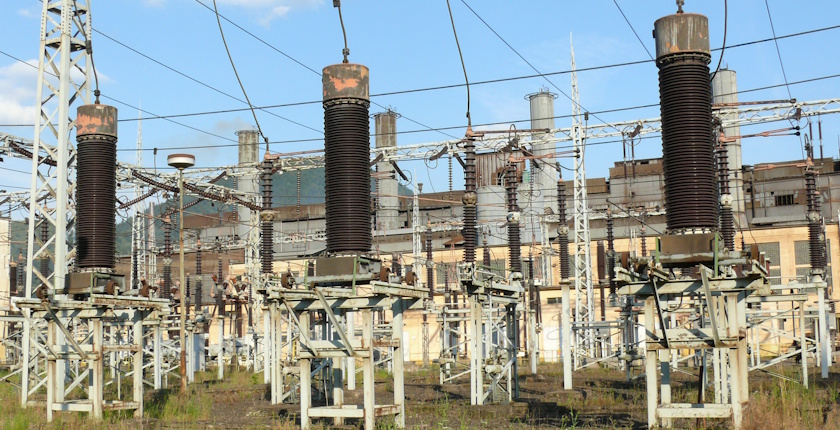
However, the power plant itself was not targeted. Instead, the nearby Turnow-Preilack substation, through which the plant is connected to the transmission grid operated by 50Hertz, came under attack. It is an important node in Brandenburg’s power grid.
Several projectiles were fired at extra-high-voltage power lines. According to 50Hertz, the devices were homemade and resembled New Year’s fireworks.
The attack did not cause a power outage
According to Brandenburg Interior Minister Jan Redmann, conductive material was fired at the power lines in an attempt to cause a short circuit. Two such disruptions were recorded, and one unit at the Jänschwalde power plant automatically went offline. More than ten of the devices were found, some of which had not been fired.
The attack did not cause a wider power outage, and all lines were soon restored. Redmann described the incident as sabotage. According to him, the possibility that foreign actors or left-wing extremists were behind the attack cannot be ruled out, as similar actions have been carried out in the past.
Earlier this year, radical left-wing Vulkan Group claimed responsibility for setting fire to a cable bridge near the Lichterfelde gas-fired power plant in southwestern Berlin. Around 45,000 households and more than 2,200 businesses were left without electricity.
Shortly after the attack on the power grid in Brandenburg, an explosion occurred in a passage near Augsburg’s main railway station. Two people suffered minor injuries, while the cause of the explosion remains unknown. German authorities have not established any link between the incident and the sabotage of the electricity grid, and the Augsburg explosion has not been classified as a terrorist attack.
Substation near Bergheim damaged in second attack
The second attack on electricity infrastructure occurred on the same day near Bergheim, in North Rhine-Westphalia. According to state Interior Minister Herbert Reul, unknown perpetrators threw cables over an overhead power line, deliberately causing a short circuit.
RWE’s five lignite-fired units were knocked offline: three at the Niederaussem power plant and two at the Neurath facility.
Their combined installed capacity is 4.2 GW, although at the time of the incident they were operating at 3 GW in total.
Consumers did not lose electricity. Transmission system operator Amprion said the power supply was never at risk and that system stability was maintained.
The attacks on the electricity grid occurred as German authorities are considering ways to better protect critical infrastructure from the growing threat of cyberattacks and hybrid operations.
Notably, in the morning before the acts of sabotage, Germany said it held Russia responsible for an attempted attack on the Leipzig/Halle Airport on August 4. A drone carrying explosives was found near a Ukrainian cargo aircraft. The Kremlin rejected the accusations.
It is not yet known who was behind the attacks or whether they were connected.