

State aid in Serbia’s energy sector increased from RSD 16.6 billion (EUR 141.1 million) in 2020 to RSD 26.6 billion (EUR 226 million) per year in 2024, but was directed almost entirely toward supporting electricity generation from renewable energy sources, according to an analysis of state aid in the energy sector conducted by NALED. There were no other measures, such as investments in hydrogen, energy storage, industrial decarbonization, clean mobility, and energy communities.
The analysis of state aid in the energy sector, with a comparison of Serbia and the European Union, was carried out by the National Alliance for Local Economic Development (NALED), with the support of the Government of Sweden, under the project More Efficient Public Procurement and Sustainable Supply Chains to Improve Competitiveness.
One of the reasons for the absence of a range of support schemes crucial for integration into the single energy market is that the existing legal framework for granting aid is outdated and relies on 2014 European rules, obsolete in the EU, NALED said.
Antonijević: Adopting new bylaws aligned with newer EU rules is a priority
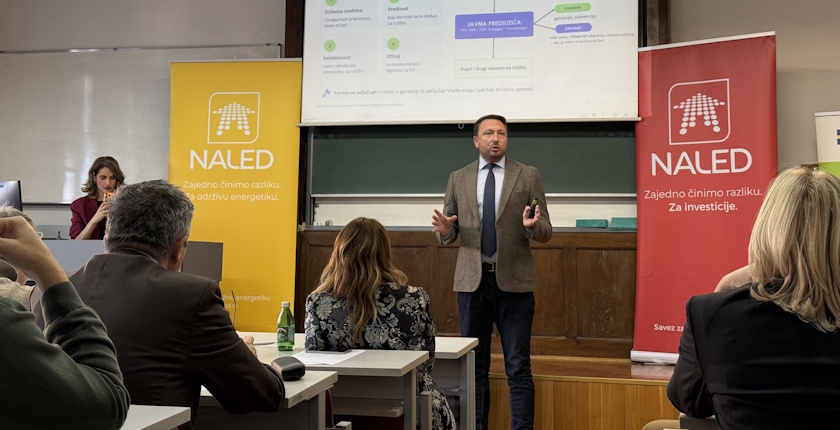
According to NALED’s consultant Vladimir Antonijević, the priority is adopting new bylaws for environmental protection and energy aid, aligned with newer EU rules. He added that the public should also be informed what has been achieved through state aid measures and whether the objectives for which the incentive measures were introduced have been met.
Therefore, one of the recommendations from the analysis is to mandate an assessment of how aid is granted and to measure its impact.
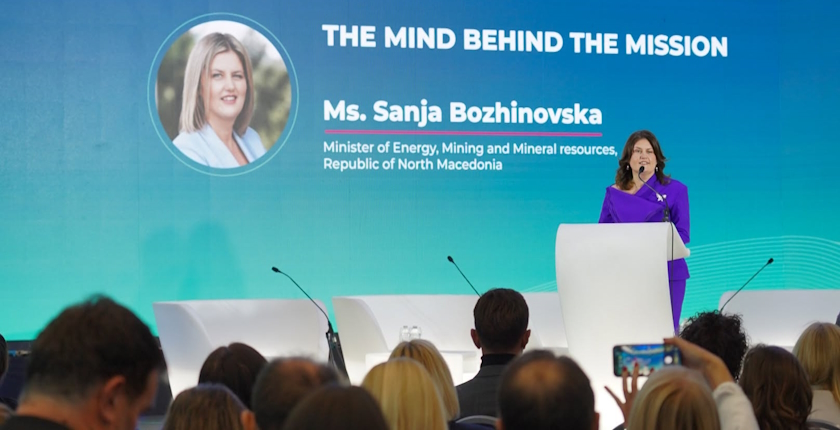
It goes along with transparent publication of data, on a dedicated website, on beneficiaries and the amounts of funds received, Antonijević explained at a meeting of the Sustainable Energy Council of NALED held at the School of Electrical Engineering in Belgrade.
Auctions are a good example
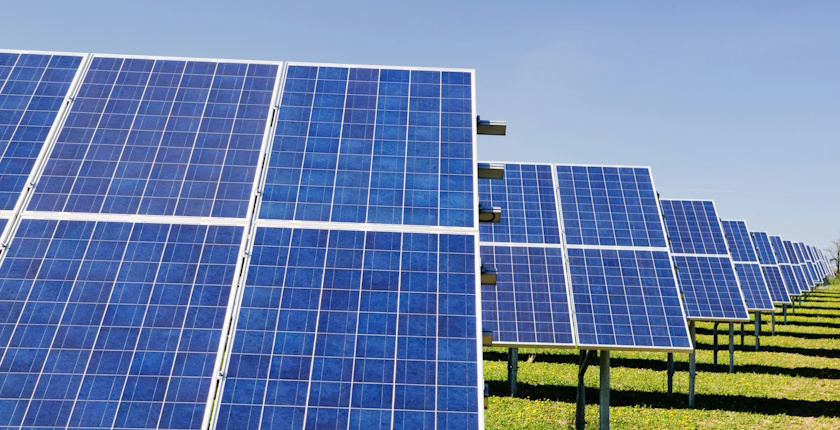
The transition to renewable energy auctions demonstrates that the domestic system can apply more contemporary support models, NALED stressed. The number of applications for solar power plants rose from seven to 34 between two rounds, and support was awarded to facilities with a combined capacity of 850 MW, of which 700 MW is for wind farms and 150 MW for photovoltaic plants.
According to the findings of the analysis, the final effects of introducing feed-in tariffs were not evaluated to see whether they fulfilled the purpose for which they were introduced.
Of note, feed-in tariffs were the support scheme for renewables prior to the introduction of auctions. Balkan Green Energy News recently published an analysis on feed-in tariffs, perhaps the only one conducted on this topic to date.
The experience from the auctions can also be applied to industrial decarbonization
NALED pointed out that the experience from the auctions can also be applied to industrial decarbonization, for which Serbia has earmarked up to EUR 131.7 million in state aid.
NALED recommends that when selecting projects, companies could compete based on the amount of aid requested per ton of avoided carbon dioxide emissions. Competitive selection is also recommended for energy storage and district heating projects.
Every measure should be submitted to the Commission for State Aid Control for an opinion
The recommendation is that every support measure in the energy sector be submitted to the Commission for State Aid Control for an opinion, particularly regarding the issuance of guarantees for major energy projects and acts by which the Government of Serbia instructs public utilities to deal with third parties.
The analysis noted that local authorities can also act as state aid grantors in situations where they support firms through energy efficiency measures, or when a municipality assumes grid connection costs that a specific investor would otherwise have to pay.
The analysis therefore proposes clearer guidelines for municipalities in planning and understanding such measures, NALED stressed.