

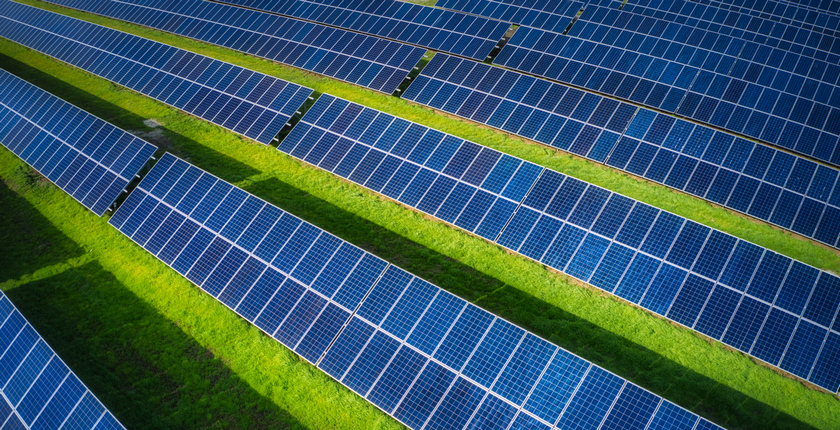
The Korea Trade Insurance Corporation (K-Sure) is providing EUR 900 million in export financing for Serbia’s 1.2 GWp solar project with battery storage, to be carried out by a consortium of South Korean firm Hyundai Engineering and US-based UGT Renewables.
Hyundai Engineering and UGT Renewables signed an agreement with the Serbian government in October 2024 to build a group of photovoltaic plants with a total connection capacity of 1 GW and 1.2 GW in peak capacity, alongside battery energy storage systems (BESS) with a combined 200 MW in operating power and up to 400 MWh in capacity.
Once completed, the facilities are to be handed over to Serbia’s state-owned power utility, Elektroprivreda Srbije (EPS).
Last December, Serbian Minister of Mining and Energy Dubravka Đedović Handanović said construction was expected to begin in 2026.
K-Sure, South Korea’s state-run export credit agency, noted in a press release that this is the largest overseas solar project landed by a Korean company to date and the first instance of participation in a Serbian national energy project.
Solar modules and other key equipment will be supplied by South Korean firms
It also said that the Hyundai Engineering – UGT Renewables consortium is responsible for engineering, procurement, and construction (EPC), while key equipment, such as solar modules and transformers, is to be supplied by South Korean manufacturers.
The Korea Trade-Investment Promotion Agency (KOTRA) shares the project risk by reinsuring the portion of Korean product supplies financed by the Swedish Export Credits Agency (EKN), according to the press release.
The future solar power plants are expected to generate 1.5 TWh per year
In a keynote speech at Belgrade Energy Forum – BEF 2025, Vice President of Hyundai Engineering Seung-Won Lee said that the PV plants would generate 1.5 TWh of electricity per year and offset more than one million tons of CO2 emissions.
Grid connection contracts for the facilities were signed with Serbia’s transmission system operator, Elektromreža Srbije (EMS), in May 2025.