


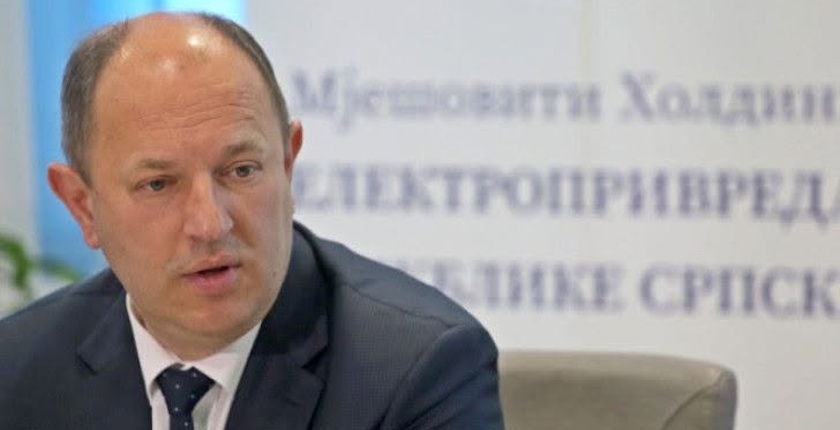
State-owned utility Elektroprivreda Republike Srpske (ERS) remains the most affordable electricity supplier in the region, according to CEO Luka Petrović. He stressed that power prices for businesses and households in the Republic of Srpska—one of the two entities comprising Bosnia and Herzegovina—are significantly lower than in neighboring countries.
Electricity prices for businesses in the Republic of Srpska stand at EUR 75 per MWh, compared to EUR 96 in the Federation of BiH, EUR 110–136 in Serbia, around EUR 130 in Croatia, and EUR 150 in Slovenia, Luka Petrović explained, Srna reported.
Households pay an average of EUR 39.6 per MWh (BAM 77.7 per 1,000 kWh, or BAM 0.77 per kWh).
Petrović noted that electricity tariffs for both industry and households have remained unchanged for two years.
84% of households consume under 350 kWh monthly
Petrović highlighted that 84% of residential consumers keep their monthly usage below 350 kWh. This lower domestic demand, he explained, allows Elektroprivreda Republike Srpske (ERS) to deliver its surplus power.
Under the 2026 power balance report adopted in September 2025, the parent company would book a profit of BAM 83 million (EUR 42.4 million), provided that its two coal power plants hit production targets and that the average hydrology supports its three hydropower plants. If generation falls short, ERS will have to import electricity.
For example, if the Ugljevik coal power plant plans to run for ten months out of 12 but only operates for five, ERS must buy power on the open market for those five months, Petrović explained.
Prices on the open market are much higher than the price of domestic electricity, he added.
Ugljevik will not operate reliably for the next year
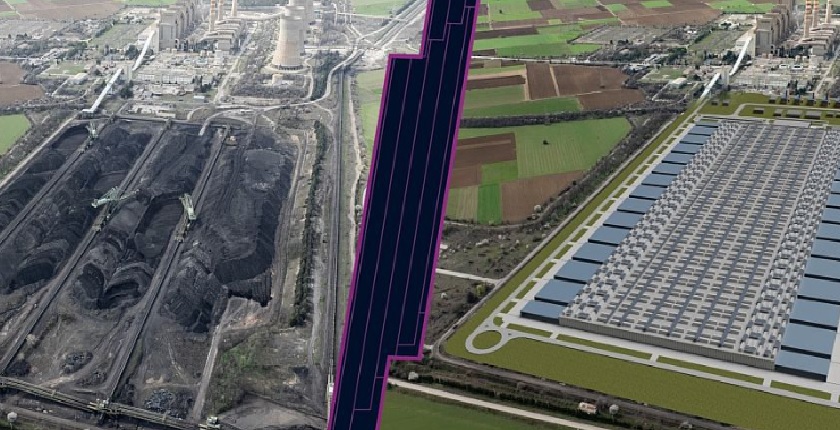
Petrović recently noted that the Ugljevik coal-fired plant will struggle with unstable operations over the coming year. The facility has suffered frequent outages in recent periods, primarily due to coal shortages.
The plant faces long-standing structural challenges. In addition to an arbitration ruling requiring it to deliver one-third of its output to Slovenia, its core bottleneck is securing coal concession fields.
While the Government of Republic of Srpska backed the Ugljevik mining and power complex (RiTE Ugljevik) to extend its operational lifespan by 25 years via the Istok 2 concession field, management must urgently proceed with land expropriation, Petrović added.