

The Western Balkans’ initiative for a fairer and more sustainable implementation of the European Union’s Carbon Border Adjustment Mechanism (CBAM), launched by Montenegro, has made a significant breakthrough at the EU level, according to the Montenegrin Ministry of Energy and Mining.
Proposals concerning the implementation of the CBAM regulation in the electricity sector have been incorporated into formal amendments of the European Parliament and have entered the next stage of consideration within the EU’s legislative process, the Ministry of Energy and Mining said in a statement.
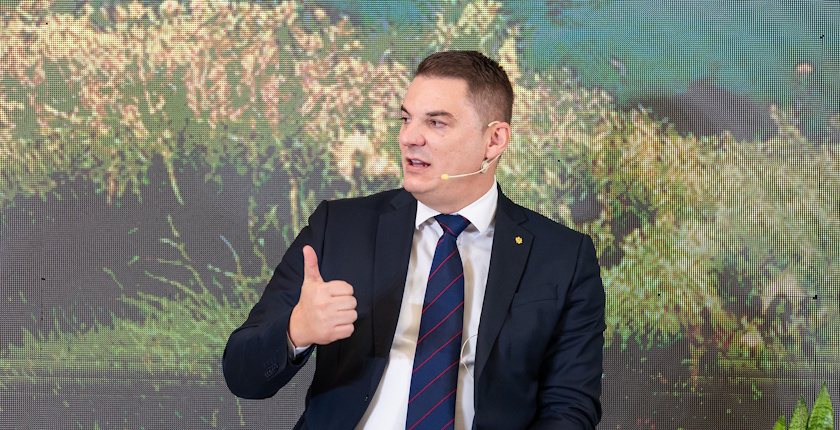
The initiative was devised and launched by Montenegrin Minister of Energy and Mining Admir Šahmanović and was subsequently unanimously supported by the energy ministers of the other Western Balkan countries, the statement recalled.
Intensive communication with EU institutions and member states will follow in the coming weeks, as the upcoming phase of the legislative process will be crucial for the final adoption of the proposed amendments, it stressed.
The proposed amendments have already been reviewed by the relevant committees of the European Parliament
“This represents one of the most important joint steps forward by the Western Balkan countries towards European institutions in the energy sector and the first time that an initiative launched by a Montenegrin minister has received the support of the entire region and is being considered in the European Parliament’s formal procedure,” the ministry emphasized.
The proposed amendments have already been reviewed by the relevant committees of the European Parliament, and are currently being considered by EU member states. According to announcements, they will also be discussed during the European Parliament’s September session.
The initiative’s significance goes beyond the borders of individual countries
The ministry recalled that the initiative was launched to ensure a fairer and more sustainable implementation of CBAM for Western Balkan countries, which are simultaneously undergoing a demanding energy transition and the EU accession process.
Its significance, the ministry stressed, goes beyond the borders of individual countries, as it concerns energy security, economic competitiveness, the preservation of investment potential, and the acceleration of renewable energy deployment across the region.
Šahmanović: Proof that the Western Balkans’ united voice can be heard in Brussels
“This is proof that the voice of the Western Balkans can be heard in Brussels when we act together, with clear arguments and concrete proposals. I am proud that the initiative we launched has been recognized as a relevant contribution to the European debate and that it has received the support of fellow ministers from across the region. This demonstrates that we share a common vision for the future of energy and that we are prepared to jointly seek solutions to the challenges ahead,” said Šahmanović.
He stressed that the aim of the initiative is not to deviate from European climate and energy policies, but to create a fair and sustainable framework that will enable candidate countries to successfully carry out the energy transition without jeopardizing the stability of their power systems and economic development.
“CBAM must be an instrument that encourages decarbonization, not an obstacle to investment and development. Western Balkan countries are already making significant efforts to align their policies with European standards, which is why it is important that the transition be fair, realistic, and sustainable. This is precisely the essence of our initiative,” Šahmanović stressed.
The ministry recalled that applying CBAM to electricity without taking into account the specific circumstances of Western Balkan countries could create a significant financial burden for power utilities in the region.
This could slow down new investment in renewable energy, hamper the energy transition, and adversely affect economic competitiveness, the statement added.