


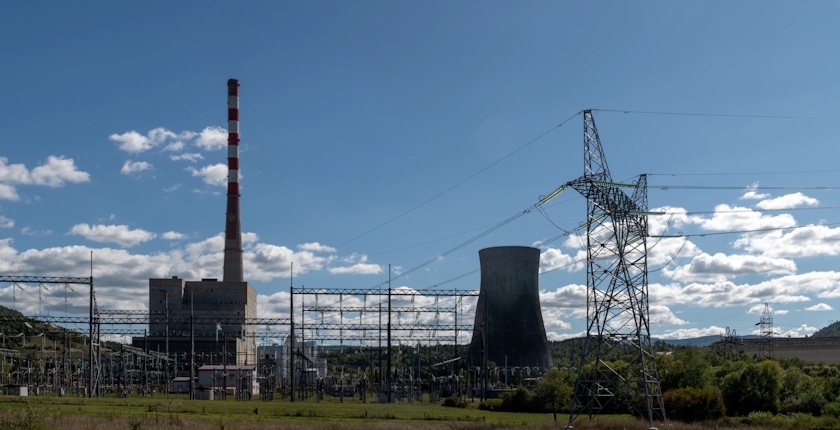
Despite the grid outage at the Pljevlja coal power plant, Montenegro’s power system remains stable and all consumers are supplied, according to the state power utility Elektroprivreda Crne Gore.
Power generation issues across Southeast Europe show no signs of slowing down.
Following the shutdown of Hungary’s Paks nuclear plant, a 50% capacity reduction at Romania’s Cernavodă facility, and record-low hydro output throughout nearly the entire region, Montenegro now faces its own set of challenges.
Unlike its neighbors, Montenegro’s troubles weren’t caused by drought.
The Pljevlja thermal power plant has been offline since Sunday, Elektroprivreda Crne Gore (EPCG) stressed.
According to the company, the facility lost all external power supply following a disruption at a transmission switchyard managed by the transmission system operator (TSO) CGES.
Pljevlja TPP accounts for 40% of Montenegro’s power generation
This event occurred outside the plant and was not caused by the company’s equipment failure or any internal system issue, EPCG explained.
Of note, TPP Pljevlja generates around 40% of the country’s electricity.
In the coming days, the unit will undergo a full cooldown process, according to EPCG. A decision on restarting the plant will only be made once all technical analyses are complete.
“Thanks to the rapid, highly skilled, and coordinated response of teams at TPP Pljevlja and EPCG, all mandated safety systems functioned as designed. This preserved facility safety, operational security, and overall grid stability,” the company said.
EPCG maintains grid stability amid regional stress
A total loss of external power supply represents one of the most complex emergency scenarios for thermal power generation.
Despite difficult conditions on the regional power market, EPCG continues to secure a reliable supply for all customers.
“Although current market conditions are further strained by reduced regional output, driven by multiple nuclear plant outages and unfavorable hydrology, EPCG is successfully maintaining grid stability and ensuring uninterrupted power delivery to both households and businesses,” the utility said.
Of note, severe drought has pushed the Danube to critically low water levels. Cooling water shortages have impacted the Paks and Cernavoda nuclear plants, while the Đerdap 1 and Đerdap 2 hydropower plants are down to just 20% and 30% of their normal output.