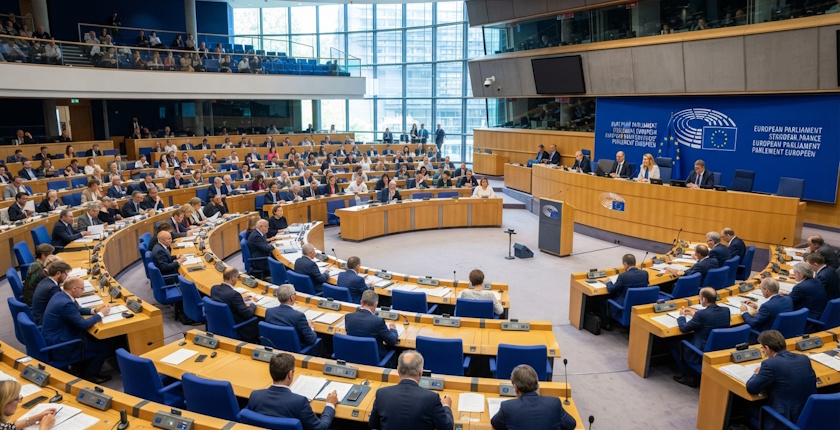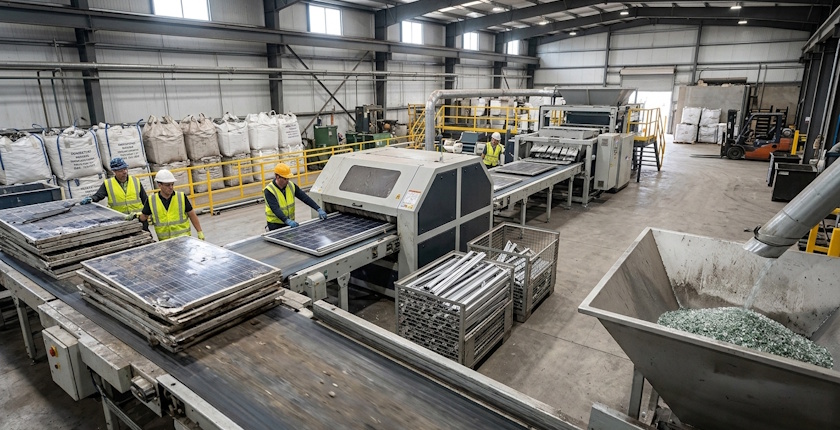



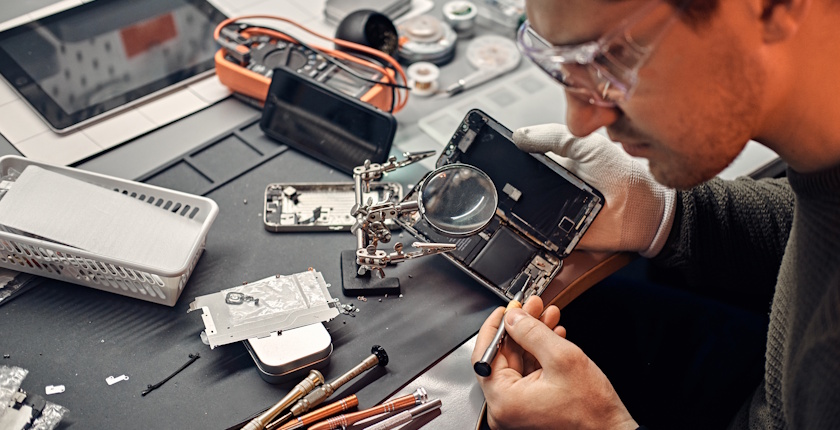
The implementation of the European Union’s new Right to Repair rules has begun in the EU member states. The aim is to make repairs more accessible and attractive to consumers, extend the lifespan of products, reduce waste generation, and support the transition to a circular economy.
The Directive on common rules promoting the repair of goods was adopted in June 2024 and entered into force on July 30 of the same year. The EU member states had until July 31, 2026, to transpose it into their national legislation and begin applying the new rules.
Buying a new device instead of repairing an old one has long been common practice, as repair costs are often too high compared to the product’s value. In addition, consumers and independent repair shops have faced difficulties accessing spare parts, tools, and information needed for repairs.
The new EU rules make repairs available even after the warranty expires
The new EU rules are intended to address these issues by making repairs more accessible both during the legal warranty period and after it expires.
Under the Directive, manufacturers are required to offer repairs for the following products: washing machines and washer-dryers, dishwashers, refrigerators and freezers, televisions and other electronic displays, vacuum cleaners, servers and data storage products, welding equipment, mobile phones, cordless phones, tablets, and household tumble dryers.
The list is not final. The European Commission will expand it as new repairability requirements for additional product categories are introduced under the Ecodesign framework.
Repairs beyond the warranty period
The Directive requires manufacturers of the covered products to offer repairs whenever they are technically feasible. This means manufacturers will no longer be able to refuse repairs and immediately encourage consumers to buy a new product if the existing one can be repaired. Repairs must be carried out within a reasonable time and, unless provided free of charge, at a reasonable price.
Manufacturers are also required to make information about their repair services, including indicative prices for common repairs, easily available.
Manufacturers are prohibited from using hardware or software that prevents repairs
The prices of spare parts for products covered by the Directive must also be reasonable and must not discourage repairs. The period during which spare parts must remain available depends on the type of product and the relevant EU Ecodesign rules.
For certain household appliances, spare parts and repair information must remain available for seven to ten years after the last unit of a product model has been placed on the market.
Manufacturers are prohibited from using contractual terms or hardware and software solutions that unjustifiably prevent or hinder repairs. This also covers certain forms of software-based component pairing, known as part pairing, where a device rejects a replacement part or limits its functionality simply because it was not installed or authorized through the manufacturer’s system.
An additional year of warranty
One of the most significant changes concerns products that fail during the legal warranty period.
When a consumer chooses repair instead of replacement, the warranty is extended by one year. The aim is to encourage consumers to repair products rather than immediately replacing them.
The European Commission will establish an online repair platform as part of the Your Europe portal. It is expected to become operational in January 2028.
A repair platform will help consumers find repair services
The platform will include dedicated sections for each EU member state and will help consumers find repairers, sellers of refurbished products, and other repair-related initiatives, such as so-called repair cafés.
Member states will be responsible for registering repairers and managing the national sections of the platform. According to the European Commission, the new rules could generate an additional EUR 4.8 billion in growth and investment across the EU.
At the same time, a higher number of repairs is expected to reduce the consumption of raw materials and energy, cut electronic waste, and lower emissions associated with manufacturing new products.