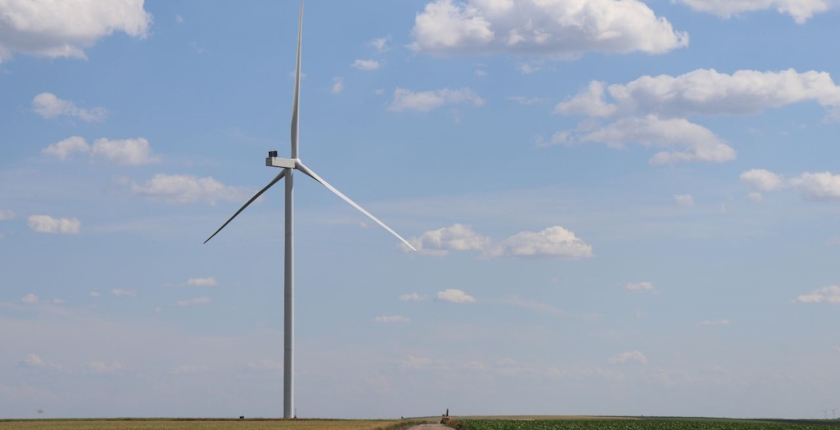



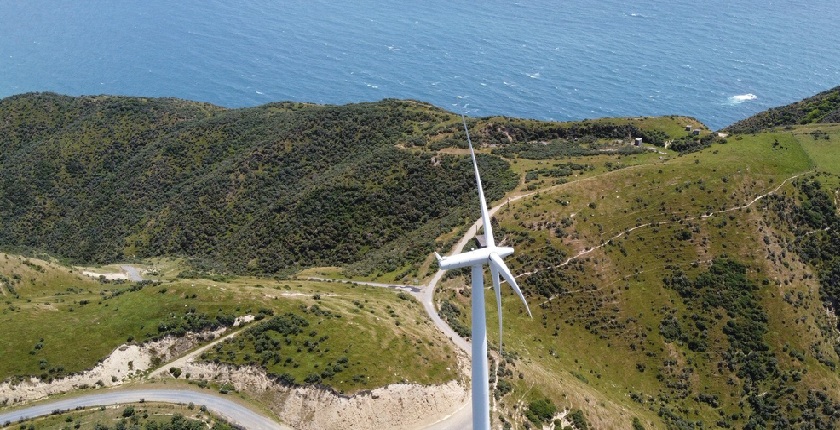
A recent wildfire caused by a wind farm’s private power network in western Attica burned 35,000 acres. As Greece finds itself faced against multiple such threats during the arid period of August, the prosecutor initiated a national investigation.
According to the fire department’s official assessement, the fire broke out from a private above ground power line connecting a wind farm to the main grid. This private line consisted of four different mid voltage segments and had a total length of 42 kilometers, of which 38 are below the ground and 4 are above.
The wind farm was completed recently in May 2026 and begun operating only days before the disaster took place. In June 27th a fire broke out under one of of the cables, but was immediately put out. In July 31st there was another fire, but this time it reached catastrophic proportions.
Prosecutor commands a full check
The owner of the company that built the private power network has been arrested, as well as its technical director and the owner of the wind farm.
After this disaster, the public prosecutor’s office commanded the fire department’s arson service to proceed with an in-depth investigation in every single wind farm of the entire country.
The aim is to find out whether there are other wind farms operating under dangerous conditions and if their licences are being implemented properly regarding installation, maintenance and operation.
Populism against wind on the rise
The situation has led to a rise in populist arguments against wind energy and renewable energy in general. Even though the wildfire was caused by mid voltage cables and not by wind turbines, there are many who blame this technology.
This is not new in Greece, as there was always a part of the population that was against wind farms. A longstanding cliche is that companies of the sector want to burn forests in order to install their projects. This, however, is not true as wind farms are mostly allowed in forests in Greece, while their installation becomes much more difficult in burned areas.
Recently, the government presented its new renewable energy spatial plan, which is more restrictive than before. For example, it forbids the installation of wind turbines above an altitude of 1,200 meters.
The finalized version of the spatial plan is not yet out. It remains to be seen whether these developments will lead to further restrictions.