


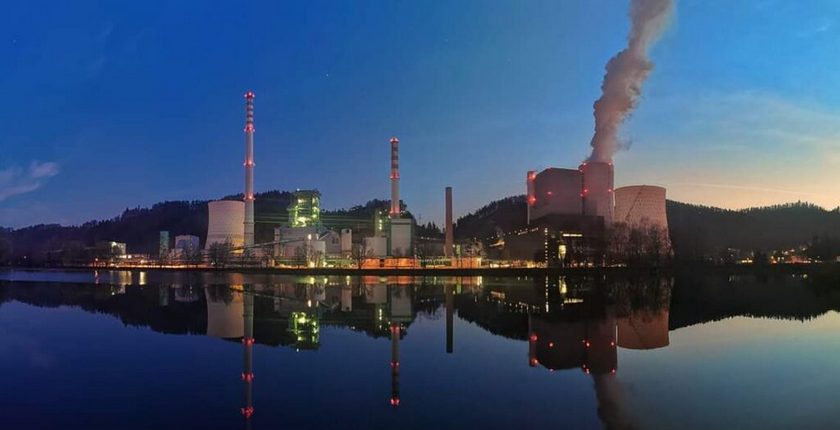
As of this year, Slovenia’s only coal-fired power plant, Termoelektrarna Šoštanj (TEŠ), has shifted its primary focus to supplying heat, with electricity now sold as a byproduct. The ongoing overhaul of its unit 6 is expected to be completed in the coming days, but the 600 MW block will not be restarted until the end of September, when demand for heat is set to rise.
As part of the coal-phaseout process, targeted for completion in 2033, the Government of Slovenia decided last year to set aside EUR 403 million to save TEŠ and coal mine Velenje from bankruptcy and take over both from state-owned power utility Holding Slovenske Elektrarne (HSE).
TEŠ hopes the fall months will drive revenues
TEŠ hopes that the fall months will enable it to meet this year’s revenue target, as the operation of unit 6 is unprofitable in the summer due to low market prices for electricity and reduced demand for heat. This year, the power plant aims to earn EUR 400 million from the sale of heat and electricity.
Apart from unit 6, TEŠ operates only one other coal-fired generator, unit 5, with a capacity of 345 MW, while its first four blocks have been shut down.
The changed circumstances have been challenging for TEŠ, according to its CEO, Branko Debeljak. As HSE no longer sells TEŠ’s electricity, the plant had to set up its own sales department and seek customers on the market. Even so, the first four months of 2025 were quite successful when it comes to electricity sales, says Debeljak. The plant sold 1,045 GWh of electricity, generating revenues of EUR 138 million, or EUR 29 million more than initially planned, according to him.
The overhaul of unit 6 began in April
The overhaul of unit 6 began on April 22 and was expected to be completed by June 20. However, due to delays in the delivery of components, it had to be extended until early July. The completion of the overhaul will be followed by a short trial run, and a restart is planned at the end of September when the need for heat supply is set to rise again.
Slovenia aims at a 55% drop in emissions by 2033, and an early closure of its only coal-fired plant could help achieve that target. It seems likely that TEŠ will be shut down within a few years or operate at minimum capacity.
In June, Ireland’s Moneypoint power plant stopped burning coal, marking the end of coal use in the country. Slovakia and Spain officially intend to exit coal in 2025, followed by Greece (2026), France and Hungary (2027), and Denmark and Italy (2028). However, the dates could be pushed forward, and more countries could join the group in the meantime.