


Oil companies in Serbia gained access to operational diesel fuel reserves, given that low river water levels are hindering imports, and the situation on the global market is becoming more complex. The seasonal increase in demand is contributing to supply difficulties. Meanwhile, historic lows in river flows are jeopardizing electricity production.
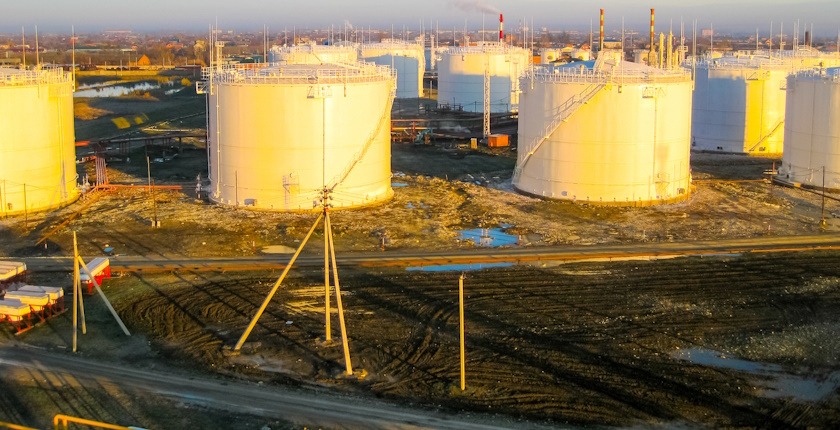
The Ministry of Mining and Energy approved requests submitted by oil companies in Serbia to use operational Eurodiesel reserves, for a secure supply in the domestic market, Minister Dubravka Đedović Handanović said.
“Due to the increasingly complex situation on the global market, difficult imports caused by low river water levels in our region, and the seasonal increase in demand, the ministry made a decision today to allow the oil companies that submitted requests to use operational reserves to supply the market. Operational reserves make it possible to bridge current supply difficulties without depleting state reserves, for oil companies to immediately receive the fuel they need, and for our market to be well supplied, as it has been so far. This was also a request from the oil companies, primarily because shipping imports have been reduced to 30 to 40 percent of capacity, which they currently cannot substitute from other sources,” she stated.
Operational reserves make it possible to bridge current supply difficulties without depleting state reserves
The minister pointed out that the supply situation is currently very challenging because oil companies cannot sufficiently rely on the Danube for imports, nor on railways and trucks.
“That is why it was necessary for the government to enable the use of a certain amount of fuel from the operational reserves of the companies themselves, as the law obliges them to keep them. These reserves are then replenished relatively quickly, as soon as imports of derivatives normalize, within a period that is mutually agreed upon, while at the same time avoiding the use of state reserves, which we keep and continue to increase. Also, we will enable NIS, at their request, to make its operational reserves available to companies that currently have higher demand from the domestic refinery, due to reduced imports, which will resolve the issue of domestic market supply in this period,” she stated.
Refiner, retailer NIS is crucial for Serbian market
NIS, also known as Naftna industrija Srbije, is the operator of the country’s only refinery and the biggest fuel station chain. It is majority-owned by Russian state-controlled company Gazprom, mostly through Gazpromneft.
United States imposed sanctions on NIS more than a year and a half ago. It has been extending licenses for a few weeks or months at a time, for transactions and supply via the Janaf oil pipeline, except for a three-month all-out blockade in the fourth quarter of last year.
In the meantime, negotiations began about selling the controlling stake to Hungarian MOL Group. The minister repeated that NIS and the desired extension of the license are crucial for the Serbian market.
Mandatory reserves level was doubled in last three years
Đedović Handanović emphasized that the government is ready to react in a timely manner.
“We cannot influence nature and global trends, but we can prepare in advance for crises and unforeseen situations, which is exactly what we have been doing. In the previous three years, we increased the mandatory reserves of petroleum products by as much as two times,” the minister said.
Companies are obligated by law to hold reserves
She also noted that a few days ago the government reduced excise duties on petroleum products by 20% to protect citizens and the economy from a sharp rise in prices.
Danube’s extremely poor flow curbs electricity production
In addition to the challenges in delivering fuel from abroad, production at the Đerdap 1 hydroelectric plant in May and June was the lowest since the beginning of its operation, state-owned power utility Elektroprivreda Srbije (EPS) warned. As reported by public broadcaster RTS, the flow of the Danube is at half its average and close to the biological minimum!
Đerdap 1 operates at one third of its average. Downstream is Đerdap 2. Half of both is held by Romania, where the complex is called Porțile de Fier – Iron Gate.
Due to low water levels in the Danube and lesser capacity for cooling turbines, production has been reduced in coal-fired thermal power plants in Kostolac. “We emphasize that there is no reason for concern because the stability of electricity supply to citizens and the economy is and will be the priority of Elektroprivreda Srbije, alongside financially sustainable and profitable operations of the company,” the company said.