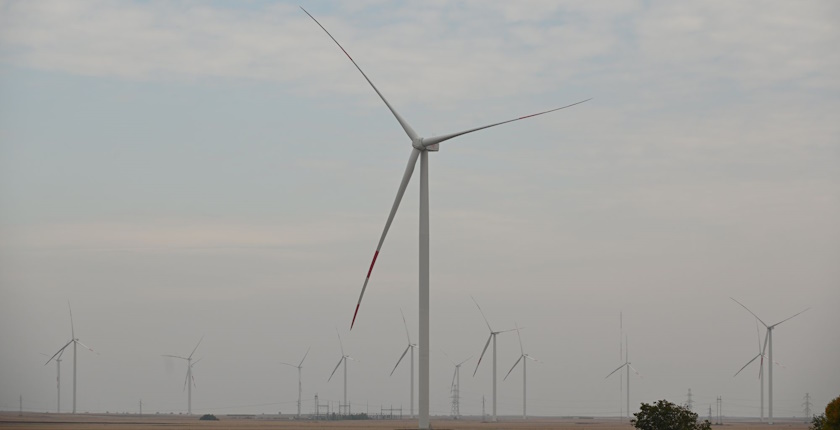



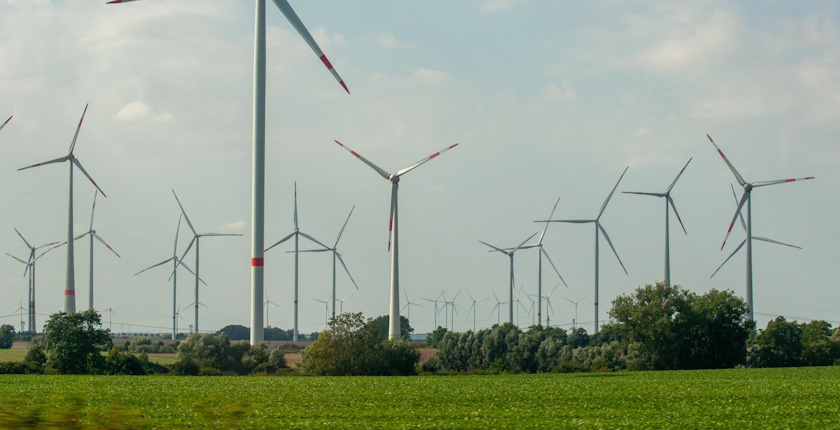
Europe is on track for a record wind power year, owing to 8.8 GW of capacity additions in the first six months and strong activity in the meantime, WindEurope said. It estimated the 2026 expansion at a stunning 24.1 GW and warned that policy choices would determine whether the pace continues. Separately, just around mid-year, Poland joined the offshore wind club.
The latest snapshot shows that wind power plants in Europe totaled 311 GW, of which 270.5 GW onshore, at the end of June. In its half-year report, WindEurope revealed that the overall additions amounted to 8.8 GW or 30% more than in the first six months of 2025. Onshore made up 74% and the European Union accounted for 7 GW.
“That’s good news for Europe’s energy security and competitiveness. But structural problems persist. Policy choices on permitting, grids, and electrification will determine whether the wind ramp-up will continue,” the document reads.
Europe is on track for a record year, given high installation activity over the summer. The industry group expects 24.1 GW, slightly less than in the previous update.
Germany dominates additions
Installations over the first six months of 2026 were driven by Germany, which contributed 3.4 GW. Remarkably, Ukraine installed more than 414 MW despite the ongoing war.
The report notes a new 456 MW in Poland, in the onshore segment. However, just around mid-year, the country joined the offshore wind club!
Namely, the Baltic Power system delivered the first electricity to the grid. It is a joint venture between Orlen and Canada-based Northland Power.
The 1.2 GW offshore wind farm is due for completion by the end of the year. Baltic Power will consist of 76 turbines delivered by Vestas. Poland controls Orlen through its 49.9% stake.
Greece tops Southeastern European chart in first half of 2026
As for the region that Balkan Green Energy News follows, Greece topped the chart in the first half, with 321 MW, reaching 6.02 GW. Turkey increased its capacity by 297 MW to 16.2 GW. Serbia climbed by 150 MW to 974 MW.
European operators ordered 10.6 GW of wind turbines in the period. It is 12% down year over year. The onshore chunk is 7.8 GW.
All-time high additions seen for auctions as well
Governments awarded 17.2 GW of wind power capacity in auctions: 8.8 GW onshore and 8.4 GW offshore. Additionally, Denmark and Moldova awarded a combined 2 GW of capacity in July and August – 1.8 GW offshore and 170 MW onshore, respectively.
Europe is set to tender an additional 26 GW in the second half, reaching the most in a single year so far.
Permitting volumes down in key markets
WindEurope now expects total installed capacity of 436 GW by 2030, of which 342 GW in the EU.
Germany permitted more than 9 GW of onshore wind in the first six months of 2026. It is looking at another record year. On the other hand, the volumes were down in Spain, France, the United Kingdom, Italy and Ireland.
Quality projects mustn’t drown in paperwork
“Just when we need wind the most to boost Europe’s economic resilience, permitting volumes are down in key markets. Government decisions on permitting, auctions, grids and electrification in the coming months will make or break this momentum”, says Chief Executive Officer of WindEurope Tinne Van der Straeten.
The association called on the administration in Brussels and member countries to determine EU permitting rules. It would enable quality projects to get grid connected rather than drown in paperwork, it pointed out. Among other recommendations, it urged rolling out the EU grids package.
“Stop experimenting with auction design. Two-sided contracts for difference are
the best deal for society. They unlock investments at scale by lowering the cost
of capital,” WindEurope underscored.