



Nominated electricity market operators in Europe are starting joint member testing on April 7 for cutting the cross-zonal day-ahead power trading interval to 15 minutes. The switch is expected to improve the integration of renewable energy sources.
The European wholesale electricity market is preparing to switch its market time unit (MTU) from 60 to 15 minutes within the Single Day-Ahead Coupling (SDAC) mechanism. The move is significant in competition terms as well as for liquidity and the optimization of power production resources. The Market Coupling Steering Committee, MCSC, said joint member testing is kicking off on April 7 with a plan to complete it on May 15.
It scheduled the go-live for 15-minute products for June 11, for delivery on June 12.
“Testing will allow us to fine-tune processes, validate key scenarios and ensure everything is in place for a smooth launch. Our teams are committed to rigorous testing to guarantee the system’s efficiency and reliability from day one. TSOs will provide production-like capacities,” the body added.
Intermittent renewables require shorter market time units
The Single Intraday Coupling (SIDC) and SDAC projects merged and formed MCSC three years ago. It consists of exchanges, formally called nominated electricity market operators or NEMOs, and transmission system operators (TSOs).
SDAC allocates scarce cross-border transmission capacity by coupling wholesale electricity markets from different regions through a common algorithm. It simultaneously takes into account cross-border transmission constraints. The aim is to create a single pan-European cross-zonal day-ahead electricity market.
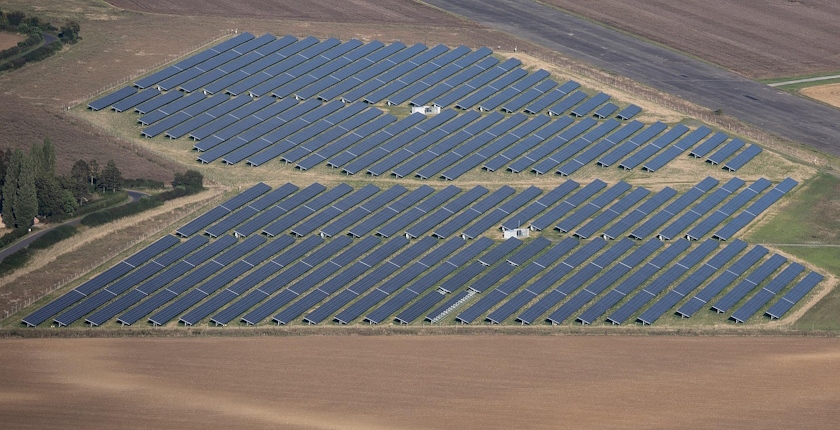
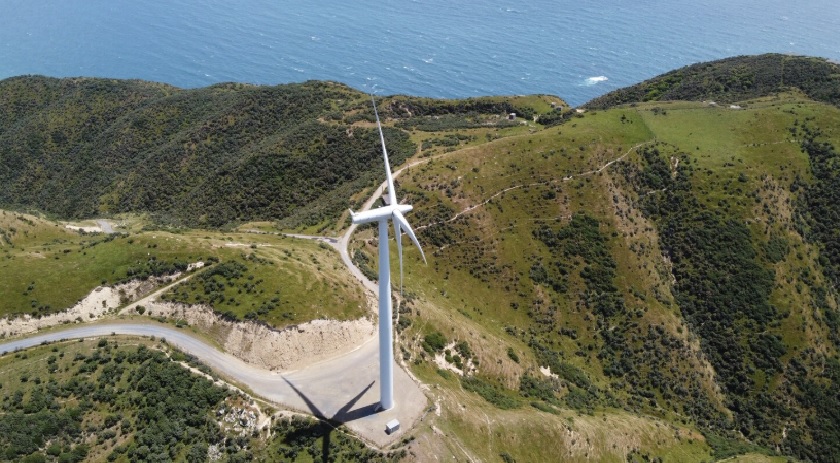
The market is experiencing a surge in intermittent sources – wind and solar energy, completely exposed to unexpected weather changes. The 15-minute MTU could eventually be cut to five minutes or even less.
“This new development will refine market operations by enhancing precision, improving the integration of renewable energy sources, and increasing overall efficiency and flexibility. By enabling better adaptation to fluctuations in energy supply and demand, it will support more accurate pricing and scheduling, delivering significant benefits to market participants,” the announcement reads.
NEMOs, TSOs to monitor as exchange members test new system
NEMOs and TSOs are responsible for monitoring as market participants test the shorter interval. The two sides will collaborate to further enhance process stability, MCSC said.
The tests include full decoupling with a shadow auction and the simulations of bidding errors and a lack of liquidity. The switch implies checking functional and simulation integration, among other elements.
JAO, the single allocation platform (SAP) for all the TSOs for cross-border transmission capacity, said it would conduct shadow auctions on April 7, 8 and 9.
As for power exchanges region that Balkan Green Energy News covers, the Romanian Gas and Electricity Market Operator (OPCOM), Independent Bulgarian Electricity Exchange (IBEX), Croatian Power Exchange (CROPEX) and Greece’s Hellenic Energy Exchange (EnEx or HEnEx) updated their members on joint testing ahead.
Of note, Greece and Bulgaria recently achieved another step in power market integration. Both connected to the Platform for the International Coordination of Automated Frequency Restoration and Stable System Operation (PICASSO). It enables them to trade balancing energy.
The Western Balkans aren’t coupled yet with the single European electricity market.