


After launching the commissioning of the world’s first gravity energy storage system, next to a wind farm near Shanghai, Energy Vault plans to deploy this innovative concept in supertall buildings around the world.
The new gravity energy storage systems are to be developed in partnership with Chicago-based architecture firm Skidmore, Owings & Merrill (SOM), which plans to design buildings up to a kilometer tall.
The innovative solution applied by Energy Vault harnesses the Earth’s gravity and kinetic energy: excess renewable energy is used to lift massive composite blocks, and then, when needed, the blocks are dropped and their kinetic energy spins generators that produce electricity.
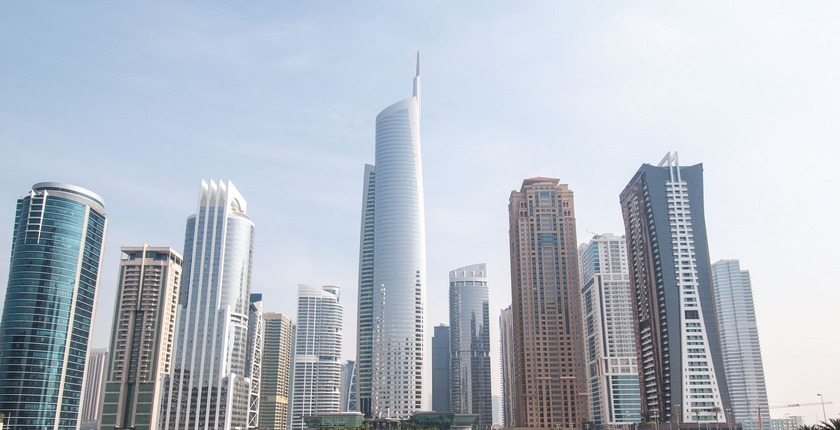
SOM designed the world’s tallest building, the 830-meter Burj Khalifa tower in Dubai.
Energy Vault has more gravity storage solutions
Under the contract with Energy Vault, SOM will be the exclusive designer for new Energy Vault gravity energy storage systems (GESS), incorporating the technology into high-rise buildings in urban areas and deployable structures in natural environments.
The cooperation has been going on for a year, including on four new Energy Vault GESS solutions. These solutions include the EVu system, a tower which enables the integration of a gravity system for energy storage in high-rise buildings through hollow structures over 300 meters and up to 1,000 meters high.
The storage capacity could reach several gigawatts, enabling it to power the building itself as well as nearby structures.
The facility in China could be online by the end of 2024
Other new solutions developed by Energy Vault are the EVc, a cylinder-shaped pumped hydro structure in tall buildings, the EVy, which is designed for existing slopes and terrain, and the EV0, which utilizes the benefits of pumped hydro storage but without building concrete structures and disturbing the environment.
The solution already implemented in China is called EVx, and Energy Vault and its partners Atlas Renewable and China Tianying have announced that they will connect the facility to the grid in the fourth quarter of this year.