


The ongoing wars have forced Western Balkan countries to focus on ensuring a stable energy supply in the short term and on developing alternative supply routes and sources in the long term. Energy ministers from the Western Balkans agreed at Belgrade Energy Forum (BEF 2026) that strengthening national and cross-border infrastructure for natural gas, electricity, and oil, along with closer regional cooperation, could help tackle these challenges.
Despite the ongoing energy crisis, which many predict will only deepen, energy ministers from Bosnia and Herzegovina, Montenegro, North Macedonia, and Serbia have no doubts that alignment with European Union standards and the development of renewable energy sources must remain priorities.
The experience of Azerbaijan, presented at BEF 2026 by Deputy Minister of Energy Elnur Soltanov, supports the views of the Western Balkan ministers. The country, located in the volatile Caucasus region, is a supplier of oil and natural gas and is also preparing to export green energy.
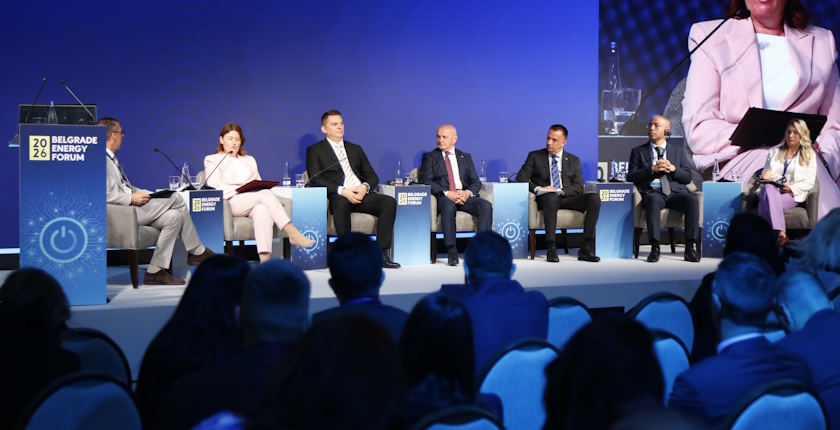
The ministerial panel was moderated by Radivoje Petrikić, Managing Partner at law firm CMS Belgrade, who noted that the wars in Ukraine and the Middle East are dramatically reshaping the energy sector and forcing entire continents to reassess their supply chains.
This shift, in his view, also has a profound impact on the Western Balkan region, which has traditionally been tied to energy corridors affected by the wars.
Fuel sales are growing in the border areas of North Macedonia and Montenegro
Almost all countries in the region have been forced to reduce taxes in order to curb sharp rises in fuel prices triggered by the surge in crude oil prices.
Due to the lowest fuel prices in the region, North Macedonia and Montenegro have recorded an increase in consumption in their border areas. In North Macedonia, sales have grown by as much as 30%. The country’s position improved at the beginning of the year with the commissioning of an oil product pipeline with Greece, which carried 145,000 cubic meters of diesel by the end of April, or 30% of the 2026 full-year plan.
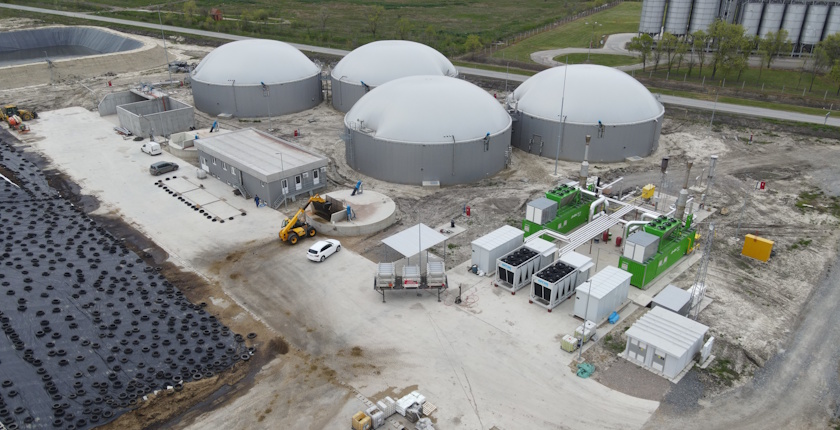
For its part, the Federation of Bosnia and Herzegovina (FBiH) has opened its first oil terminal in Blažuj, near Sarajevo, with a capacity of 42 million liters of crude oil and petroleum products, and is preparing to build three more.
The energy crisis has (not) altered strategic development directions

Radivoje Petrikić and Sanja Božinovska (foto: Balkan Green Energy News)
The energy crisis has not, in the view of regional ministers, altered strategic development directions. However, they acknowledge the changes in energy policies taking place across Europe and the world.
North Macedonia, according to Minister of Energy, Mining and Mineral Resources Sanja Božinovska, began preparing for these changes last year by adopting an energy law aligned with EU regulations.
Investments in green energy have increased, boosting the share of renewable sources to 58% of the country’s total installed generation capacity and 46% of overall electricity output.
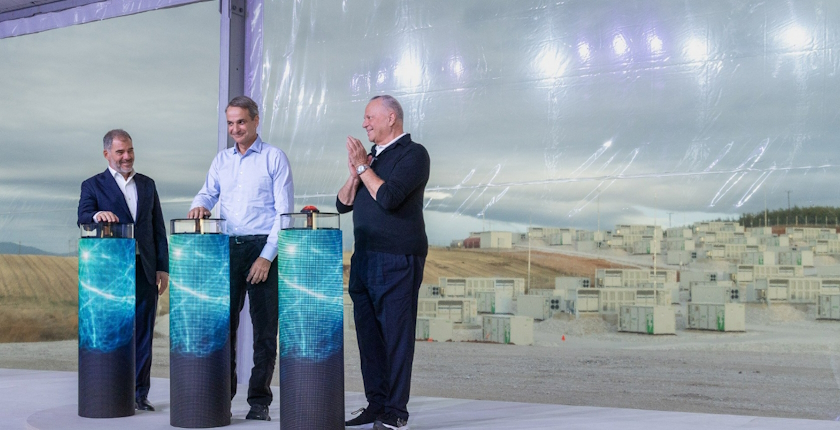
In North Macedonia, YESS Power has installed the first large-scale battery energy storage system (BESS) in the Western Balkans.
“The war has only accelerated all processes,” Božinovska concluded.
Šahmanović: Montenegro seeks to make up for lost time through intergovernmental agreements
According to Montenegrin Minister of Energy and Mining Admir Šahmanović, every crisis offers great development opportunities, and Montenegro intends to seize them.
In the past year, the country has focused on aligning its legislation with the EU acquis and is very close to closing Chapter 15 – Energy in accession negotiations with the EU. This is expected to happen in the coming months.
With the development of data centers and artificial intelligence (AI), electricity consumption in Europe is expected to increase, and this is where Montenegro sees its opportunity, according to Šahmanović.
He said he believes that in the future, the question will not be whether a nation is large or small, but whether it has sufficient electricity, especially if it comes from renewables.

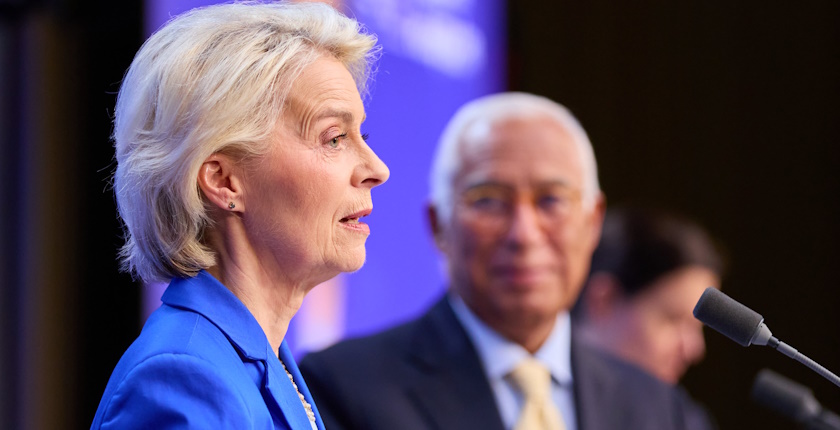
Sanja Božinovska and Admir Šahmanović (photo: Balkan Green Energy News)
Montenegro, he stressed, seeks to make up for lost time through intergovernmental agreements.
The minister noted that the process of power market coupling with the EU is underway through a collaboration with Italy, and that the construction of the Montenegrin section of the Trans-Balkan Electricity Corridor is nearing completion.
All this, along with other achievements, has paved the way for an agreement with Terna on a second submarine power cable to Italy, designed to double the interconnector’s existing capacity and position Montenegro as an energy bridge between the Western Balkans and the EU, according to Šahmanović.
“We aim for Montenegro to become a vital strategic partner to the EU by leveraging our capacity to supply electricity from renewable sources at competitive prices,” Šahmanović stressed.
Đokić: Energy policy in Europe is changing
Petar Đokić, Minister of Energy and Mining of the Republic of Srpska, recalled that the legal framework has been fully aligned with EU legislation. The Republic of Srpska, one of the two entities that make up Bosnia and Herzegovina, is continuing along that path, and is now expected to pass amendments to the Energy Law that will introduce energy storage.
In the past few years, power plants with a capacity of 540 MW have been built, and Đokić believes that the owners of these facilities, as well as new investors, will be motivated to install batteries to improve the power plants’ efficiency and shorten the payback period of their investments.
The Republic of Srpska’s only concern is that energy policy in Europe is changing, he said, citing the natural gas sector as an example.
A contract worth BAM 1.029 billion (around EUR 526 million) was recently signed for the construction of a 500-kilometer gas pipeline, which is expected to be completed within four years. However, it remains uncertain whether the Republic of Srpska will have access to all gas supply routes, said Đokić, citing the example of Nord Stream, which has been blocked by politics.
He also hinted that TurkStream, through which the Republic of Srpska is currently supplied, could potentially face the same fate.

Petar Đokić and Vedran Lakić (photo: Balkan Green Energy News)
Đokić also highlighted excellent cooperation with Vedran Lakić, Minister of Energy, Mining and Industry of the Federation of BiH, the other entity of Bosnia and Herzegovina. Lakić, in turn, described the cooperation as “perfect.”
Lakić: We must achieve regional integration in three sectors – gas, electricity, and oil
Lakić also pointed out that different parts of the world view the future of energy differently and that this serves as a useful warning to everyone.
It is also a message that each country must first take into account its own interests and needs, according to him. “It is particularly important that we achieve regional integration in three sectors – gas, electricity, and oil,” he added.
In light of the EU’s decision to stop using Russian gas from 2028, the Federation of BiH is building the Southern Gas Interconnection, in a project worth EUR 1.5 billion.
“We really no longer have time for any talk of a transition. We must act promptly and demonstrate through actions how we will save the energy sector and further develop it,” Lakić warned.
FBiH now wants the kind of cooperation established with Croatia on the gas pipeline to be replicated in its project with Serbia to build three hydropower plants on the Drina River.
Joksimović: The introduction of intermittent renewable energy sources should not come at any cost
In the just transition segment, FBiH has decided, without causing social unrest, to close its first coal mine, Zenica, and to build two solar power plants at the Banovići and Kreka mines, Lakić noted.
However, he added, FBiH will not abandon its mining sector – the remaining six mines must increase production to ensure baseload generation at two thermal power plants.
According to Jovana Joksimović, Serbia’s assistant minister of energy and mining, the country has already defined regulatory and strategic frameworks aligned with its international obligations and the EU integration process, as well as with its national interests.
She said that the introduction of intermittent renewable energy sources should not come at any cost, but should be done while protecting the energy system and working on diversifying the energy mix.
She recalled that Serbia is also considering using nuclear energy as an emissions-free energy source.
Azerbaijan offers oil, gas, and green energy

Elnur Soltanov (photo: Balkan Green Energy News)
New energy sources and supply routes are precisely what Azerbaijan can offer to the Western Balkans.
Elnur Soltanov, the country’s deputy energy minister, said that in addition to the oil and gas corridor, Azerbaijan is also developing a green energy corridor.
He explained that the Azerbaijan-Europe green corridor is being developed together with Georgia, Romania, and Hungary, and that other countries are welcome to join.
Soltanov recalled that Azerbaijan signed a memorandum of understanding with the European Commission in 2022 to double its gas exports to the EU, from 10 billion cubic meters to 20 billion cubic meters, via the Southern Gas Corridor.
Azerbaijan currently produces 50 billion cubic meters, exporting 25 billion cubic meters, of which 12-13 billion cubic meters go to European countries.
Since it has no access to the sea, Azerbaijan can export gas only via pipelines, and not by ships as liquefied natural gas (LNG). This complicates the situation, because it is easier to find buyers for LNG than for pipeline gas.
Azerbaijan has natural gas resources and can take the risk of developing the second phase of the Southern Gas Corridor on its own. However, this requires long-term purchase agreements and financial support, according to Soltanov.
New investment in the next ten years

Petar Đokić, Vedran Lakić, and Elnur Soltanov (photo: Balkan Green Energy News)
Regional ministers expect the alignment of national regulatory frameworks with EU standards to be completed in the next five to ten years, along with ongoing and new projects for electricity transmission and generation infrastructure.
North Macedonia and FBiH plan to finish building gas interconnections with neighboring countries – North Macedonia with Greece and Serbia, and FBiH with Croatia.
Sanja Božinovska, North Macedonia’s energy minister, believes that alignment with the EU acquis will be beneficial for investors, as the same rules will apply in both the EU and the region. She also hopes that at least some of the countries, if not all, will complete the coupling of their electricity markets with the EU.
She expects that the 2026 plan to build 4 GW of renewable energy power plants and 2 GW of batteries will be implemented. In the same period, construction should also begin on the Čebren pumped storage hydropower plant of 333 MW.
Božinovska: We cannot be an isolated island
“We cannot function on our own as an isolated island. I expect more integration and regional cooperation,” Božinovska concluded.
Montenegro’s plans rely on the development of renewable energy sources and exports. To achieve this, according to Admir Šahmanović, the country has chosen the path of strategic partnerships. It has signed intergovernmental agreements with the United Arab Emirates (UAE), France, and Hungary, and plans to do so with the United States next month, Montenegro’s energy minister said.
A few weeks ago, Montenegrin state power utility Elektroprivreda Crne Gore (EPCG) signed an agreement to establish a joint venture with the UAE-based Masdar to develop clean energy projects, and preparations are underway to build a hydropower plant in cooperation with France’s EDF.
Šahmanović recalled that Montenegro intends to develop gas-fired power plants with the United States to provide baseload energy as an alternative to the Pljevlja thermal power plant. That requires a connection to the gas pipeline that has reached Albania, he added.
Projects for an LNG terminal and a 500 MW gas-fired power plant are in the development phase, according to Šahmanović.

Vedran Lakić (photo: Balkan Green Energy News)
According to Minister Petar Đokić, the Republic of Srpska will complete two hydropower projects – Dabar and Bistrica – by the end of 2027. Bistrica is a complex of three hydropower plants.
A total of 37 contracts for the construction of renewable energy power plants have been concluded, most of them with state power utility Elektroprivreda Republike Srpske (ERS), he said.
“The installed capacity of the power plants covered by the contracts is 2,304 MW, and all of it could be built within the next five years,” Đokić said, adding that the value of the projects is around BAM 5.5 billion (EUR 2.8 billion).
An agreement with the World Bank is also expected to be concluded on a project to develop prosumers, with an expected solar power capacity of 200 MW.
Lakić: We need to build an energy system flexible enough to respond to all future challenges
FBiH will significantly increase coal production over the next three to five years to ensure baseload energy and reduce electricity imports, according to Minister Vedran Lakić.
He believes that infrastructure development according to the needs of each individual country should be a priority. However, it is much more important to achieve regional integration, according to him. “I believe we should build an energy system whose main feature will be flexibility for the coming period, so that we can respond to all future challenges,” Lakić said.
Serbia is moving towards the goal set in its National Energy and Climate Plan (NECP) of generating 65% of its electricity from renewable sources by 2030. Jovana Joksimović expects that electricity market coupling with the EU will be the first proof of Serbia’s readiness for European integration.

Jovana Joksimović (photo: Balkan Green Energy News)
In her view, the region should follow global and European trends, but the national context must always take priority. She believes that every country should diversify supply routes and sources in line with national interests, and adapt its energy mix to technological development.
Soltanov: Azerbaijan was more likely to fail than to succeed
The Western Balkan ministers’ belief that cooperation is the solution to energy problems was supported by Elnur Soltanov, who cited the experience of his own country as an example. He explained how Azerbaijan managed to develop its oil and gas sector, despite being part of a volatile region, very similar to the Western Balkans.
The country first extended its oil pipeline to Georgia and Turkey and further to the Mediterranean Sea (the Baku–Tbilisi–Ceyhan pipeline), and later developed the Shah Deniz gas field, which supplies the Southern Gas Corridor.
Its capacity to develop intercultural relations enabled Azerbaijan to build a regional coalition, securing the support of a strong regional player, Turkey, as well as global players, the EU and the US, according to Soltanov.
“We hope the EU will realize that CBAM is bad for our economies”
Regional ministers reiterated that the implementation of the EU’s Carbon Border Adjustment Mechanism (CBAM) has created significant challenges.
About ten days ago, Minister Admir Šahmanović wrote on behalf of Montenegro, Bosnia and Herzegovina, Kosovo*, North Macedonia, and Serbia to the relevant committee of the European Parliament, stating that the carbon border tax had reduced electricity exports from the region to the EU.
Šahmanović said that they hoped their colleagues in the EU would understand that this was simply not good for regional economies.
He added that no one is trying to avoid obligations, but that the region is simply not ready for this type of taxation and is seeking technical and financial support.
Petar Đokić, for his part, noted that the withdrawal of the US from the Paris Agreement has raised questions about the direction the world is heading. “Can Europe protect the global climate on its own through its policies, or is it time to consider a different model?” he asked.