


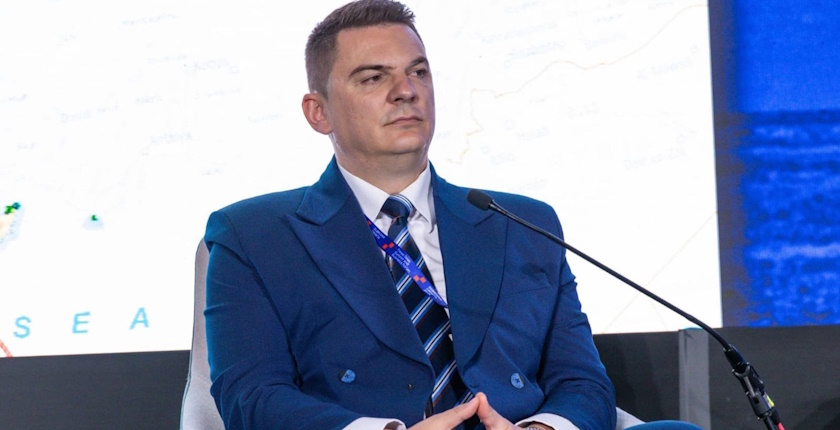
Montenegro, Serbia, Bosnia and Herzegovina, Kosovo* and North Macedonia are asking for the amendments to the European Union’s CBAM Regulation to be adjusted. On behalf of the group, Minister of Energy and Mining of Montenegro Admir Šahmanović wrote to the relevant committee of the European Parliament that uncertainty in the Western Balkan electricity markets led to a weakened interest in the EU in purchasing electricity from the region, including from renewable sources.
In cooperation with the Energy Community Secretariat, energy ministries of Montenegro, Serbia, Bosnia and Herzegovina, Kosovo* and North Macedonia asked for “limited but targeted refinements” to the amendments to Regulation (EU) 2023/956, which covers the Carbon Border Adjustment Mechanism (CBAM). Minister of Energy and Mining of Montenegro Admir Šahmanović wrote to the European Parliament’s Committee on Industry, Research and Energy (ITRE) for support.
Within the framework of interinstitutional negotiations that particularly concern electricity as a CBAM item, the group of Energy Community contracting parties suggested adjustments to the measures that the European Commission proposed in December.
On their behalf, Šahmanović expressed concern that certain objectives, particularly those related to market coupling, may not be attainable under the current provisions of the CBAM Regulation.
Significant progress achieved in transposition
CBAM, which entered its definitive phase on January 1, brought a surcharge on all electricity exported to the EU from the region, irrespective of the source.
Šahmanović: The commission will find that the countries of the region fulfilled their commitments and reached a point of no return on the path toward integration with the EU electricity markets
“This has led to uncertainty in our electricity markets. Consequently, we have observed reduced interest from EU-based partners in purchasing electricity from our producers, including electricity generated from renewable sources. This situation has been particularly evident in periods of abundant clean energy production, notably due to increased hydropower output driven by seasonal precipitation,” Šahmanović pointed out.
He told EU lawmakers that the Western Balkans have made significant progress in the transposition of the EU’s electricity rules, an essential step towards market coupling. The commission’s verification will confirm that they fulfilled their commitments and reached a point of no return on the path toward integration with the EU electricity markets, the minister asserted.
CBAM’s strictness jeopardizes market coupling process
While acknowledging that the region fully supports the EU’s energy and climate ambitions, Šahmanović warned that CBAM’s stricter conditions and shorter timelines risk undermining the efforts towards successful electricity market coupling.
The initiative is aimed at recognizing the specificities of the Western Balkans’ energy systems in the legislation. According to documents that Balkan Green Energy News obtained, the proposals include the possibility of an early exemption of electricity from CBAM in case of successful verification. An exemption could be extended past the current 2030 limit.
The Western Balkans asked for the possibility that the European Commission and candidate countries jointly determine the deadlines and the price of carbon. Under the adjustments, power purchase agreements (PPAs) and guarantees of origin (GOs) would be proof of origin of electricity.
Alongside his counterparts from the region and Energy Community Secretariat Director Artur Lorkowski, Šahmanović is participating in the Belgrade Energy Forum 2026 next week in Serbia’s capital. Balkan Green Energy News is organizing the annual event for the fourth time in a row.