

The Croatian government has allocated EUR 2.67 million for a project to determine the potential for geological carbon dioxide storage in Croatia.
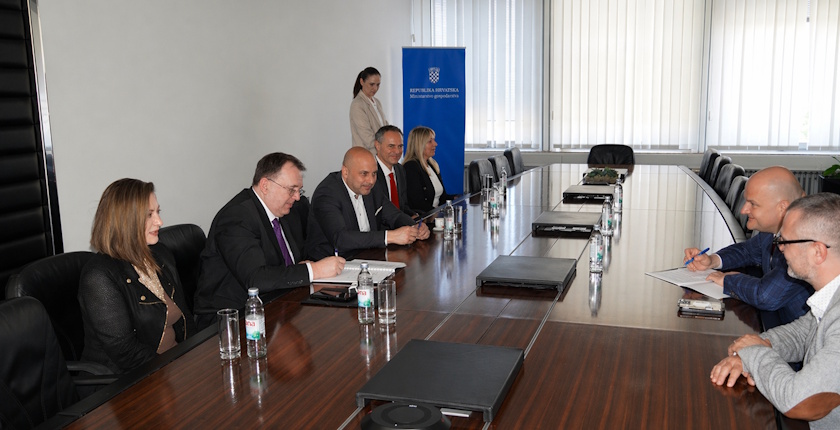
A grant agreement for the carbon dioxide capture and storage project was signed at the Ministry of Economy, as part of the National Recovery and Resilience Plan 2021-2026.
The contract was signed by the Minister of Economy Ante Šušnjar, President of the Management Board of the Croatian Hydrocarbon Agency Marijan Krpan, and Luka Balen, manager of the Environmental Protection and Energy Efficiency Fund.
The project is being implemented within the investment item for the use of hydrogen and new technologies, and the total value of the allocated grant is EUR 2.67 million, with a 100% co-funding rate, according to the ministry.
The project includes the creation of an atlas of deep saline aquifers and geological structures suitable for the permanent disposal of CO2
The project’s aim is to determine the potential for geological storage of CO2 onshore and offshore in Croatia, and create the prerequisites for the development of new technologies and strengthening the resilience of the energy system.
The project includes the creation of an atlas of deep saline aquifers and geological structures suitable for the permanent disposal of CO2, production of a pre-FEED (preliminary front-end engineering and design) study for the Bockovac site, procurement of a software package for designing the carbon capture and storage (CCS) system, as well as promotion and visibility.
Minister Ante Šušnjar pointed out that the project makes Croatia one of the region’s leaders in developing solutions for managing CO2 emissions.
Krpan: The project affirms the agency’s role in the decarbonization of heavy industry
The development of such projects strengthens the economy’s competitiveness and further positions Croatia as a relevant partner in the European energy transition, he noted.
According to the President of the Management Board of the Croatian Hydrocarbon Agency Marijan Krpan, the project affirms the agency’s role in the decarbonization of heavy industry.
Atlas will, as he explained, serve as a basis for future CCS projects, including the strategic GT CCS project, which envisages the development of transport infrastructure, storage capacity and the use of geothermal energy.
The project contributes to meeting national and European climate goals, and ensures compliance with European policies, whilst strengthening Croatia’s role in developing solutions for the permanent disposal of CO2, Krpan added.
Balen: A feasibility study will be prepared for the Bockovac site
Luka Balen, manager of the Environmental Protection and Energy Efficiency Fund, stressed the importance of preparing an expert base for making future decisions.
The creation of an atlas of geological structures suitable for permanent CO2 storage and a feasibility study for the Bockovac site will enable making decisions on future investments and the development of infrastructure for decarbonisation, Balen explained.
This creates room for the application of advanced solutions in reducing greenhouse gas emissions, while also strengthening Croatia’s role as an active participant in the development of innovative technologies, in his view.
The call for the carbon dioxide capture and storage project was published in early 2026. The Croatian Hydrocarbon Agency was designated as the only eligible entity for its implementation.
Of note, the Ministry of Mining and Energy of Serbia said in January that the draft law on hydrocarbon exploration and exploitation will include permanent disposal of carbon dioxide in geological formations of depleted deposits.