


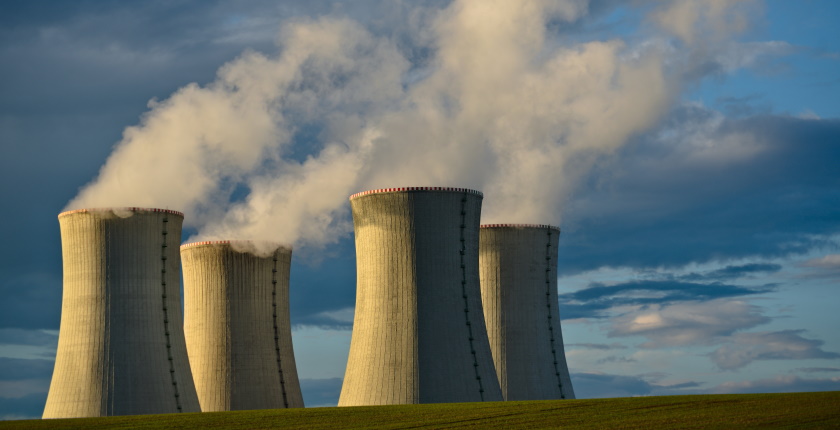
Germany is reconsidering the decision to shut down its last three nuclear power plants at the end of the year. The three facilities that it retired last year can be brought back online and the entire fleet is capable to run for at least three more years, according to Joachim Bühler from safety inspection operator TÜV.
Nuclear power plants Brokdorf in Schleswig-Holstein, Grohnde in Lower Saxony and Gundremmingen C in Bavaria are “in excellent condition” and they can be restarted within “months or weeks,” TÜV’s Managing Director Joachim Bühler told the Bild. The head of the testing and certification organization said such a move would be technically feasible and “harmless.”
The three units were shut down at the end of last year as part of the denuclearization process, which was accelerated after the Fukushima nuclear disaster in 2011 in Japan. Germany is already reconsidering the decision to retire the last three nuclear plants at the end of the year: Isar 2 in Bavaria, Neckarwestheim in Baden-Württemberg and Emsland in Lower Saxony.
Nuclear turnaround
The government was refusing to keep the last three units on for longer until recently despite Europe-wide electricity and gas shortages and record prices. The situation deteriorated further after Russia’s invasion of Ukraine. Eventually it opened the way for the Alliance 90/The Greens, a junior partner in the ruling coalition, to stop insisting on the denuclearization deadlines, which are determined by law.
Until as little as a month ago, the German government resisted the idea to extend the operation of the remaining three nuclear units
The claim that even three retired nuclear plants can be brought back online is another surprise. As little as a month ago, high-ranking officials were still citing legal, licensing, safety and insurance issues that would arise with an extension for existing nuclear units. They also said it would be difficult to obtain additional nuclear fuel.
Others have urged the decision makers in Berlin to act fast, arguing that the shutdown process is well underway and that it would get harder to reverse it as time goes by. Bühler added that the entire fleet could operate until 2026.
Scholz signals revision of denuclearization policy
Vice Chancellor and Federal Minister for Economic Affairs and Climate Action Robert Habeck is the most senior member of the Greens in the cabinet. Chancellor Olaf Scholz has just reiterated that the government would “have a look at” the results of a repeated and stricter stress test that is being conducted.
Finance Minister Christian Lindner from the Free Democratic Party called for the extension of the existing fleet’s operation until 2024.
Slovakia and Hungary have urged Germany not to shut down the last three nuclear plants, which have a combined capacity of 4.3 GW. They currently provide 5% or so of the country’s electricity.
Reactor rods are usually ordered one year in advance
One of the options is to stretch the operation of the existing facilities by up to three months with the fuel that they already have, though it may require savings in the meantime, according to some experts. Industry officials warned that reactor rods are usually ordered one year in advance.
Of note, Belgium was supposed to decommission its two nuclear reactors with 2.1 GW in total capacity in 2025, but in March it decided to keep them running for another ten years.
Comments (2)
Dan Woodard
A viable approach to slowing climate change requires an adequate supply of carbon free energy. This includes the continued safe production of nuclear energy. Germany has an excellent safety record in this industry and the alternative, remaining dependent on Russia and on fossil fuel, imposes greater environmental and geopolitical risk. Moving forward with planning, licensing, inspection, and fuel procurement is the prudent course.
Nutron Flux
The author is dreaming. If the plants said to be restarted were not laid up correctly, the heat exchangers are junk. The lack of chemistry control has caused considerable loss of material due to corrosion. The Licensed operators are gone and their training is void. The pump seals need to be changed. The electronics do not like being deenergized for a lengthy time. The control rod drive mechanisms are suspect. The reactor protection system is untested. Safety Injection lost its certification. The memoranda of understanding with all the support organizations are null. The warehouses have lost credentials to store spare parts. Numerous regulations are no longer met and would require months of approvals to even begin. The first step would be to get an assessment team of qualified engineers on site to develop and execute a comprehensive list of what’s needed for restart and operation. Maybe in 4 months, a list and schedule be finalized. Then it would have to be presented to regulators, financial backers, local jurisdictions, emergency offsite organizations, and insurance companies. Nuclear plants are designed to be staffed continuously from day 1 with no lapse in coverage. The greenies killed the Golden Goose when they shut down a perfectly viable source of carbon-free electrical production. What a horrifying waste!