

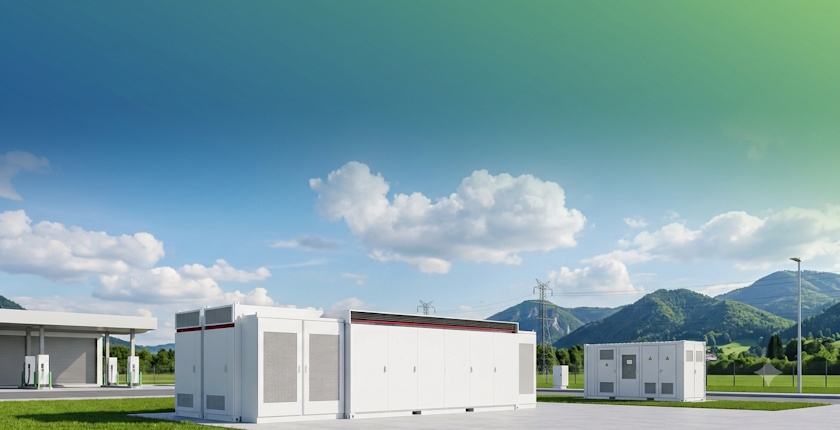
The European Commission has approved a EUR 59 million Slovenian state aid scheme to promote stand-alone battery energy storage systems. It is the first scheme to support this kind of BESS in the country.
Slovenia intends to support the installation of at least 370 MWh of new storage capacity, which contributes to the objectives of the Clean Industrial Deal, according to the European Commission.
The measure was approved under the Clean Industrial Deal State Aid Framework (CISAF), adopted by the commission on June 25, 2025.
The purpose of the scheme is to increase the integration of renewable energy sources in the electricity system through the deployment of stand-alone battery energy storage systems, the update reads.
The aid amount will be set by Slovenia based on the investment costs of each project
The scheme will be financed by the Just Transition Fund and the ETS Modernisation Fund.
Under the scheme, the aid will take the form of direct grants for the construction of new stand-alone battery electricity storage systems, the decision reads.
The aid amount will be set by Slovenia based on the investment costs of each project. It is set to be granted before December 31, 2030.
According to the commission, the Slovenian scheme is necessary, appropriate and proportionate to accelerate the transition towards a net-zero economy and facilitate the development of certain economic activities, which are of importance for the implementation of the Clean Industrial Deal.
Stand-alone BESS capacity has reached 70 MW
The country is regularly allocating subsidies for the installation of batteries for businesses, local authorities, and prosumers.
Slovenia currently operates stand-alone BESS installations with a combined capacity of around 70 MW / 140 MWh.
For example, NGEN installed facilities in Jesenice (12.6 MW / 22.2 MWh) and in Kidričevo (35 MW / 70 MWh), while GEN-I inaugurated a 12 MW / 24 MWh facility in Kidričevo.
Transmission system operator ELES has installed a 10 MW / 20 MWh battery.