


Hourly day-ahead prices at the SEEPEX electricity bourse for delivery on June 7 have tumbled as low as EUR 45.5 per MWh under zero, setting a record for Serbia. Zero and negative power prices are becoming more frequent and deeper throughout Europe, and they last longer.
Since the SEEPEX power exchange in Serbia allowed negative prices a month ago, there were only a couple of occurrences at its day-ahead market, of EUR 0.01 per MWh. But on Saturday, June 6, the operator logged the first intensive dip on an hourly basis. Within the nine consecutive hours in negative territory for the following day, the level plunged to as low as EUR 45.5 per MWh under zero.
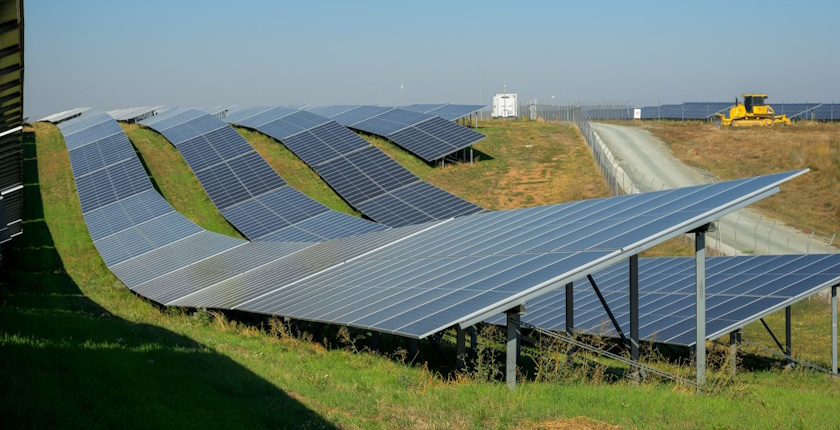
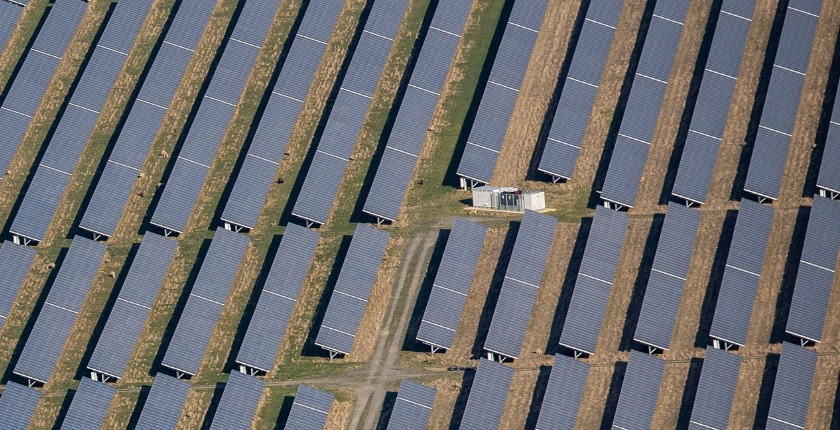
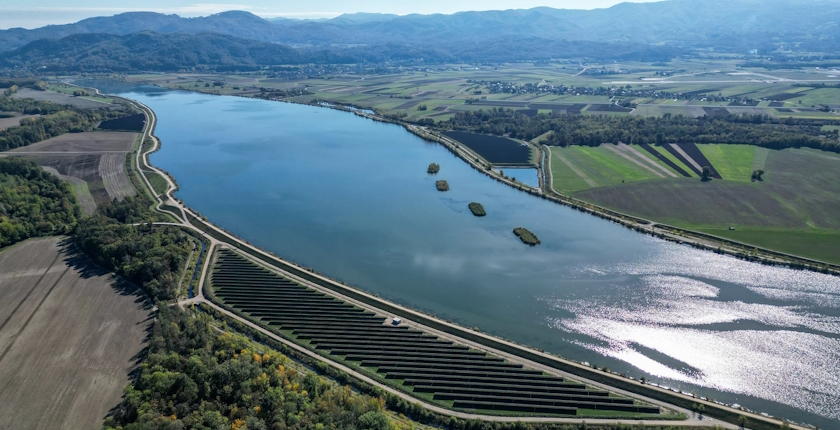
The phenomenon emerged with the surge in photovoltaic and wind power capacity in Europe and beyond. The expansion of battery energy storage systems (BESS) is still much slower, despite growing demand. Together with pumped storage hydropower plants and much fewer units utilizing new technologies, they save excess electricity to be consumed in evening peaks.
Negative levels are registered mostly around midday when it is sunny, and especially on weekends and holidays.
Negative prices are a signal for production curtailments where possible, as suppliers want to avoid paying to deliver electricity. Such levels are registered mostly around midday when it is sunny, and especially on weekends and holidays.
Producers benefiting from government subsidies are in much less pain. However, contracts for difference (CfDs) now usually come with a clause that there is no remuneration when prices are at zero or below. Levels like that are becoming more frequent and deeper, and they last longer, alongside forced curtailments.
First intraday negative prices on SEEPEX were registered last month, also on Sunday
At SEEPEX, the said lowest price was for between 14:00 and 15:00 on June 7. In the previous hour, the level was EUR 20 per MWh under zero. In the rest of the period, the negative prices were milder.
While Serbia has a very low solar power capacity in comparison to most of its neighbors, imports can actually bring the downward pressure on prices.
The country’s grid was paid an estimated EUR 122,700 to import 10,144 MWh of power in the nine-hour interval, energy expert Nenad Jovanović pointed out. The calculation is based on wholesale prices. The maximum level was EUR 132.58 per MWh.
The wind power capture price came in at EUR 47.3 per MWh for the day, according to Jovanović’s Electricity Platform application with live dashboards. It draws public data verifiable via the ENTSO-E Transparency Platform of the European Network of Transmission System Operators for Electricity.
The estimated solar power capture price has collapsed to just EUR 1.7 per MWh. It compares to the daily average of EUR 52.2 per MWh for Sunday, June 7.
A tool for BESS arbitrage spreads showed EUR 163.6 per MWh for two-hour systems and EUR 151.5 per MWh for four-hour batteries.
The first negative prices on the intraday market at the SEEPEX bourse were registered on Sunday, May 24. The average for the delivery hour 15:00-16:00 landed at EUR 8.83 per MWh under zero.
Price floor in European day-ahead markets lowered to EUR 600 per MWh
Hungary, Greece, Bulgaria and Romania are often among the world’s top ten countries with their domestic shares of daily photovoltaic output.
In much of Europe, day-ahead levels for the May 1 holiday went nearly to EUR 500 per MWh under zero, which is the price floor. Germany was at EUR 499.99 per MWh in negative territory, resulting in a spread of more than EUR 700 per MWh versus the evening peak!
Then the May 1 intraday price plunged to an all-time low of EUR 855.24 per MWh under zero, and the daily spread was almost EUR 1,100 per MWh. The intraday price is allowed to sink to EUR 9,999 per MWh in negative territory.
The day-ahead market at the Hungarian HUPX power exchange was at limit down for two and a half hours, at EUR 500 per MWh under zero.
In line with the market rules, the floor was lowered to EUR 600 per MWh in negative territory. The change was rolled out on May 28 in Germany, France, the Nordics, Iberia, Italy and most of Central and Eastern Europe. Switzerland or the Western Balkans are exempted as they are not fully coupled with the European market.
No solar power in high-voltage grid yet
Of note, Serbia hosts 431 MW of photovoltaic capacity, the International Renewable Energy Agency said in its last annual statistics. Importantly, none of it is in the high-voltage transmission system. At least 115 MW is off-grid solar power – the item was last changed in 2022.
The country also had 803 of wind power at the end of last year, compared to 3.81 GW of total renewables excluding pure pumped storage. Hydropower accounts for 2.51 GW.