



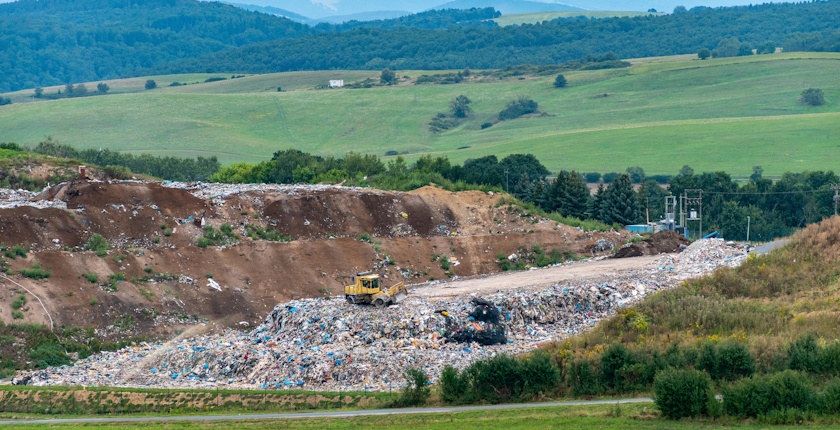
A public consultation process was conducted regarding the intended changes to the law on waste management, which would introduce stricter compliance controls, prescribe new penalties for violations, and quadruple existing ones.
Croatia’s Ministry of Environmental Protection and Green Transition said that the draft amendments to the law on waste management strengthen the government’s response to illegal waste dumping, increase the responsibilities of all shareholders, and further enhance environmental protection.
The amendments introduce mandatory video surveillance and GPS tracking for vehicles transporting waste to prevent dumping at illegal landfills.
Local authorities have been granted more specific mechanisms for urgent waste removal
Competent authorities are granted powers for the temporary or permanent seizure of shipments, equipment, and vehicles to secure cost recovery in cases of illegal transport.
Municipal authorities have received more specific mechanisms for urgent waste removal and easier forced collection of remediation costs directly from polluters.
Under the amendments, the eONTO digital platform for tracking waste flows is being expanded to maintain significantly more detailed records and facilitate expert supervision.
Maximum fines up to EUR 150,000
Fines have been increased for the most severe environmental offenses committed by legal entities, such as the illegal dumping of hazardous waste or operating without a permit. The maximum fine, currently set at up to HRK 300,000 (EUR 39,816), is raised to EUR 150,000, according to the draft.
Among the novelties are fines for companies with vehicles lacking a functional GPS system and ones that fail to submit data to the eONTO electronic system. The fines depend on company size and the severity of the violation.
Fines range from EUR 10,000 to EUR 50,000 for major infractions, or up to EUR 15,000 for minor administrative errors. Fines for individuals responsible for such mattters within companies range from EUR 1,500 to EUR 5,000, while sole proprietors face penalties between EUR 5,000 and EUR 20,000.
Asset seizure introduced
Another novelty is seizure of assets, including vehicles and equipment. Under the current law, inspectors can issue a fine or temporarily close a facility, but lack the power to physically impound and seize a truck, equipment, or shipment on-site.
As part of the amendments, local authorities have been granted expanded powers to recover the costs of urgent remediation of illegal landfills from identified polluters. Municipalities currently have a legal obligation to remediate illegal dumpsites and the right to seek reimbursement from polluters.
However, that process was slow and lengthy. Now a forced collection mechanism is being introduced, according to the draft.